
4 Minute Leg Workouts for Rapid Gains
(No squats required)
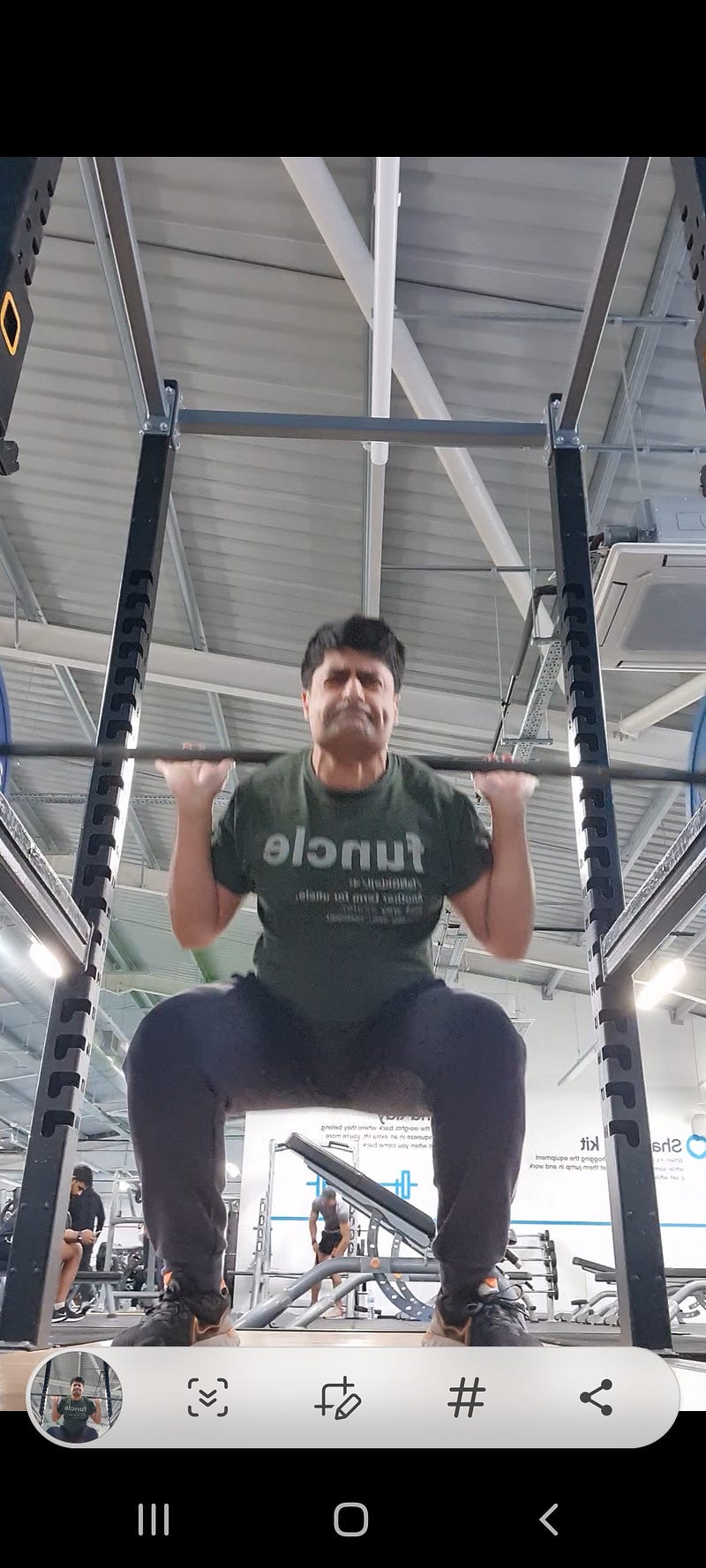
Squats! Deadlifts! Deep! Heavy! SQUATS! DEADLIFTS! DEEP! HEAVY!
That’s one way to build great legs, and it works. But squats are brutal, and so are deadlifts. Go all out on both exercises and you’ll feel lightheaded and nauseous. You might even throw up in the gym. I’ve done that. My legs grew, but I lived in fear of the squat rack and the Olympic bar.
Is there a way to build great legs without squats, and without deadlifts? What if there is? Wouldn’t that be a relief. And what if the whole workout took less than four minutes.? That would be amazing.
There is, and you can. It’s the workout I use when I’m not doing squats and I’m not doing deadlifts. That’s for about 6 months of the year.
The problem(s) with squats
Let’s just say it; squats are the best single exercise you can do for your lower body. Squat diligently and you’ll build great legs. But there are a few problems with squats.
Technique. You need to squat properly for the best results, and squatting properly is no easy thing. When you’re tired, or when the weight gets heavy, or when your concentration breaks, technique goes out of the window, even if you’re a seasoned lifter. When technique goes out of the window, you’re inviting injury. I’ve done thousands of squats in my life, and even I falter when the going gets tough.
Fear. Fear is another factor that invites bad form and injuries. It can also make squatting a psychological battle.
You’re standing there with a heavy bar on your back, fully focused and ready to squat. You unlock your hips and knees and begin the descent, all the way down till your arse nearly touches your ankles with your thighs below parallel. Then the dreaded thought enters your mind. What if you cant get back up? What happens if you get stuck down there with all that weight on your shoulders? You’ve seen it happen to others, and you worry that it will happen to you.
It has happened to me, and I’ve survived, but that doesn’t make it any less frightening. I fear squats like I used to fear injections when I was a child. The fear is irrational, slightly less so with squats than with injections. But irrational nonetheless. If your mind is not right, your workout is wasted.
Availability: The squat rack is always busy. When I’m squatting regularly, I have to go the gym after midnight. That’s usually the only time I can guarantee being able to squat without having to wait around for ages. The rising popularity of CrossFit, weight lifting, and power lifting have made squat racks all over the world busier than any other piece of equipment except the bench press.
Anatomy: Some people just can’t squat that well. An example of such a person is Dorian Yates. He built his world beating legs without squats, after realising that the movement was damaging his hips.
And then there are deadlifts… Deadlifts are my favourite exercise for developing the hamstrings, traps and forearms. But after squats, deadlifts are the most terrifying exercise in the gym. And you need to really make sure your form is good.
I could write so much about squats and deadlifts but for this article, suffice to say, they work, and they’re a nightmare.
I love them because they work, I hate them because they kill. Understandably, squats and deadlifts aren’t for some people. Some people just can’t face them, and even those who can face them need a break sometimes.
With all the psyching yourself up, waiting around for equipment, warming up, and loading plates onto barbells, squats and deadlifts can take a long time. To maintain my sanity and my gains, for half of my yearly training cycle I abandon the free weights area, and I say goodbye to the squat rack and barbells. I leave the maelstrom of the free weights area behind and head for the relative Eden of the machines.
Trouble in paradise
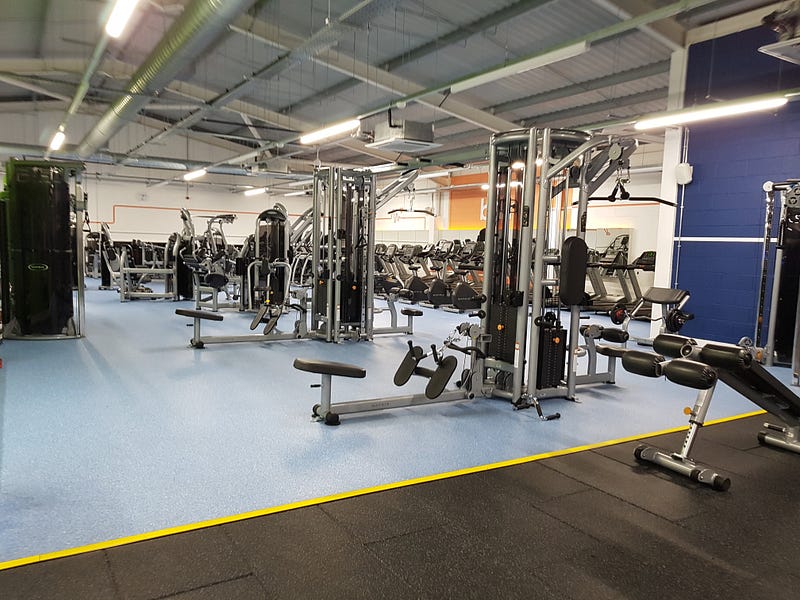
Compared to the free weights area, the machine area is a paradise. No plates to load, no crowds of over excited, posturing young men hoarding equipment. It’s usually fairly empty. Free weights are so oversubscribed and a lot of people ignore the machines, which means you can have a brutal workout that will totally fry your legs, without any interruptions or wasted time, in less than five minutes.
As serene and peaceful as the machines are, the leg workout you can have there is utterly unpleasant. It comprises four exercises that should take about a minute each. If done as instructed, they will leave you barely able to stand, bent over with pain, and struggling for breath.
The exercises
There are no magic exercises and nobody is going to invent any. What makes the four minute leg workout so effective, is the order in is which you do the exercises, and the manner in which you perform them. Randomly throwing movements together will not get your the same results as combining movements for a specific and logical reason.
Your legs are the strongest muscles in your body. To effectively stimulate such large, powerful structures, you need to lift as much weight as you can with the correct form and full range of motion. Therefore, you need compound movements in your leg workouts because compound movements allow you to lift the most weight.
Compound movements are essential, but they suffer from one shortcoming. Squats, deadlifts and leg presses (the major compound movements for legs) use the thighs, hamstrings, glutes and calves. There will always be a weak link that gives way, meaning the stronger muscles involved in the compound movement will not have received maximum growth stimulation by the time the set is terminated. The four minute workout does not involve squats or deadlifts, so we’re using leg press as our compound movement, and the strongest muscles involved in the leg press are the quadriceps.
You can massively increase the results you get from the leg press by pre-exhausting your thighs with leg extensions. Leg extensions are an isolation exercise, targeting only the quadriceps. The first exercise in the four minute workout is the leg extension, and you should perform as many repetitions as possible. As soon as you have performed your last, barely possible repetition, you should move immediately to the leg press, the compound movement. Start the second exercise without resting.
By working in this manner, your quadriceps can continue to contract, assisted by your hamstrings and other corollary muscles that will still be fresh. Pre exhausting your quadriceps with with leg extensions overcomes the shortcoming of compound movements. If you haven’t trained legs like this before, you’ll immediately notice the difference pre-exhausting the target muscle makes. As well as setting your thighs on fire, the workout is going to have you gasping for air.
Initially you may need to reduce the weights you’re used to using on the leg press, but your strength will increase quickly with pre exhaustion training. Within a few workouts, you should be able to lift your normal leg press weight, despite pre exhausting your legs with leg extensions. Then you can work on blasting through your previous max on leg presses. You will not need to reduce the weight you use on leg extensions unless you have previously been using poor form (see the notes on exercise performance below).
After leg extensions and leg press, your quadriceps will be fried. If you’ve performed the exercises properly you’re going to have difficulty walking. Nonetheless, you must move with as little rest as possible over to the leg curl machine to finish off your hamstrings, which will already be tired from the compound movement. You should move right into your working set of leg extensions and perform as many repetitions as possible. This is the final exercise for your upper legs and you want to totally finish your hamstrings off. Go all out. Concentrate, work as hard as you can.
You’ll probably need to lay on the leg curl machine for a while, just to catch your breath. When you get up you have one more exercise to go, calf press. Calf presses or calf raises can be preformed on a block, or a step. Some gyms have a standing calf press machine with pads to place on your shoulders. Alternatively you can do calf raises on one leg at a time, holding a dumbbell in your hand for added resistance. I prefer to do my calf raises on a leg press machine, sitting down.
Once again, perform as many repetitions as you can, then stop. I can usually use slightly more for calf press than I did for leg press, by virtue of the much smaller range of motion involved. Do not take it easy on calves. They may be small, but they’re strong. You should train your calves with all the intensity of effort that you give any other body part.
Once you have done your leg extensions, leg presses, leg curls and calf presses, your leg workout is done, and it should have taken no more than four minutes. My last workout took three minutes and twenty seconds, but I am used to this kind of training.
Do not let the knowledge that you will go directly from one exercise to the next become an excuse for holding back. Go all out on every exercise. The burn you get on this kind of workout is amazing, especially on the latter half of the leg press. Try to work through the pain. As soon as you stop, you will decrease the intensity of the workout, and intensity is key.
Sometimes, if the pain becomes unbearable, it’s okay to pause just for a second at the top of the leg press with a slight bend in your knees. That way your legs will still be doing some work supporting the load. Take a few seconds to catch your breath, then continue. The extra repetitions afforded by the brief rest will make your workout more effective, but ideally you can keep going through the pain until it’s just not possible to move the weight anymore.
Follow the exercise performance tips below and you will see rapid results. You should see strength increases on every single workout, and if you have less than 20% body fat you should see visible improvements in your legs muscles on a weekly basis.
Exercise performance
The best way to stimulate muscle growth is to fully exhaust the targeted muscle, in the shortest amount of time possible. The more time you spend in the gym, the less time you have to recover between workouts. You only grow when you are resting, not whilst you are working out. The less time you need to spend in the gym triggering growth, the better.
Getting in and out of the gym quickly does not mean you should perform your actual exercises quickly. A rapid exercise cadence will decrease the efficacy of any movement because when you train fast, the weight is being moved by momentum; it is being thrown rather than lifted. Your aim is to lift the weight with no momentum, making your muscles do all of the work. Initiate each repetition with a slow, smooth motion. Lifting and lowering the weight should each take two to three seconds. The benefit of slower movements will be especially evident on leg extensions, where a lot of people have a tendency to kick the weight up as fast as possible. Doing the exercise slowly is a lot more painful, a lot more difficult, and lot more beneficial.
When you move to leg press, if you use a machine that starts in the stretched position (knees fully bent), it can be very difficult to get the weight moving. You can assist your self by pushing down on your knees with your hands, but only if it is absolutely necessary to get the weight moving, and only on the first repetition. Remember, the harder the exercise is, the better. You should only need to use your hands on the first repetition of leg press, after that you must do all the work with your legs.
On the leg curls you are at a mechanical disadvantage. Therefore it is okay to speed up the cadence for the last couple of repetitions. When you can no longer lift the weight with a smooth controlled movement, speed up a little just to get into the fully contracted position. Once in the fully contracted position, hold the weight in place for as long as you can, then lower it all the way to the fully stretched position as slowly as possible. With a bit of practise, you will be able to make the lowering of the weight take a full thirty seconds. If you haven’t tried this before, be warned, it is brutal.
When lowering a weight, you are exhausting the greatest level of strength that you have. That is why it is so difficult, and also why it is the most productive part of any exercise. Too many people focus only on lifting the weight, and then let it drop back to the start position. By doing so, they are training only the weakest level of strength (lifting a weight) and ignoring the two greater levels of strength (holding a weight in position and lowering a weight). You can hold in place more weight than you can lift, and you can lower under control, more weight than you can hold in place. The three levels of strength are sequential; your lifting ability will give way before your holding ability, and your lowering ability will give way last. When you have totally depleted all three levels of strength, you will have done the absolute most that you can in order to trigger growth.
Leg extensions, leg presses, leg curls, and calf raises, all lend themselves to the following techniques which you can use to exhaust all three levels of strength. On the final repetition of leg extensions, pause at the top of the movement and hold the weight there for as long as you can. Eventually, gravity will win and the weight will begin to force your legs down into the stretched position. Fight it all the way. Do your utmost to slow down the movement of the weight until you are forced all the way down. There is now no way you will be able to move the weight, so it’s time to move on to the leg press. As you did with leg extensions, when you have performed your last possible repetition, unlock your knees ever so slightly and try to stop the weight from moving. Once again, you will eventually lose the battle. See if you can make the descent take thirty seconds. If you have a wrist watch, or you can see a clock, use it. You will always do better when you are timing yourself than if you are blindly trying to slow down the descent. Holding the weight in position is known as a static contraction, and lowering the weigh under control is known as a negative repetition.
Negative repetitions and static contractions are extremely intense, and I do not recommend using them on every workout, or even on every exercise within a given workout. Doing so is likely to lead to over training, which will put a stop to your progress, and can even make you weaker and lead to injuries.
Lifting the weight on the last repetition of an exercise should take at least three seconds. I have seen some people (myself included) take up to ten seconds to complete the the lifting part of the final repetition. If you lifted the weight in less than three seconds, you can do another repetition.
You can warm up for the workout by performing a couple of sets of leg press. When you start the routine, use the warm ups to find your weight for the working set of leg press. Set the weight, then go to leg extensions and get started.
After warming up, you only need to perform one set of each exercise, taking each exercise to the point of failure. Failure is the stage at which another repetition is impossible. You only need to trigger growth once. Once you have triggered growth, performing further sets or further exercises is counter productive, it simply drains resources your body could be using to repair the damaged muscles and increase their size. Training to failure is enough to trigger growth.
For each exercise you should pick a weight that allows a minimum of eight repetitions. If you can’t get eight repetitions the weight is too heavy. Using an effective workout, you will get stronger on every workout. When you can perform more than fifteen repetitions with a given weight, you are ready to increase the weight on the next workout, bringing your reps back down to eight. Always increase the weight in the smallest possible increments.
The one set to failure approach to training was introduced by Arthur Jones in the 1970’s. It’s effectiveness has been proven time and time again over the last fifty years, but it is still not a popular way to train.
The importance of keeping a record
Every time you lift more weight or perform more repetitions than you have ever lifted before, you place an unprecedented stress on the muscles being worked. The muscles will respond by growing stronger in preparation for a similar level of stress in the future. Rather than relying on your memory, you should write down the weight you use and the number of repetitions you perform for every exercise your perform.
As accurate record of your workouts will allow you to track your progress, and you should be making progress on every single workout. If you ever find yourself performing less repetitions on a given exercise than you did last time, one of two things has happened. Either you have not trained hard enough to trigger an adaptation in the form of increased strength, or you have not rested for long enough since the last workout. If you have three workouts in a row without demonstrable strength increases on all exercises, you should insert an extra day of rest between workouts. Initially, you should rest for three two days between each workout, and as you get stronger, you will need to increase the number of days that you rest because you will be capable of doing more damage to our muscles in any given workout. I workout once every seven days and I continue to get stronger.
Not everybody will see immediate growth on the four minute leg workout. Muscle growth takes time, especially for advanced trainees. In the absence of visible growth, the only sure indicator that a workout is effective is strength increases. It bares repeating; you should get stronger on every single workout. As you get stronger, muscle growth will follow, as any muscle can only get so much more efficient before it has to increase in size. Without keeping a record, you cannot rely on yourself to effectively track your workouts.
What are you waiting for?
Give the four minute leg workout a try. I have no doubt that you will be shocked by it’s intensity, and impressed by the results you get. Pre exhaustion workouts put massive demands on the cardiorespiratory system, so you will get fitter as well as more muscular.
If you’ve been flogging yourself with squats and deadlifts for a long time, give yourself a pat on the back, and a well earned rest from them. Use the four minute leg workout for a few months then go back to the squat rack and the Olympic bar stronger than ever.
For the less masochistic readers who don’t regularly squat and do deadlifts, and for anyone who has difficulty getting their legs to grow, the four minute leg workout is also a great idea. I know it works for women because my wife has done it. I know it works for older people and younger people, because I have been both of those, and I have had young and old training partners. The workout described in this workout works for me, and it will work for you too.
You can take the pre-exhaustion technique and apply it to other body parts as well. Currently I train all of my muscles in this manner, and I will be writing about the exercise combinations I use in future articles.
If you’ve enjoyed reading this article and you’re not a Medium member, you might notice you can only read 3 articles per month. If you create an account, you can read 5 articles a month without charge. But if you become a member ( only $5/month or $50/year) you can read as many articles as you want, ad free. You can become a member here and if you use my link I retain a small portion of your fee. Thanks for your support!


