
4 Life Lessons From the Mathematician ‘Pythagoras’ To Solve All Your Problems
Stop stopping yourself.
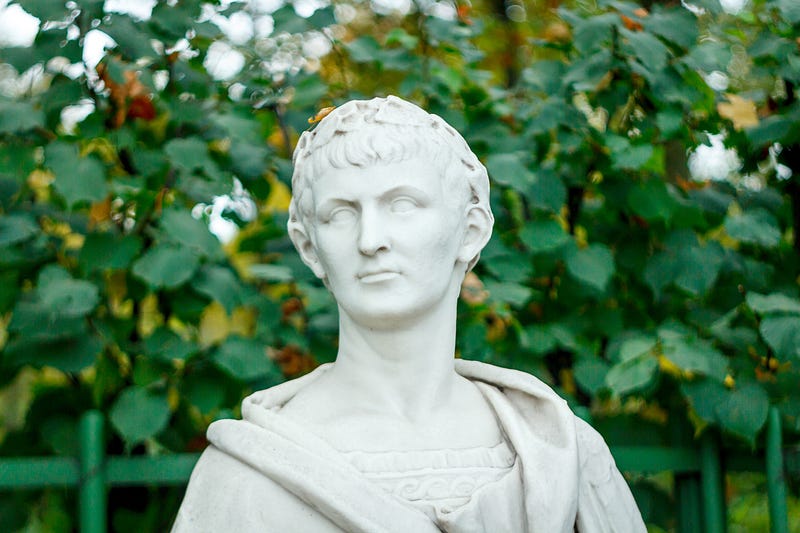
“Salt is born of the purest parents: the sun and the sea.”
If you’re like me, the word “Pythagoras” will brew several memories. Almost no one has gone through their formal education without studying Pythagoras’ theorem. Accept it!
But that’s all we knew about him until today.
In 570 BC, all ancient scientific discoveries ached with the birth of the “Pythagoras of Samos.” Later in his 40s, he moved to southern Italy to continue his philosophical activities.
Long after he moved to Italy, he started a school of thought. His teachings mainly whisked with that of (Aristotle and Plato). Besides being a mathematician, Pythagoras was a strong philosopher, scientist, and religious teacher.
- His understanding of religion and science made him the wisest person in history.
That’s what I feel. Life lessons without Pythagoras are incomplete, just like a cake without icing.
So below through the quotes and thoughts by Pythagoras that hold a sea of wisdom.
Let’s get started.
1. Sides of the coin
“The oldest, shortest words — “yes” and “no” — are those which require the most thought.”
— Pythagoras
The oldest known language is “Sumerian.” If we take a closer look, English and Sumerian are feathers of the same bird.
- No: Nu
- Yes: Heam
Seems like interjection isn’t a modern thing. It’s been there since before Pythagoras. Of course, can you imagine a day without saying “Yes” or “No”? I can never.
According to Shilpa Mydur, Yes’ and ‘no’ are two simple word pairs, but they generate a vast array of mind-boggling complexities when misused — intentionally or unintentionally.
Our first task as humans is to master expressions of the affirmative and the negative (Yes & No). Yet, it looks like a simple task, but we all mishandle it at some point.
How to apply?
Why? We humans are not driven by logic but by emotions.
Suppose:
…you see beautiful women approaching you. She asks you to dance with her, but you instantly refuse.
…she could see the guilt in your eyes. Your mind is in a war with the word you spoke. But she isn’t the woman you’re going to find again. So she simply went off on the board. Your face is now smeared with embarrassment. But what can you do?
That’s when Pythagoras woke from his sleep and reminded you to master saying “Yes” and “No” at the right times. But how can you do that? For instance, if you’re unsure of your decision, politely excuse and take time to think.
Pythagoras practiced it every day. Just imagine if he hasn’t, there would be a (million equations) to Pythagoras theorem just because he couldn’t figure out his yes or no.
Because he could do it means you can too.
2. He who hesitates is lost
In Pythagoras’s words:
“No man is free who cannot control himself.”
Pythagoras spend most of his life in the light of his religious teachings. He names it “metempsychosis.”
Metempsychosis means: our soul never dies. It reincarnates (transmits) into another body upon death.
Didn’t we all believe this? Keep in mind that we are not born to make friends in this world and to soft-soap people. We are here to scrub off our evil deeds.
Plus, doing the opposite, we intensify the bond with this (wicked) world. We become prisoners of this world — we are not free to think, meditate, pray, and observe.
- Pythagoras believe that to be free, we need to control ourselves.
You can never save a person who doesn’t even know he is drowning. So to save yourself, accept your current stance.
Don’t rebel.
How to apply?
For Pythagoras, he believed in the universal life spirit.
He believed that spirits are present in everything — vegetables or pets. They all convey meaning.
Pythagoras used a simple tactic known as “observing.” He observed everything on a deeper level. He was never a man of ignorance. He spent time celebrating every act he did.
Also, you might call him mistaken — but he surely knew how it worked. Pythagoras was the one amongst his religious group to hear the voice of his dead friend coming out from a dog’s howl.
Indeed, he was very focused.
3. Cut the mustard
Pythagoras adds:
“Do not say a little in many words, but a great deal in few!”
Because of his religious and mathematical beliefs, Pythagoras gave a statement: “The view of the Earth is a sphere which circles the center of the universe.”
Our King of Samos stood his ground for knowledge. He never shivered or stepped backed from his “beliefs.”
Let me explain it this way:
Mostly, when we want to explain our wants, we cannot find the (right word) or (phrase). It arouses from lack of self-confidence.
- Saying many words with less conciseness is a great sign of a successful person.
Fun fact: take a closer look at Ted Talks. Have you ever felt the speaker shivering or may be zoning out of the opinion he was expressing?
No…?
How to apply?
To become a master of saying less in a few words, we must follow these steps from hurleywrite.com by Pam Hurley.
1#: Be clear with your nugget: To achieve your true purpose, start by clarifying. For example, what is your goal? Being unclear shows a lack of research.
2#: Avoid lengthy jargon: Skip fancy words and long phrases such as “we will think” instead of “we will run our brains to check.” This may mislead the purpose.
3#: Use strong verbs: Verb is the bottle cap of the sentence. Instead of “we made a selection,” say “we selected.” This helps to make the sentence effective.
4#: Avoid intensifiers: We all love to use “very” and “really.” These are known to pull the effect from the sentence.
5#: Speak positively: If you ever watch a professional interview with UN executives, you’ll realize they don’t say “Don’t” and “Never” They simply use words like: unexpected and unusual.
Conciseness is the muscle of professionalism. Not only does it helps in the professional setting, but Conciseness also rejuvenates your personality and communication skills.
4. Chalk and Cheese
“Do not take roads traveled by the public.”
— Pythagoras.
Mnesarchus, the father of Pythagoras, was a gem merchant. Living on the Greek island of Samos, the merchant was a well-liked job.
However, Pythagoras was different than everyone — he had two brothers, but none were like him. Pythagoras always claimed: to not follow in everyone’s footsteps.
The same minds can never conquer new thoughts even on the 100th try. If it isn’t the right ship for the storm, it will drown. Pythagoras was unique. That’s why he wasn’t only an ancient religious teacher and scientist — but a voice to many followers.
History suggests: Pythagoras wrote no book. So the details of him, we have now are the result of his follower’s dedication.
How to apply?
If you look closely, all the notable personalities were always unique: Tesla, Aristotle, and Galileo Galilei.
Growing on a small island, under the rule of wicked monsters, traveling around the world to settle, with no hope and mentor — you will find similar accounts in the history of Stoics.
- Marcus Aurelius: The Antonine Plague
- Tesla: Poverty, slander, and persecution
- Aristotle: Dethroned in several spheres of thought
- Galileo Galilei: Sentenced to life imprisonment
Because that’s the heat that sharpens the coal to diamonds.
I am not saying that being unique is easy, but we must discover the calling inside of us. Pythagoras surely did. And when we weren’t welcome in Greece and Egypt anymore, he fled to Italy.
So, if you feel you’re unfit where you are, you’re welcome to switch places.
Final thoughts:
Long ago, ancient superheroes: scientists/ philosophers wore long beards, spectacles, capes, and a book clutched into their hands.
We are talking about 570 BC. Now, the superheroes are different.
Today, we are driven to read books, study, cloak in articles, and purify with self-love.
- We don’t wear capes anymore. We’ve improvised.


