
Life Lessons from a Small Town
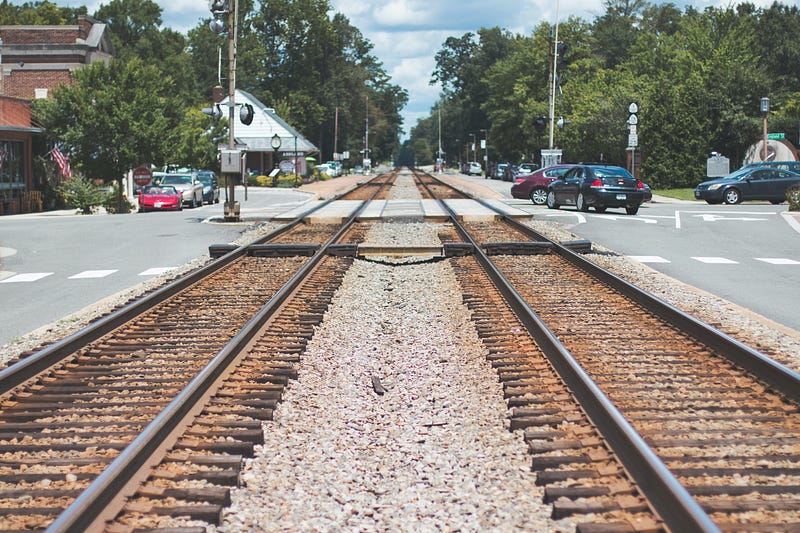
When I was three-years-old, my mother walked behind me from our small stucco home off the main square to the post office, where I mailed birthday party invitations, each one stamped with a little green turtle, to my preschool classmates. The party was to be held at the home of my grandparents, also off the main square, but on a different street.
We lived in a small town. Much like the small apartment where I currently reside, everything had its function and its place. There was my grandfather’s pharmacy, the feed store, the bank, the Piggly Wiggly (a grocery store, for those of you above the Mason-Dixon line), the barber shop, the Methodist Church, the Baptist Church, the courthouse, and the post office where I mailed my invitations. There are photos of the birthday party — I had a One Hundred and One Dalmatians cake, and I wore a large red bow in my hair. But I don’t remember it. What I remember, very clearly, is mailing the invitations.
I learned something that day — something about how the world works, about how to navigate the many systems and structures that order the chaotic reality of living. In my experience, moments of recognition, of increased understanding, leave the strongest impressions and become the most valuable of life lessons. My small-town denizenship ended quickly and permanently when my father’s law practice took us to Washington D.C., but I’ve remained connected to the little rural community that first taught me things like how to interpret various street signs, return books to the library, greet people warmly by name, and, importantly, use the post office. These are some teachings from small-town living that I’ve kept with me.

If you can do something yourself, do it yourself.
Or at least know how to do it yourself before you delegate. I belong to the generation that popularized the term “adulting” to describe the tasks that constitute the daily monotony of living in the world. Millennials have begun to catch flack from Gen Z for our compulsion to brag to Instagram each time we cook ourselves a proper meal or accomplish some other basic chore of adulthood. And they’re right to scrutinize.
I feel for my generation, because I know how personally disconnected I’ve been at times from life’s most essential obligations. Cooking, cleaning, changing the oil in my car before it konks out on the side of I-75. These are things that in an anxiety-prone, distracted mind foment even more anxiety and distraction. They’re burdening. But in a small-town mindset, they can be a blessing.
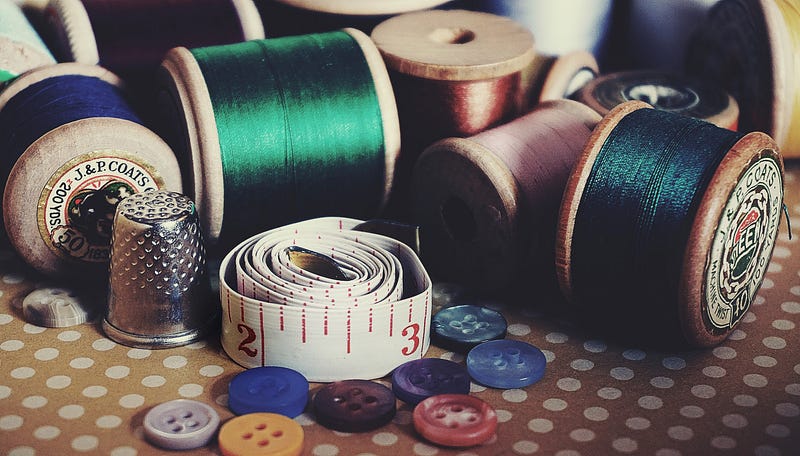
The opportunity to order your own life, to use your brain and your own two hands to do what needs to be done, is an opportunity for freedom through self-reliance. My grandfather could have gone to the farmer’s market on Saturdays to buy fresh tomatoes, but he grew them instead in his backyard. My grandmother did not consider herself to be a talented seamstress, but she knew enough to take in my dresses and reattach a button.
We live in a time when virtually any skill can be learned on YouTube, DIY has become an entire internet genre, and yet, the start-from-scratch, creative, industrious quality of initiative seems to have shrunk for many of us. The thing about learning something new and doing it yourself is that it feels bad, but then, really good.
Most of us no longer live in places where entire communities conspire to cushion the ugly process of learning self-sufficiency. We do it by ourselves, but the result is similar — we feel better and have more freedom. So if you can learn to do something yourself, do it. And be grateful that you can.
Be quick to ask for a favor and even quicker to grant one.
In small towns, the prevalent system of exchange is what I call the Economy of Favors. I lived with my grandparents when they were sick, and I can tell you, the Economy of Favors is a powerful network. Neighbors drove them, sometimes hours, to various appointments. Friends delivered meals, dropped off the dry-cleaning; one even arranged for an in-home mani/pedi for my grandmother.
The way the town took care of them when they were sick is something I’ve written about a lot since their deaths in 2017. (It’s also largely the reason I sought and found religion, but that’s a different article.) The favors, ranging from small and thoughtful to unspeakably generous, were daily. They were a testament to the beloved character of my grandparents, but also, I realized, they were simply a function of living in a small town.
I belong to a peer group in which people privately congratulate themselves for doing things like driving a friend twenty minutes to the airport on a Saturday. Not that it’s not a nice thing to do, but most people could afford to challenge themselves to be inconvenienced for the sake of someone else a bit more often.
I want to be someone who seeks out opportunities to meaningfully assist people rather than merely acquiescing now and then as the occasion happens to arise. It’s worth noting, too, that when we are giving of ourselves, we are more comfortable and gracious in receiving from others. Ask for a favor when you need one, but look for places to grant one too. Stimulate the economy.
Creating community means emphasizing similarity while allowing for difference.
A misconception about small towns is that they are homogenous. It’s true that in most tight-knit rural communities there is a dominant culture, religion, ideology and general way of life. Some sense of collectivism is requisite for the survival of small towns. But like anywhere on earth, the range of human idiosyncrasy is limitless.
More rigid societal norms do not circumvent the fact that people are and always have been… weird. Some of the most liberated thinkers and realest mavericks I’ve ever known I’ve met in small towns. To me, small town communities often achieve a level of tolerance for difference that puts more corporate, would-be progressive environments to shame.
Humans have a natural propensity to create belonging which we constantly balance against the opposing need to act with autonomy as individuals. In small towns, this balance is maintained by the establishment of a dominant culture that holds a relatively permissive attitude toward deviation from the norm.
This is a traditional model, and one that has been eschewed by many today as too potentially marginalizing, inflexible, and, in other ways, problematic. Without downplaying the very real harm can come to people who find themselves on the outside of a rigid or even violently enforced cultural norm, there is something to be said for a model that prioritizes similarity and belonging, the ties that bind, first.
When enacted with a disciplined eye to morality, this kind of intentional unity creates an environment akin to the unconditional love that exists in healthy family relationships. Resultantly, individuals feel empowered to display a full range of weird, messy, non-conforming humanity, even if their name is on the lips of gossips now and then.
Everything is interesting when you’re interested.
When I was a child, my dad and I used to take long walks together. The geography of the town never changed, but each walk was different. Things change as the quality of your attention changes. This is something that people who live in rural areas understand intuitively. My grandfather’s family were all farmers, and from him I learned that the subtlest shift in the hue of a plant’s stalk might show the onset of a path to health or to decline. Things that seem mundane or like minutia hold a world of interest when they hold clues about whether you’ll be able to feed your family in the coming months.
The cure to boredom is to get extremely interested in details, no matter how high or low the stakes. A mind that is sincerely focused on something, even something small and seemingly insignificant, is a creative mind. The world looks different when you look at it with openness, intention, and curiosity. Maybe it’s easier to do that when the skies are clear, people are sparse and you have a little, but aim to do a lot.

Studies have shown that people who live in rural areas, and small towns tend to be happier. There are all sorts of reasons this may be the case, and a good number of reasons why that does not also mean that everyone would be happier living in a small town. I, for one, am writing from my city apartment and very glad for it.
But on my bookshelf is a framed photo of the house off the square where my grandparents lived for the last twenty-odd years of their lives together. There was so much wisdom in that home, and no shortage of happiness, either. Their home and the little town to which it belonged were valuable first classrooms for me.
Their world felt and still feels like the entire world in microcosm. The pathways to joy and good living that operate in small towns function beautifully anywhere and with anyone when employed with some diligence. Sometimes it takes a step or two outside of the city to remember that at every moment it is possible to start where you are, use what you have, be good to people, and find the world unutterably interesting.