
4 Harmful Mindsets About Money to Avoid
These limiting beliefs about money will make you unhappy.
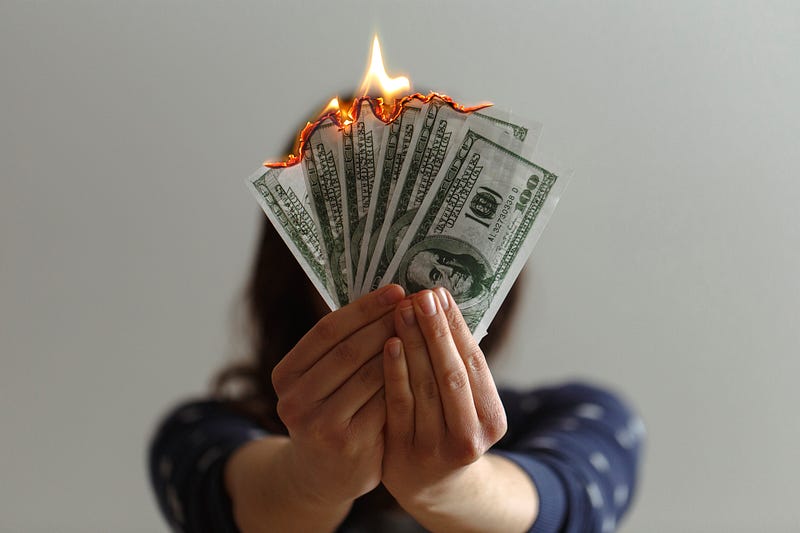
Money can be a touchy subject for many. Whether we’re paying off debt, spending excessively or borrowing money, we usually don’t like to talk about it. Money talk can bring up feelings of shame, discomfort and unhappiness.
But it doesn’t have to be that way.
Money shouldn’t be an uncomfortable topic. By talking about money we can start to challenge any taboos, misconceptions or self-limiting beliefs around it.
It’s only through examining our money habits that we begin to see our mistakes and grow from them. I’ve become a lot better at managing my money now than I was in my 20s. The most beneficial change for me has been in examining how I think and feel about money, and how those beliefs were negatively affecting me.
These are some of the toxic money mindsets I’ve identified and changed for the better.
1. Holding onto a scarcity mindset.
Scarcity mindset and abundance mindset were terms originally coined by Stephen R. Covey, author of The 7 Habits of Highly Effective People. A scarcity mindset means that you see resources as finite, that there’s only so much to go around for everyone. In contrast, an abundance mindset means you believe there’s enough opportunity and space for everyone.
In his book, he explains that people with a scarcity mindset derive their worth from comparison with others, while those with an abundance mindset get their self-esteem from a “deep inner sense of personal worth and security.” In a highly competitive world, we’ve been conditioned to think from a scarcity mindset, so making this shift to an abundance mindset takes work.
I know it’s not easy to think you’re abundant when circumstances around you say otherwise. But having an abundance mindset is so much more than what you make.
Before adopting an abundance mindset, I believed I had less. Less opportunity, less talent and less money. But I’ve since realized that I have other things in abundance: a supportive family, ample savings, interesting travel experiences, a deep-seated passion for writing and learning, rewarding employment experiences, etc. If you really take stock of all that’s good in your life, you see there’s actually a lot to be grateful for.
We all come from varying circumstances but by looking at what we do have in our lives — even the smallest things from a warm cup of coffee to a loving family— we can begin to appreciate all the blessings we have in abundance.
“In a heart filled with gratitude, there is no room for discontentment.” — Rachel Cruze
A scarcity mindset — on the other hand — acts like a toxin, blocking out positive feelings of gratitude and happiness. But when we’re grateful, we’re more able to focus on what’s available to us in the present. This has been reinforced to me through meditation and manifestation practices; when I’ve practiced gratitude I’ve released negativity and opened myself up to the gift of the present. An abundance mindset allows room for possibilities rather than limitations, and solutions rather than problems.
I’ve now considered a multitude of ways to earn money — through blogging, freelance writing, creating YouTube videos, making e-books…Some of these are still only considerations right now but the point is that I now see many paths instead of just one.
2. Spending emotionally.
I always bought into the ‘retail therapy’ idea. I used to buy clothes or books whenever I felt unhappy, insecure or anxious. It numbed these feelings in the short-term but it didn’t help me process these feelings and deal with them.
“We often overspend because we are trying to fill an emotional gap in our lives.” — Dave Ramsey
It wasn’t until I got into minimalism that I saw how much I was using shopping as a coping mechanism. Coming to this eye-opening realization made me more self-aware of my emotional spending habits.
Now I avoid frivolous spending as much as possible and spend only on what I need. Whenever I do splurge, it’s usually on a specialty coffee every once in a while.
It can help to take this a step further by removing emotions from the situation and tracking your spending in a personal budgeting spreadsheet or app. Seeing your expenditure in a pie chart or graph is much more telling than withdrawals and deposits listed chronologically in a bank account. You get much more of a literal sense of where your money’s going.
3. Believing money will make you feel better.
While I was between jobs, I had a lot of worries surrounding money. My worries were unnecessary because my family was so supportive and my expenses were so low, but I was desperate for independence. I took the first job offer I got, happy to be making money again.
But very unhappy to be in a less than ideal work environment.
My mistake was in thinking that money could be my main driver. But I disliked the job so much that the money I was making didn’t matter. After reading Happy Money: The Japanese Art of Making Peace with Your Money by Ken Honda, I’ve learned it doesn’t matter how much or how little you’re making. If you don’t like what you’re doing it will negatively affect your cash flow, as he explains in his book.
“Let me state this plainly: It is not how much you make or have that makes you have Happy Money or Unhappy Money; it is the energy with which your money is given and received that determines your flow.” — Ken Honda
He explains that money received and given with positive energy (love, care, friendship) becomes Happy Money, while money that’s received and shared with negative energy (anger, frustration, sadness) is Unhappy Money.
Money can also give you a false sense of security. At its most basic, money is a means to an end but true security comes from within, from knowing who you are and what you want.
4. Not aligning your money with your values and lifestyle.
Ken Honda talks about the importance of defining your own idea of financial success and happiness. He points out that you don’t have to earn, save or invest like other people do.
I used to feel pressured to spend my money according to society’s rules. For instance, if I didn’t donate to charities I felt guilty. When I did donate, sometimes it was more out of a feeling of obligation than genuine support.
Ken Honda suggests donating money to a charity or group that’s in alignment with your values, in order to create a happy money flow. Now that I’ve really examined my own values and what’s meaningful to me, I’m more particular about which causes or charities I want to support.
Although I eventually sacrificed money to pursue a happier life, I slipped back into the habit of comparing myself to other people. They’d buy a new car or be looking for a new place, and I’d be fighting back my envy. I’d wonder how they got so “lucky” and why I wasn’t living up to that “standard.”
But I’ve come to re-learn this lesson again and again, realizing that I have all I need at this point in my life. I’m conveniently close to public transportation, I’m comfortable and happy in the house I live in, and I’m not yet ready for big expenses like a house or a car. I’m walking my own path, in my own time and it’s unique just like everyone else’s path. I enjoy not having the expenses of a car. I like being close to family and sharing quality time with them. I like my simple, minimalist lifestyle. The same goes for a maximalist lifestyle; if that’s what makes you happy then it’s the right path for you.
Identifying and changing negative money mindsets takes time and effort. This is something I’m still working on — but I have a much better relationship with money than I did before.
The mind is powerful and once that mindset shift happens, things start to look different.
“Once your mindset changes, everything on the outside will change along with it.” — Steve Maraboli
This article is for informational purposes only. If you need financial advice or are making any major financial decisions, please consult with a financial expert.
The Mini Post-Grad Survival Guide
A 5-day email course with tips on budgeting, investing, and productivity for 20-somethings. Sign up for free.