
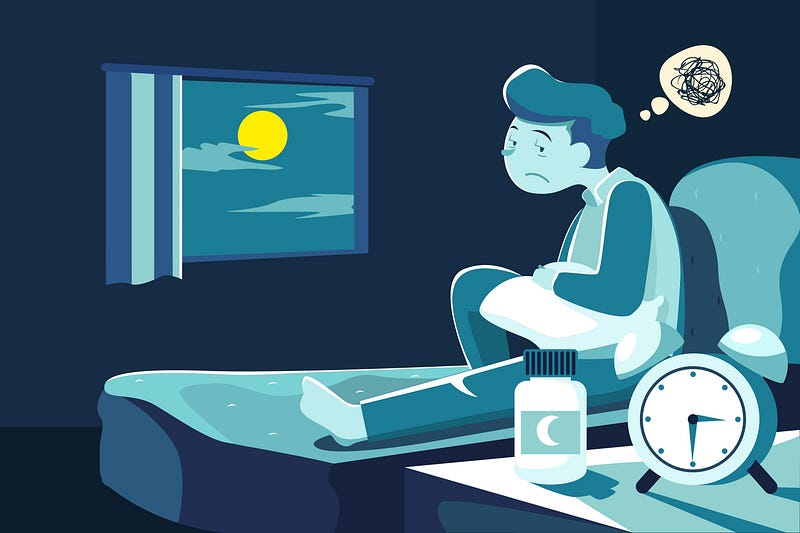
4 Habits That Are Sabotaging Your Sleep — and What You Can Do for That
Stop prioritising things above sleep.
A day after a sleepless or insufficiently slept night is tough. We all have experienced it many times. Sleep is the only thing you could be legally selfish for. We often exploit our sleep time for other activities and repent the next day for not sleeping well.
People often mythicise giving up a portion of sleep for work makes them more productive. Contrary to that, to become more productive, you need to sleep well.
Because sleep isn’t a passive or unproductive state. Our body is highly active at night, more than during the day. At night, it regurgitates and processes your day memories and weeds out (forgets) unnecessary ones. It’s proven by a study on mice.
Yes, it forgets. Do you remember what exactly you’re doing this time five days ago? Yes? Alright. One year ago? No. Cleaning them helps free up memory space to organise important ones, so you can think and come to conclusions easily. That’s why people say, “Sleep on it.”
Additionally, your immune system gets stronger, your metabolism gets regulated, and vital hormones are released at night. These don’t happen when you’re awake.
Now tell me how we can afford to forgo sleep?
Here are the 4 habits that are sabotaging your sleep, and how to avoid them.
🧐 Habit #1: Overthinking
We have to sleep like animals.
- They don’t have surety or insurance for their life.
- They don’t reserve stocks of food to eat.
- They aren’t equipped with weapons to kill predators.
Yet, they could fall asleep within few seconds or minutes. Because, they don’t think.
We have a decent house, sufficient money, and security. But still, we’re bloated with incessant thoughts that don’t let us sleep. Sleeplessness due to overthinking is a cyclic process. A research proves people who report frequent sleep disturbances tend to fixate more on negative emotions, and they again make them more insomniac.
Repetitive sleepless problems in long-term lead to depression, anxiety, and mental disorders. They have to be got rid as soon as possible.
How to do it:
- Try not to see or hear things that cause negative impressions on your heart, at least two hours before bed. Instead, wind-down and listen to music or read a good book that soothes your brain and gets it ready for sleep.
- Don’t over stimulate yourself throughout the day. Keep yourself calm. Meditation would help you relax and keep a meditative state throughout the day, so sleeping wouldn’t be difficult. I practice Heartfulness meditation, and it improved my sleep efficiency to a great extent.
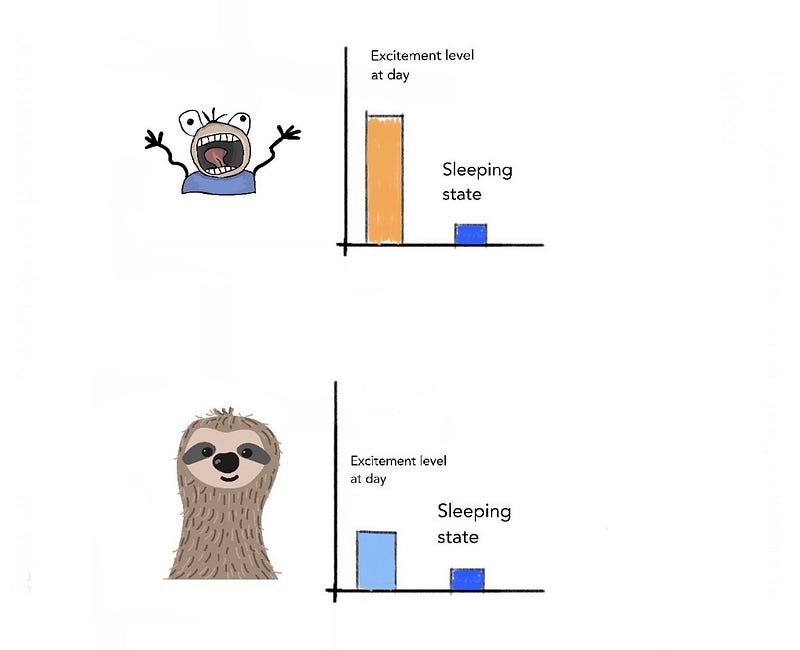
Don’t fight with your thoughts, but then don’t entertain them. Let them be like clouds passing in the sky, while reminding yourself you’re going into deep sleep.
📲 Habit #2: Gadgets Overuse
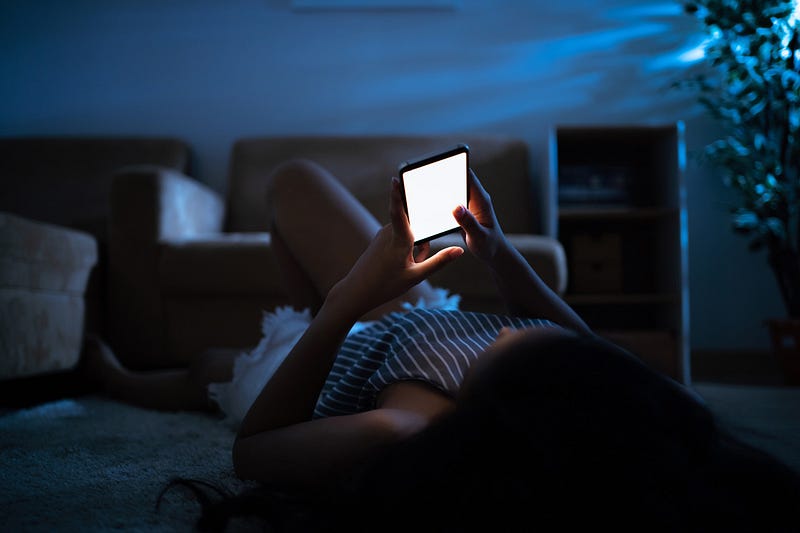
Gadgets (especially mobile phones) aid your sleeplessness in three ways.
- Blue light
- Social and game anxiety
- EMF
We’re so addicted to mobile phones that we aren’t able to firmly resolve refraining from using them even we do know the harm they do. A smartphone is the last thing we see before we sleep. Agree?
Most often, we don’t have reason to pick them up. Yet, we create a reason like checking feed, or friends’ status to unlock it and spend lots of precious time surfing in it.
It’s reported that using mobile phones more than 2 hours a day leads to significant poor quality and decreased time of sleep.
A research by NIMHANS, Bangalore found that 65.5% of their respondents, more men than women, slept with their phones nearby. Among those people, 72.4% reported poor sleep quality, and among those who didn’t do that, only 8.89–12.38% reported poor sleep quality.
(Also, men were more into gaming, and female were more into social media.)
How to decrease their use:
- When you’re about to grab your pone, wait for a second, and ask yourself, “For what am I taking it for?”. If your reason is relevant, you can continue. Else, postpone it for later.
- When you don’t need your mobile at work, hide it away from your sight. It reduces your mobile usage at daytime.
- Use your bed only to sleep. If you have work with your phone, try doing it in other room. Also, don’t put your phone near your head while sleeping. If you do, make sure you set it on flight mode.
A research finds that EMF emitted by phones delays entering higher stages of deep sleep, and also the respondents reported headaches and low quality of sleep with the radiation.
❗️FACT:
The blue light emitted by your mobile mimics sunlight, so your brain thinks it isn’t night yet and doesn’t secrete Melatonin, the hormone that makes you sleepy. That’s why you can’t sleep easily after you use phone.
🥬 Habit #3: Diet and Exercise
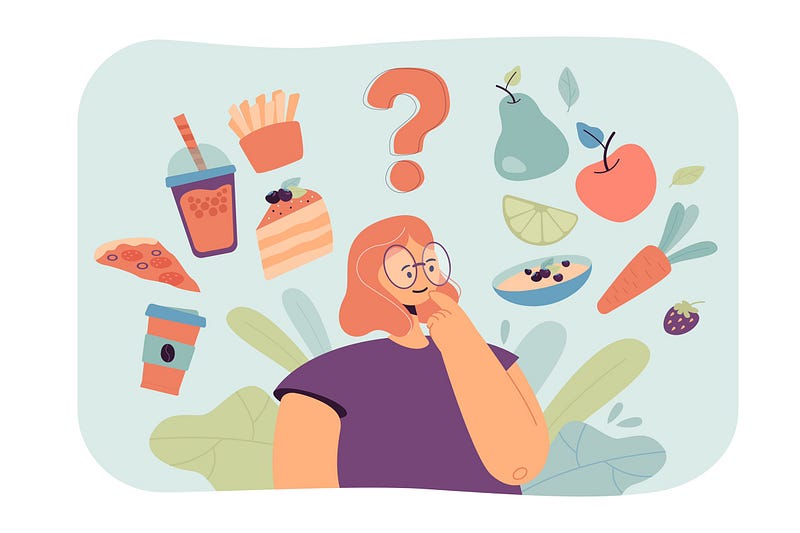
“You are what you eat”
You can stay at least okay if some part of your body is upset, but you can not be happy if it’s your stomach.
In this binge era, diet has become a major reason for insomnia.
Intake of healthy food and balanced diet has drastically decreased. Fast food has become popular because that’s cheap and easy to cook, and is ‘cool’ to eat.
Skipping breakfast largely contributes to insomniac effects. Researches show that taking breakfast in time sets the circadian or biological clock right. If not taken, it could delay blood sugar rhythms for more than five hours! I hear people saying, “You know, I’m not really hungry in the morning.” Why? It’s because they trained themselves not to be hungry in the mornings.
Exercising regularly makes releases Endorphins, the stress-releasing hormones. It would decrease the time you take to sleep, and increase its quality.
Some tips:
- Try not to have much Caffeine (mostly in coffee products). As it’s naturally a stimulant, it has short-term benefits like increasing your efficiency at work, but overuse can lead to insomnia.
- Have at least 30–45 min of daily exercise, preferably in the morning, will contribute to sound sleep.
- It’s surveyed that 60% of regular night-snackers are those suffering from insomnia. Craving for food at night heightens the risk of obesity and blood sugar, which in turn gives us poorer sleep.
Exercising outdoors is highly recommended because you get exposed to natural light, which sets your body’s circadian rhythm right and gets you some Vitamin D.
Fixing a correct schedule to your sleep can familiarise your biological clock for that time, and you’ll have effortless quality sleep.
🛌 Habit #4: How do you set up your bedroom?
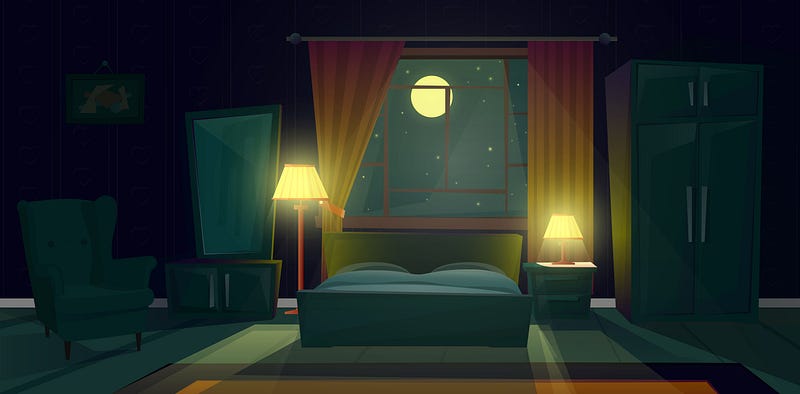
Sleeplessness doesn’t have everything to do about yourself and your habits. Your room could affect it too. Here are the 5 things you need to set right to have better sleep every night.
1. Lighting and Noise:
Make sure your room is dark and quiet before sleep, unless you watch a horror movie. Use dark curtains to block light from outside.
If you live in a hostel with night owls, don’t quarrel. Try using eye mask and earplugs.
2. Cleanliness:
❗ FACT: 80% of your household dust is your skin.
And you spend 33% of your time on bed everyday. Imagine how much dust you unknowingly build-up on your bed every night! If you clean your bedsheet and surroundings, you’ll have a better mood for sleep.
Focus on improving the air quality too.
3. Temperature and Aroma:
People of different regions have different comfortable temperature. Find yours, and set accordingly.
You can also use Aromatherapy to relax and calm our brain. With daily usage, the smell can cue your mind to wind-down.
4. Mattress type:
93% of people participated in the Bedroom poll conducted by National Sleep Foundation said a comfortable mattress is important for good quality sleep.
Cosy bedsheets, pillows, and blankets facilitate in comforting sleep. Pillow puts your neck and spine properly aligned.
5. Paint colour of your bedroom — Colour psychology:
A study in Britain showed that paint colour of bedroom can effect your sleepy mood. It says blue has the highest capability to induce sleep among people, followed by yellow and green almost nearly.
The colours purple, brown, and grey have the least capability and can possibly ruin your quality sleep.
Final Words:
“Your eyes water when you yawn because you miss your bed and it makes you sad.” — Anonymous.
Sleep isn’t something that takes off your ‘cool’ time. It actually makes you happier, and more to what you’re ought to be.
I regularly sleep early, at about 10:00 PM. My friends, who sleep at 2:00 or 3:00 AM in the morning, ridiculed me for doing that. I somehow educated some of them about the benefits of sleeping well, and about the people who are suffering from insomnia.
We need to sleep like animals.