
4 Exercises To Learn To Say No — How To Get Your Time Back
A No to Others is a Yes to Oneself!
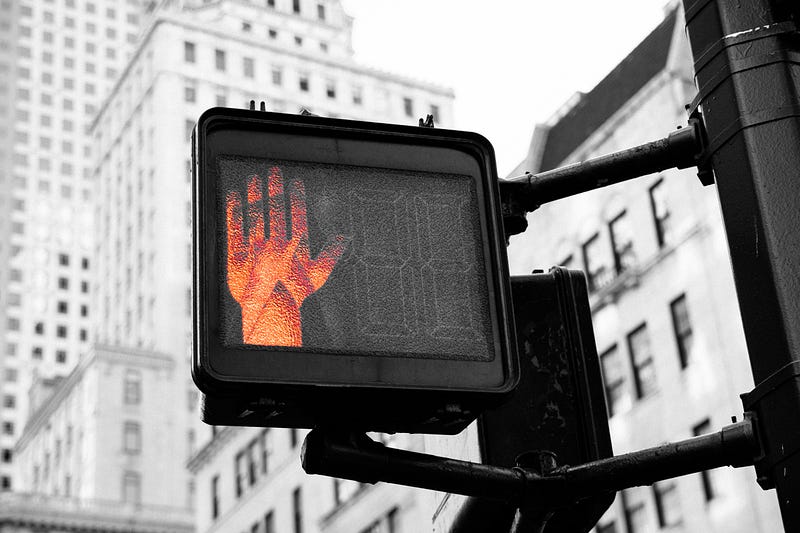
Do you often spend your weekends baking cakes for parties that you would rather not go to at all? Do you often do stuff for people who have never done you favor before? Or do you watch a stupid movie now and then just because your friends wanted to see it?
If the word “actually” regularly creeps into your vocabulary while a clear “no” is hard to say, the following exercises for learning to say no are just right for you.
Why it is difficult for us to say no
Many people do not dare to say no because they are afraid of the reaction of their counterparts.
What if the other person is angry and thinks we are selfish?
The fear of rejection and our bad conscience have evolutionary roots. Millions of years ago, humans had to avoid being excluded from a group under all circumstances. Cooperative humans had an evolutionary advantage because no one would have survived in the wilderness alone.
This primal fear still frequently controls our behavior today, without us noticing it — even though, rationally speaking, in today’s civilization we can stay alive if we refuse someone a favor.
The Art Of Saying No In 4 Exercises
Saying no does not mean thinking only of yourself and never again doing other people a favor. It is about distinguishing whether you enjoy doing something for others or only because you feel obliged to do so.
If you take on all kinds of obligations, you will eventually feel overburdened and exhausted.
With a clear “No” you create space for the things that are important to you personally. Because whenever you say “yes” to something, you also say “no” to something else — whether it’s more time for family and friends, your hobbies, or getting enough sleep.
‘The ability to say the word “no” is the first step to freedom. ‘ — Nicolas Chamfort
1. Write Down Your Priorities
What is important to you in life? What would you like to do more and what less?
By writing down your values and priorities you will become clearer what you want and what you don’t want to do. It will be easier for you to say no to things that are not in line with your priorities.
Imagine, for example, that your list of priorities has “more time for relaxation” at the top of it. Now a colleague asks you to bake a cake for the annual company party. If you love to bake multi-tiered cakes in your free time and find it relaxing, you’ll be happy to accept. It’s a different matter to agree if you don’t succeed with even ready-made baking mixes and would rather get on with your annual tax return or read a book than bake a cake.
Those who automatically say yes often focus only on what the other person wants and forget what is important to themselves. Writing down your priorities helps you to make more conscious decisions.
‘A “no” from the bottom of your heart is better and bigger than a “yes” with which you want to please or — even worse — avoid trouble. ‘ — Mahatma Gandhi
2. Arrange Appointments With Yourself
Sometimes it is difficult for us to say no because we think we don’t have an important excuse.
If you urgently need to do the tax on the weekend, it is certainly not difficult to cancel a party you don’t feel like going to. But what do you do if you “only” want to spend a cozy evening at home because you had a busy week? Or if you have decided to try a new hobby for the weekend?
Block time in your calendar for little breaks and things that are important to you. When you make appointments with yourself, you make sure that you have time for yourself regularly.
Then, when your mother-in-law calls you and invites you for coffee, you can tell her that you already have plans. You don’t have to tell her that you’re making flower arrangements or that you want to lie on the sofa and read a novel.
3. Set Limits In Your Free Time
The Cuban cocktail course organized by your friends. The Hollywood theme party of your colleague. The new trampoline park that your nephew is dying to try out…
The offers in our free time are seemingly endless and many people are afraid of missing something important if they don’t take everything with them.
This phenomenon is also described as FOMO (Fear of Missing Out) and is related to stress, overtiredness, and sleep problems.
Because if you say yes to everything, your free time can quickly turn into stress. Personal limits can help you with your decisions.
For example, you can limit your appointments to two evenings a week, because you know from experience that otherwise you will be overtired. Or you can decide to take an afternoon off on the weekend to pursue your hobby.
If you consciously set limits on your free time, you will no longer see everything as a missed opportunity and will find it easier to turn down invitations.
‘People who are always thinking about what others think of them would be very surprised if they knew how little others think about them.‘ — Bertrand Russell
4. Formulate Cancellations Cleverly
To make it easier for you to say no, you can prepare a few good sentences beforehand. Be direct and honest, and avoid excessive explanations. It is also important to remain friendly.
Diplomatic phrases are for example:
- “Thank you for thinking of me, but unfortunately…”
- “What a nice invitation, but I have to pass.”
- “I’m sorry, but this is not a good time.”
Maybe you can offer a compromise. “I’m afraid I don’t have time to help you move. But why don’t you come over tomorrow and I’ll cook for us?” If you’re having a hard time at first, you could ask for a little time to think about: “When I get home, let me check my calendar.”
Whoever Says No, Takes Responsibility
You have written down your priorities and thought carefully about how you want to use your free time consciously. You have prepared great sentences and formulated your rejection in a friendly and direct way.
Despite all your efforts, your counterpart is now pissed off and blames you. Of course, such a situation is unpleasant, but unfortunately, it cannot always be avoided.
Saying no means taking responsibility for yourself and your decisions and accepting that you can never please everyone.
As long as you remain polite and tell them in time, it is not up to you if someone lets a rejection spoil their mood.
Being able to say no is a sign of healthy self-confidence and personal maturity.
Replace the worrying about the opinions of others with a few thoughts about what you can do with the time you have gained.
‘When you stop living your life based on what others think of you — real life begins.’ — Shannon L. Alder


