
HISTORY | WAR | NUCLEAR WEAPONS
4 Days in 1983 When the World was Almost Destroyed Accidentally by Nuclear Weapons
Misinterpretation of clues and signals can destroy us all
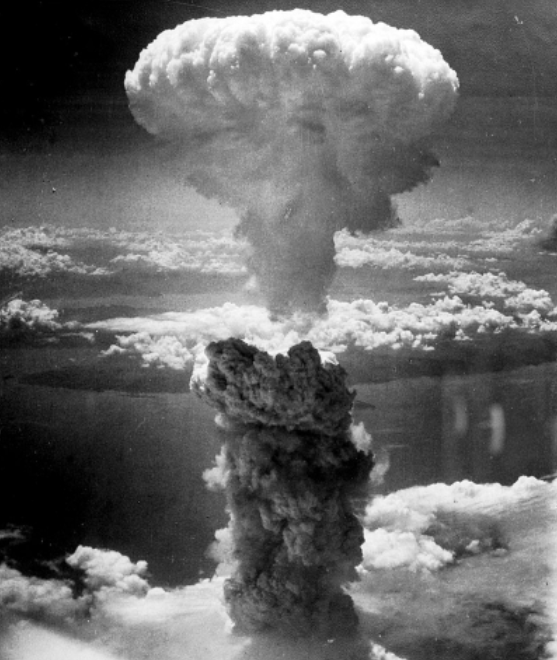
We are living through scary days when the use of nuclear weapons was brought up by Russia as a possible scenario in the Ukraine war.
I’m scared because Russia almost did that back in 1983 when it misinterpreted a NATO exercise as a ruse to attack the Soviet Union with nuclear weapons. Thankfully, the error was discovered at the last moment and global catastrophe was avoided.
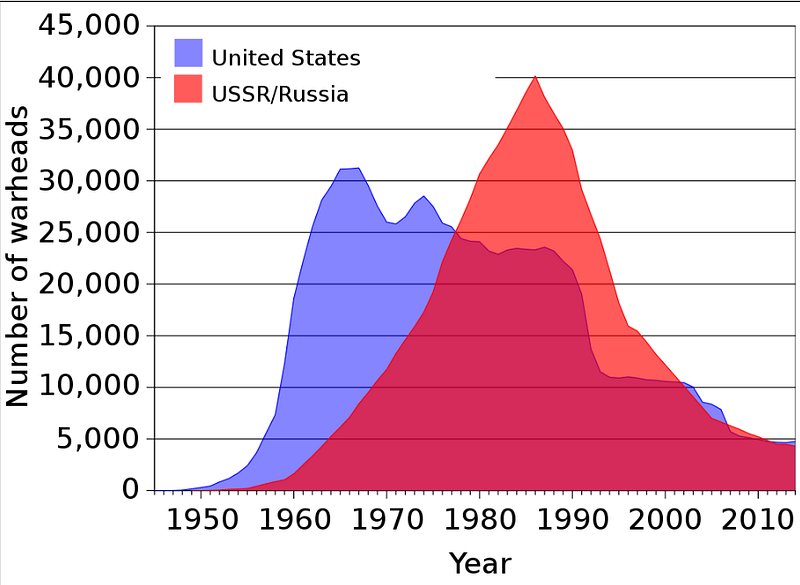
Even after SALT (Strategic Arms Limitation Talks), the United States and Russia still have over 10,000 nuclear warheads, enough to destroy the world many times over.
Operation Able Archer 83
It all happened during NATO exercise Able Archer 83 “nuclear release exercise” conducted November 7–11, 1983.
For NATO, the exercise was a “routine” one but the Soviets did not interpret it as such. They thought the exercise was a cover to actually attack and destroy the Soviet Union with nuclear weapons.
Non-Routine Features
There were reasons for the misinterpretation, encouraged by certain features of the exercise that were new and not routine.
- Radio-silence was observed during the airlift of 19,000 US soldiers to Europe.
- Consultations took place between the U.S. and the U.K. for “new nuclear weapons release procedures.”
- Routine B-52 sorties were referred to by mistake as “nuclear strikes” during NATO communications.
- “Alternate War Headquarters” was created for the exercise instead of conducting it through a Permanent War Headquarters.
- Soviet intelligence sources reported NATO planes taxiing out of their hangars loaded with what appeared to be warheads.
- And the worst of it all — the U.S. forces were placed on DEFCON1, the highest nuclear alert level — in response to reports that the Soviets used chemical weapons. This was a level even higher than DEFCON2 implemented during the Cuban Missile Crisis (October 1962).
Fear of RYaN
All of these factors in combination created the misinterpretation for the Soviet intelligence and observers that the exercise was a ruse and the beginning of a real nuclear attack on the Soviet Union.
The Soviets thought they were witnessing the initial stages of “RYaN” (Raketno-Yadernoye Napadenie) — the code name KGB gave to a NATO nuclear attack. The Soviet armed forces went on the highest alert and started preparations to launch their own nuclear missiles.
A Self-Fulfilling Prophecy
Able Archer 83 was designed to simulate a series of Soviet attacks on the West, culminating in a nuclear war.
The bitter irony is, the exercise was so realistic that it almost triggered the nuclear holocaust that it was designed to prevent.
“This close scrape with Armageddon was largely unknown until October 2015, when the U.S. government released a ninety-four-page presidential analysis of Able Archer that the National Security Archive had spent over a decade trying to declassify,” says Tom Blanton in his foreword to “Able Archer 83: The Secret History of the NATO Exercise That Almost Triggered Nuclear War,” edited by Nate Jones.
The U.S. analysts detected increasing nervousness on the Soviet side but they in turn also misinterpreted and dismissed these signs as a sophisticated Soviet ploy to “cleverly manipulate Western perceptions.” The mutual errors on both sides compounded fast.
“It was a vicious circle,” is how Francine Uenuma summarized the dilemma in his Smithsonian Magazine article: “The Soviets refused to believe the Americans were bluffing; the Americans, meanwhile, suspected the Soviets were bluffing about not thinking the Americans were bluffing.”
Soviet leader Yuri Andropov issued an alert to all KGB stations around the world that the Project RYaN had “acquired an especial degree of urgency.”
Within four months Andropov would pass away and President Reagan, who in 1983 described the Soviet Union as an “evil empire,” would express his condolences for a man with whom he almost dragged the world by mistake into nuclear annihilation.
The nuclear Armageddon was averted when the Able Archer exercise ended on November 11, 1983.
“This war may perhaps not occur through evil intent, but could happen through miscalculation.” — Yuri Andropov, Soviet Leader, 1983
And Now…
We are again going through perilous days when both sides, Russia and NATO countries, are suspecting each other’s motives and believe the other side is bluffing.
What makes the occupation of Ukraine even more dangerous is the fact that there is an ongoing real war on the ground with thousands of victims.
The Critics
Ukraine is bombed back slowly to the stone age while the Soviet-supporters claim that Ukraine, led by “a comedian,” “had it coming” with her “unreasonable dream” of joining EU and NATO.
Ukraine bit more than she could chew, the critics claim, forgetting who the victim is in this unilateral occupation of an independent sovereign UN-member country by a nuclear superpower.
The critics further add that the United States is culpable for supporting Ukraine in her “unrealistic demands” and giving her false hopes that can never be realized given Ukraine’s long history and borders with Russia.
Thus the longer the conflict goes on, the observers note, it has more potential to set NATO forces against those of the Russian Republic.
Conveniently ignored by the critics is the century-old Soviet/Russian ambition to expand The Empire through wars and military occupations in Hungary (1956), Czechoslovakia (1968), Georgia (1921 and 2008), Crimea (annexed in 2014), and now Ukraine (2022). Sweden and Finland have agreed to apply for NATO membership, believing they could be the next targets of Russia's expansion plans.
I’m not saying that Russia is the only country in the world that’s trying to build and secure a geopolitical empire but still, facts are facts. They should not be dismissed.
Unfortunately, there is no end game or exit strategy in sight at this writing while Russian President Putin and his Foreign Minister Lavrov have raised the specter of a nuclear exchange as battlefield losses add up both for Russia and Ukraine.
Mutually Assured Misunderstanding (MAM)
For decades the MAD (Mutually Assured Destruction) doctrine kept the U.S. and the Soviet Union at bay, each extremely careful to not cross the nuclear threshold.
But right now it seems like we are going through a period of Mutually Assured Misunderstanding (MAM) (a great label coined by Francine Uenuma) when both sides think the other side is 100% wrong.
All it takes is another Able-Archer-83 type of incident to trigger a global disaster from which we all will suffer.
That’s why I’m worried as I watch the news these days.
.


