
4 Creative Ways to Manage Anxiety
Try these strategies to reduce panic and worry.

In the world that we live in, feeling anxious is completely normal.
Heck, we are living in a world where:
- We have to limit our social interaction.
- We can’t do the things that we want whenever we want.
- We have to maintain social distancing from people.
As Viktor Frankl summed up:
“An abnormal reaction to an abnormal situation is normal behaviour.”
Without a doubt, we are experiencing a very abnormal situation with this pandemic, so experiencing an increase in panic or worry is what we would expect.
With anxiety levels rising to nearly 50% in the people surveyed by the Office for National Statistics in the UK, there is a concern with people being able to obtain support and manage their fears and worries.
As an assistant psychologist, I’ve noticed an increase in individuals' anxiety levels and more people wanting to obtain support. Luckily, there are many things we can implement ourselves to manage our anxiety. There are a few common strategies that I’d like to share that I use with the people I work with to manage any worry experienced.
I’m sure you’ve heard the generic self-help before — do some meditation, mindfulness, exercise, and get more sleep. So, here are 4 different and creative ways you can manage your anxiety.
1. Restructure Your Anxiety
The way we think and interpret situations will affect our emotions.
This underlies the basis of cognitive restructuring. It involves changing how we think about a situation to change how we feel.
Evidence published in the Journal of Anxiety Disorders found cognitive restructuring produced large positive effects in reducing social anxiety.
Cognitively restructuring your anxiety helps because it makes you notice the automatic, worrying thoughts that pop into your mind. By noticing them, we can then take action against them and develop alternative thoughts.
How to do it:
- Identify the trigger — is it the lockdown? Not being able to see your friend? Or is it the nerves of going back to university during a pandemic?
- Identify automatic thoughts — make a note of the instant thoughts that come into your mind when you feel worried. For example, if you see a couple of missed calls from your boss, you might immediately think, “Oh no, what’s wrong!?”
- Identify your emotions — write down all the emotions you are feeling at that time. With the example above, you might feel worried, irritable, and scared!
- Develop different ways of thinking — now the fun part. Time to write down alternative statements/thoughts that you can say in the same situation. For example:
If you see a missed called from your boss, you might say, “Why is she/he calling me? Let me give them a call and find out what’s happening”. Alternatively, if you can’t see your friends in person during a lockdown, instead of thinking “This isn't good. I can’t spend time with my close friends. What am I going to do?”, you might say, “Not to worry, we can still meet on Zoom and do quizzes or watch something together at the same time. This won’t last forever”.
5. Say those alternative thoughts to yourself out loud in these triggering situations.
This five-step process can help you change the way you think and perceive a situation that will improve your anxious feelings.
“The happiness of your life depends upon the quality of your thoughts.” — Marcus Aurelius
2. Progressive Muscle Relaxation (PMR)
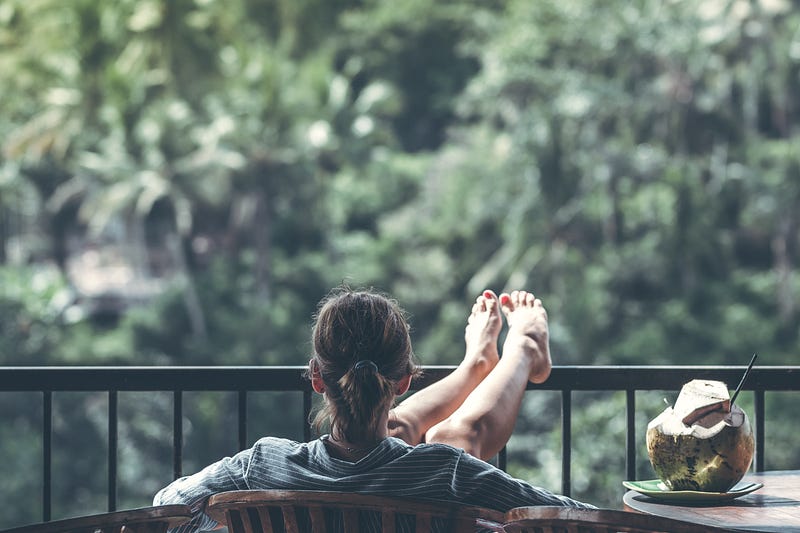
Did you ever think that tensing your body can actually cause relaxation?
Well, long story short — it can!
PMR involves tensing one muscle group at one time, followed by slowly releasing the muscle's tension.
Recent research, published in May 2020, implemented PMR on patients who were isolated due to Covid-19. They practiced PMR for 30 minutes per day for 5 days. Findings showed that anxiety ratings reduced significantly after the intervention.
PMR affects our worries, and as Donald Curtis said:
“Relaxation means releasing all concern and tension and letting the natural order of life flow through one’s being.”
How to do it:
- Start by taking a big deep breath and contract one muscle group, such as your buttocks. Hold that tension for up to 15 seconds.
- Slowly exhale and start to release that tension from your buttocks slowly.
- Whilst releasing the tension, notice your muscle slowly relaxing and picture the tension flowing out of your buttocks.
- Wait 10 seconds and repeat with a different muscle group.
- Work your way around your body until you’ve been through all muscle groups.
The more tension you create, the more you’ll be able to relax.
3. Behavioural Experiments
Quite often, we are anxious about something, but we don’t have any evidence for it. It’s just our mind playing tricks.
For example:
I was always worried about public speaking. I didn't want to sound silly when all eyes were on me and I thought people would perceive me as incompetent. When I took a step back and analysed the situation, I realised there is no evidence whatsoever for me to feel this way. If anything, my presentations were actually pretty good.
I only felt this way because my mind was telling me too. I was overthinking.
Alternatively, there may be evidence for your anxiety. But how can we alter these feelings if we don’t allow ourselves to challenge them?
A great way to challenge your anxiety is through behavioural experiments , commonly used in CBT to address anxiety.
Behavioural experiments involve directly testing your worrying beliefs to help you create more useful beliefs.
A study published in the journal of Cognitive and Behavioural Practice found behavioural experiments results in a substantial decrease in general anxiety symptoms. These effects were also sustained after a six-month follow-up.
How to do it:
- Identify the worrying belief/thought — “I can’t talk to people. They will think I’m a fool.”
- Plan the experiment — Think about what you’re going to do, challenging this belief. For example, “I’m going to give a restaurant a call to make a reservation for two people.”
- Think about what can make the experiment challenging — “I will freeze and won’t know what to say.”
- Think of ways to minimise the challenges — “I can write down some prompts in case I get stuck.”
- Carry out the experiment — It’s now time to pick a restaurant, give them a call, and see what happens.
- Record and reflect — Write down what went well and what didn't. If someone was there with you, ask them for their feedback.
You’re allowing yourself to show that there is no need to have these feelings.
If you’re struggling to conduct the behavioural experiment, ask someone you trust to help out. They can help boost your motivation and confidence.
4. Gratitude

“Gratitude is one of the sweet shortcuts to finding peace of mind and happiness inside. No matter what is going on outside of us, there’s always something we could be grateful for.” — Barry Neil Kaufman
During these difficult times, there is still so much that we can be thankful for.
Right now, I’m thankful for my family and friends being very supportive, the fact I’m still able to work during these difficult times, my health is in good condition, my safety, and loads more.
We often forget to appreciate the things right in front of us and instead focus on the negatives. The focus on the negatives is the very thing that can fuel our anxiety.
Practicing gratitude is a fantastic way to shift your mindset to the positive things in life. When we think about the positives, it’s hard for us to worry, be scared, or feel frightened.
Research has shown that practicing gratitude can predict fewer symptoms of depression and anxiety associated with being less critical and punishing to ourselves.
How to do it:
One of the best ways to practice gratitude is to keep a gratitude journal:
- Think of three things each morning you are thankful for. This could be the people around you, gifts you’ve given or received, your health, the food around you—literally, anything.
- Write down these three things in your journal.
- During the day and just before you sleep, revisit the three things you wrote down to remind yourself.
It’s that simple.
“Even during the most stressful times, you can choose to focus on the things that spark your soul and make your heart dance.” — Sinem Günel
Final Comments
We are often pestered with the same self-help advice time and time again.
Although the same points of exercising, meditation, sleeping, hydrating can all make us feel better and reduce our anxiety, there are loads of other tips that don’t receive as much attention that can have amazing effects.
As we are naturally feeling more anxious due to what’s happening around the world right now, these four unconventional tips can all help reduce our feelings of anxiety:
- Cognitively restructure your anxiety.
- Engage in progressive muscle relaxation.
- Try a behavioural experiment.
- Practice gratitude.