
4 Controversial Life Hacks for Raising a Baby
My son was out of diapers before the 18th month

I am a geriatric mother. Yes, apparently, they call pregnant women over the age of 35, that. I was 40.
I feel lucky for this. In my twenties or early thirties, I wasn’t in the right headspace. I didn’t want the responsibility. Also, as a young mother, I probably would have to face more social pressure in Turkey. It would be harder for me to do my own research and choose what kind of mother I wanted to be. Instead, as a grown-ass woman, I felt stronger and more independent to read, learn, make up my mind, and resist what I didn’t want. And in 2012, there was no shortage of information.
I picked up a few hacks that I found helpful for us. Not everyone will agree with all of these; even I was against some of them to begin with. But they worked wonders for my family.
1st hack: Co-sleeping and breastfeeding combo
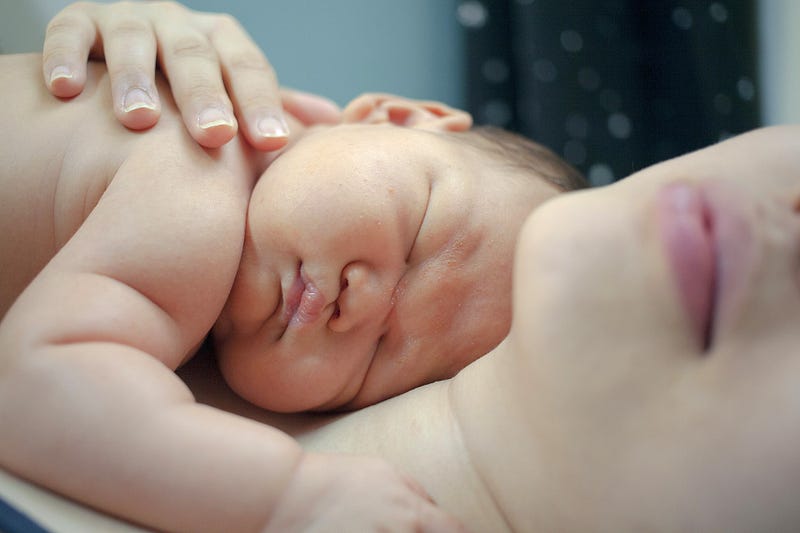
I had heard the horror stories of women falling asleep while breastfeeding and crushing their babies to death. I had never considered it until I saw a heartwarming illustration of a cosleeping and breastfeeding mother and baby and read the accompanying text. I got intrigued and went down the rabbit hole of discussions.
I concluded that it would be safe as long as I was not on drugs or alcohol and we slept on a firm, proper bed. And it had so many advantages that after being aware of them, it would feel crazy not to do it.
How come is it safe?
When you sleep at night, you are not completely unconscious. You are still aware of your boundaries, like the side of the bed. As a grown-up, you don’t fall out the bed when you are in a deep sleep, or you don’t climb on your partner (unless you intend to do just that). Similarly, when you sleep with a baby, you always feel them next to you.
It’s understandable to be afraid of crushing a newborn baby for new parents, though. So the best solution would be to place a cot directly adjacent to the mother’s bed without a rail on the bed’s side. This way baby still has their own bed, and it is easy for the mother to reach the baby.
Our bedroom at the time was tiny. There was a little bit of room on one side of the bed. We placed a large shelf and a baby mattress between the wall and the bed. The shelf was our son’s bed for a few weeks. Once we got used to sleeping with him, we got rid of the shelf, and he slept between my partner and me.
Why is it such a powerful hack?
First of all, when you are next to the baby, you can respond to their cues right away. This way, you can feed them before they get fully awake and begin crying.
When babies start a full-blown cry, especially if they are in a separate room, it takes time for the caregivers to respond to them, and they get stressed out. Stress leads to a rise in their cortisol levels. High cortisol makes it even harder for them to fall back to sleep. All this routine takes time and steals from everyone’s sleep time.
This is a controversial subject. Many people who suggest “sleep training” to infants argue that breastfeeding to sleep is harmful. Here is a La Leche League article about the subject.
I remember hearing the advice not to let babies sleep on the breast and feeling worried. My observation is, babies fall asleep during feedings all the time. Breastmilk has a calming effect on babies, and it is a perfect way for them to fall asleep in their mothers’ arms.
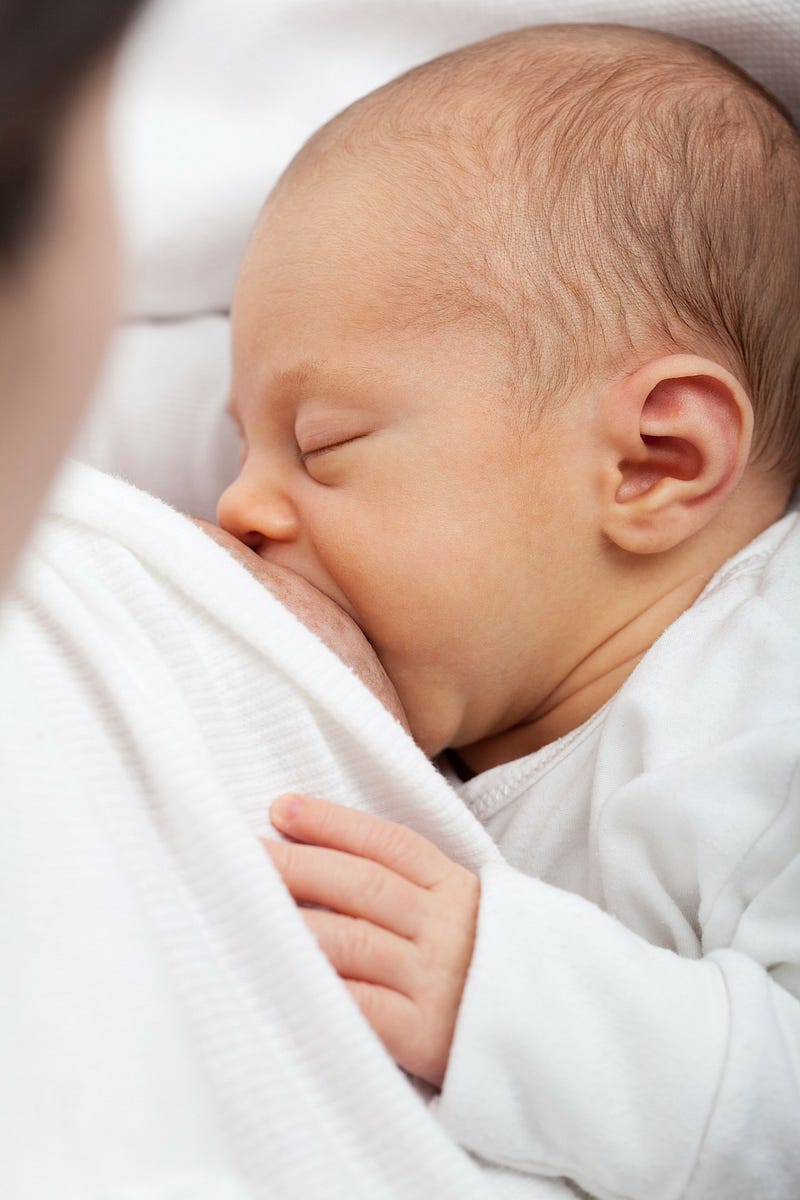
Fighting against the nature of this relationship makes everything harder. I don’t believe human babies were evolved to sleep on their own. They need to be close to their mothers and feel safe. But here I am only trying to say co-sleeping and breastfeeding provide mothers and babies hours of peaceful sleep without having to get up several times a night.
Even if you use formula, sleeping together and responding right away shortens the time of lost sleep.
I remember half waking up in the middle of the night finding my baby dream feeding on my breast, then going back to sleep. Apart from the first few weeks when everything was new, I was mostly well-rested, rarely sleep deprived.
2nd hack: Swaddling and slinging
I was against the concept of swaddling babies. Restraining babies like that seemed like an archaic tradition to me. I thought it was just for the convenience of parents who didn’t want to deal with little flailing arms and legs.

My mother kept suggesting swaddling my son lightly “so that he wouldn’t wake himself up by shaking his arms and legs,” but I rejected it until I learned more about it.
My son had a “clingy” phase. He would start complaining as soon as we put him down. We didn’t want him to cry at all, so we would pick him up as soon as he began whining. Some people called him “colicky.” The nurse said he had a gas problem; maybe we didn’t burp him efficiently.
We already had a wrap sling for going out, so we began putting him in the sling when he needed to be picked up. When we placed my son in the sling and moved a little, he would stop complaining and mostly sleep.
I had initially thought that the function of a sling was to free our hands. We could do other things while carrying the baby at the same time. However, the sling has a much more significant role in calming a baby.

Womb with a view
The first three months of a baby is sometimes called the “fourth trimester.” This means that human babies are born before they are ready. They can’t move efficiently or hold their heads up. But they have to come out at the 40th week because otherwise, their heads become too large to be born without risking their mother’s life.
This means babies are too sensitive, and they still enjoy being in a womb-like tight space where they feel safe.
The sling is the closest thing they can get to a real womb. It covers them snugly, and they can feel their mother’s movements, feel their heartbeat, and smell. That’s the reason they calm down.
Swaddling works similarly. It’s not because we don’t want the babies to move. It’s because babies feel better when they are wrapped tightly, like in the womb.
There is the idea that even adults can benefit from swaddling themselves when they are depressed. How do you feel when you are wrapped under blankets? Weighted blankets are even better. You feel even more restrained, and apparently, this helps you feel better.
3rd hack: Baby Led Weaning
Introducing babies to solid food stresses out many parents. Will the baby eat enough? Will they starve? Will they choke on a piece of food?
So they mash, blend and liquefy food so that the babies eat comfortably as possible. But they take all the fun out of the discovery and adventure of eating.
Babies are evolved so that they develop a curiosity about tasting the world at the same time they start growing teeth around their sixth month. They begin taking everything to their mouths. We tend to think they want to scratch their gums and hand them some plastic toys, or “teethers.” Some parents are concerned about giving the babies real food because they might try to eat it and choke on them.

If they take it to their mouth, they are ready to take a bite
The reality is, when a baby begins taking stuff to their mouth, it means they are ready to taste real food.
At this point, they are still supposed to receive their nutrients from breastmilk or formula. So there is no need to worry if they don’t eat the additional food.
If you are worried that your baby doesn’t eat enough, I recommend My Child Won’t Eat by Carlos Gonzalez.
When my son was six months old, I temporarily abandoned my Turkish recipes and began boiling or steaming our plain vegetables. We made my son sit on a high chair and put his food on his tray. We all had the same dinner. No special baby food! From day one, eating became his most fun activity. He loved trying new vegetables every time. Carrots, broccoli, squash, cucumbers were all so exciting to him.
We didn’t expect him to eat the whole thing. Just one or two pieces of each were enough for him to get an idea. Of course, the rest of the food would go on the floor, but we tended to eat on the balcony, or we placed a sheet on the floor so we could easily clean.
Being fed by a spoon is a dreadful feeling, primarily if you can’t effectively communicate what you do and don’t want and how much. Try to see it from the baby’s perspective. Instead of making it a chore to “stuff puree into baby’s mouth,” try to give the control to the baby. Place the food in front of them and let them decide to grab it and take it to their mouth naturally.
But babies don’t have teeth!
How will they chew their food if it is not mashed? Is it safe?

At six months, babies have one or two teeth come out, but the other teeth are under the gums, waiting for the right moment to come out. So the gums are not all soft like jelly; they actually can crush food quite effectively. Everyone who got their finger destroyed by a 6-month-old would know this.
When we introduce food in its solid form, babies learn how to manage food in their mouths. But when we keep feeding them mashed and liquified food, they delay learning to chew and handle food. When they have full control, babies are less likely to choke on food.
4th hack: Cloth diapers and elimination communication
This might come as a shock, but using cloth diapers cuts your potty training troubles by half. Babies don’t like feeling their pees and poos against their skin, so they learn to manage their needs much faster.
This brings us to Elimination Communication. Here is an excellent article about it.
Babies, like other mammals, are born with a sensitivity of hygiene. They don’t like to lie in dirty diapers or clothes; they instinctively try not to soil themselves or their sleeping place. They also can control their muscles, hold their pee, and cue when they want to pee. When we parents or caregivers pay close attention, we can learn to read those cues. Also, the babies can learn to go when they are signaled.

Many traditional societies communicate with infants this way. Caregivers know when a baby will go, so they hold the baby on top of a potty or bucket and signal them. This way, they help the baby urinate or defecate without soiling themselves or their clothes. These babies don’t wear nappies at all.
However, in modern societies, we either don’t know this fact or doubt it. We ignore babies’ natural cues and wrap their bottoms in disposable nappies.
Disposable nappies are marketed as “always dry and comfortable.” And they are right. The nappies don’t allow the babies to feel any discomfort when they eliminate. Therefore, the babies lose their natural hygiene sensitivity and, eventually, the control of their muscles. They have to re-learn it when, according to us, it is time to potty train.
Our experience with nappies lasted short
My partner had talked about using washable nappies early on, but I had laughed at his face thinking he must have been joking, so he didn’t bring it up again. I remembered dealing with cloth nappies of my twin brothers and hating it. I had thought those days were over.
Then someone handed me The Diaperfree Baby only a few weeks before my son’s birth. It took me some time to wrap my mind around the concept. So the first few months, we used disposable nappies until I felt confident in other areas.
Once I got it, I ordered a dozen colorful washable nappies, and we began using those instead of the disposable ones. My partner used to call my son “the nappied crusader” and make jokes about his nappies.

The modern reusable nappies are quite different than the ones I remembered. They are practical to use with Velcro or fasteners, and easy to wash in the washing machine. They have absorbent inserts and can hold liquid, but they are not always dry and comfortable like the disposable ones. Yet that’s the whole point: they keep the babies aware.

We also gave my son diaper-free time and tried the communication on and off. There were periods we successfully caught everything and times we missed all the cues and regretted ever trying it. And we continued to use disposable nappies at night because I didn’t want to change sheets, even though many people claimed that they found night communication easier than daytime communication because there were no distractions.
Yet, even though we didn’t do it full time, our efforts surprisingly paid off. When my son was 17 months old, he began using the potty exclusively and waking up dry, using the bathroom first thing in the morning. We had retired all the nappies by the time he was 18 months old. He was no longer the nappied crusader!
Eighteen months is the time many parents even begin to think about potty training.
Is it safe?
Many doctors and experts argue that it is harmful to start potty training before 18 months. But elimination communication is not potty training. We don’t try to teach babies to use the potty; instead, we train ourselves to catch the signs. Babies don’t learn anything new other than communicating. They keep their original instincts not to soil themselves, that’s all.
Did you notice I didn’t even mention how much money you save by minimizing the use of disposable nappies and the environmental benefits?
These four hacks in four areas helped me have an easy introduction to parenthood at a later age.
Each of these areas can be a source of stress from time to time. While living with a problem and trying to solve it, the time feels like forever. But once it’s past, it feels like it’s gone in the blink of an eye. So, it’s best to make the most of this special time, trying not to fret too much about minor issues.
Keeping an open mind and being ready to change your mind at short notice is a superpower for a parent.


