
4 Books You’ll LOVE If You’ve Read The Fountainhead, by Ayn Rand
Awful writer, bad person, BRILLIANT ideas — why you should read the 20th century’s most influential book and these 4 after that one
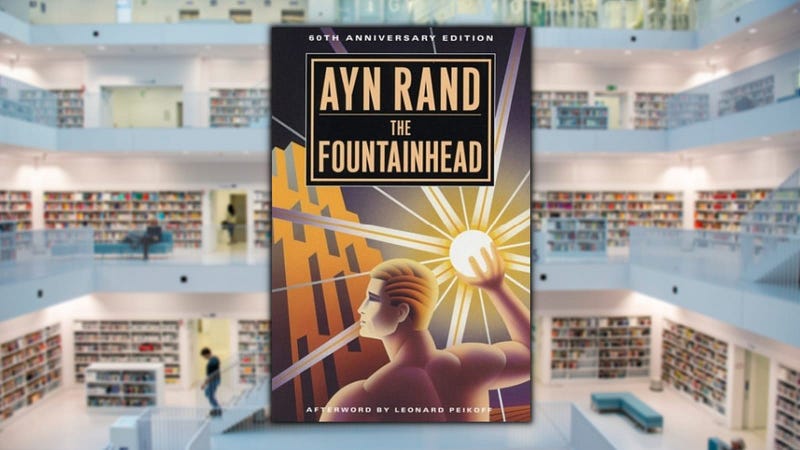
“I like to see a man standing at the foot of a skyscraper. It’s man who made it — the whole incredible mass of stone and steel. It doesn’t dwarf him, it makes him greater than the structure. It reveals his true dimensions to the world. What we love about these buildings, Dominique, is the creative faculty, the heroic in man.”
-Ayn Rand, The Fountainhead
Ayn Rand’s powerful novel about an uncompromising young architect who willingly sacrifices everything for his ultimate vision has inspired more than 9,000,000 people to defy convention, relentlessly pursue what they want, and never, ever, EVER give in.
She was also probably one of the most horrid individuals you’d ever want to meet, and perhaps even worse, the characters in her books are made out of cardboard.
No real person actually talks like that — or stops in the middle of a big party swirling around them to deliver a 15-minute extemporaneous speech about capitalism — but many of her ideas were downright brilliant, and you should definitely read The Fountainhead if you’ve got like…15 hours to kill.
It’s worth it. And more than that, it literally changed how I live my life from the very first moment I read it.
Some of the most accomplished, achievement-oriented, driven individuals in our world today directly credit Ayn Rand with changing their lives as well, and I understand completely! That being said…
Once you’ve read The Fountainhead — or if you’re looking for something equally impactful but completely different — then I would humbly suggest checking out these 4 books!
Actually, wait…the first book I list is Atlas Shrugged, also by Rand, which is even longer than The Fountainhead, but again, life-changing. So I included it here in this list. Also one of my favorite books for sure.
After that, we’ve got books by the legendary music producer Rick Rubin on creativity, a severely underrated book about human desire and how it shapes our lives without our being consciously aware of it, as well as an epic biography that reads like a novel.
In fact, the subject of the biography even once said: “What a novel my life has been!” And he was right! It’s one of the best books I’ve ever read.
I stand by my opinion that The Fountainhead is 100% required reading for people who value freedom, autonomy, and personal excellence — and you can get all the key ideas and takeaways right here for free — but now I want to show these 4 other books the appreciation they deserve too.
So let’s get right into them!
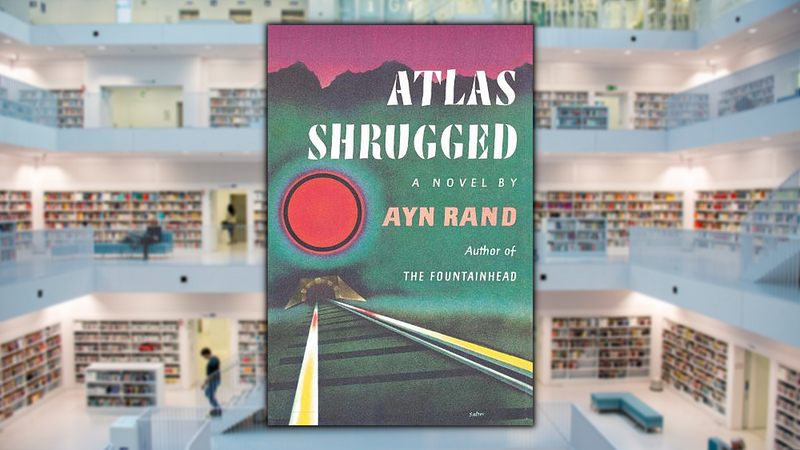
Atlas Shrugged, by Ayn Rand:
Saying that you “love Ayn Rand” is a lot like saying, “I believe in God.”
The listener has to follow up with “What do you mean by that?” When you tell someone you love Ayn Rand, they’re going to need a little bit more information. I find many of her views absolutely abhorrent, yet I can state unequivocally that she changed my life for the better.
See, Atlas Shrugged can be read in many different ways, which is probably one of the reasons why it’s still so popular today.
In some circles, it’s seen as the philosophical justification for the motto “greed is good,” which, I don’t think I have to tell you, is not something that I particularly gravitate towards.
That being said, I do share Rand’s opinion that charting your own path, maintaining an irrepressible vision for how you want your one and only life to look, and sacrificing anything and everything necessary in order to achieve it is vital to a life well-lived.
Most of the people who are really alive in this world have an inspiring vision pulling them forward and infusing every moment of their lives with meaning and depth.
In Atlas Shrugged, we have Dagny Taggart, a railroad executive who takes over her father’s company because the rest of the men in charge are so incompetent and lazy that they would run the railroad into the ground if Dagny let them. Which she won’t, because she’s a proverbial force of nature.
Rand made her into an exceptionally strong female lead who is constantly questioned by the men in the novel, constantly objected to and interfered with, and yet she manages to lift her own burden and drive progress forward.
One of Dagny’s steel suppliers, Hank Reardon (another “good guy” in the novel), ends up developing a new kind of steel that revolutionizes the entire industry, and they get to work bringing this grand vision of connecting the entire country with this massive railroad system to life.
All this goes fine until the mysterious figure of John Galt starts persuading all of Rand’s “good guys” to quit the railroad business and literally disappear.
This sets the stage for a total collapse of industry in America, with the government handing out benefits to people who have never provided any real value (the worst crime imaginable in Rand’s view), and the freeloading employees of companies all over the country letting everything fall into disrepair — all of which leads to rioting, death, and a direct threat to the lives of Dagny and Hank.
Atlas Shrugged gets dark in the middle, and it’s genuinely riveting. Like I said, her writing leaves something to be desired (for example, all her characters are either good or evil, with nothing in between), and the whole book’s purpose is to serve a political point, but I couldn’t stop reading.
It’s about so much more than just railroads and capitalism. It’s about happiness as the goal and purpose of a human life, and how hard work toward a compelling vision makes a person happy.
It’s about taking responsibility; being a hero to yourself and others; creating value where none existed before, and thinking for yourself in a world where everyone wants you to think just like they do.
The book has faults, and I’m not setting up Ayn Rand as some sort of unimpeachable role model. But Atlas Shrugged teaches that creation — making something that didn’t exist before — and not apologizing for your own existence are fundamental components of human flourishing.
Sample Quotes from the Book:
“My philosophy, in essence, is the concept of man as a heroic being, with his own happiness as the moral purpose of his life, with productive achievement as his noblest activity, and reason as his only absolute.”
“The only pride of her workday was not that it had been lived, but that it had been survived. It was wrong, she thought, it was viciously wrong that one should ever be forced to say that about any hour of one’s life.”
“No one’s happiness but my own is in my power to achieve or destroy.”
Read the Full Breakdown: Atlas Shrugged, by Ayn Rand
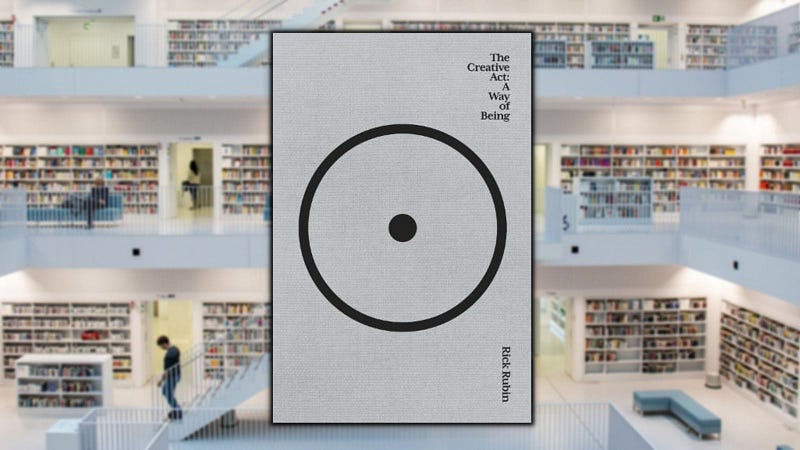
The Creative Act, by Rick Rubin:
Legendary music producer Rick Rubin has probably guided more of your favorite songs into existence than you realize, no matter whether you listen to country, rock, rap, metal, or anything in between.
Ever since co-founding Def Jam Recordings from his college dormitory in the 1980s, he’s produced albums for Slayer, Adele, Jay-Z, Neil Young, Johnnie Cash, and a huge number of other artists that have very little in common other than the fact that they all record songs.
As Rubin says in the book, “However you frame yourself as an artist, the frame is too small,” which idea he definitely exemplifies in his own life and creative work. Even The Creative Act itself expanded beyond its frame, because, as he said about his own writing process:
“I set out to write a book about what to do to make a great work of art. Instead, it revealed itself to be a book on how to be.”
The above statement is a big key to understanding the book, to Rubin’s creative process in general, and to the nature of life and art itself, because he reveals that living and being are inseparable from the work you end up creating.
There is no “work-life balance” for the true artist, and everyone is an artist if only they would learn to see.
Being an artist isn’t so much about what kind of art you make, or some particular volume of output, but rather it’s about your relationship to the world and how much of it you can pick up through your senses. And how much of what you see you’re able to pass on to your audience to help us see it too.
The Creative Act contains 78 philosophical “musings” on the nature of art and the laws of creativity, although most of those “laws” are more or less made to be broken. Really, the only law that Rubin says is “less breakable” than the others is the need for patience.
Tactically, inside you’ll find a wealth of insights about finding — and being receptive to — ideas, settling on sustainable rituals that will help you achieve longevity in your career, advice about setting limits, advice about exceeding limits, how to discover your own unique voice, and even what it means to express oneself creatively.
In the Key Ideas section, we’ll be discussing what it might be like to pay attention as though you were landing a plane, how to expand the universe, how to anger the audience and incite strong reactions to your work, and more.
Rick Rubin will help us understand why we must become finishers, how we can take our work to its extreme conclusion, and why expressing ourselves is the best — and perhaps only — way to discover who we really are.
The fundamental idea behind much of his advice is that we are all artists, and each of us has something meaningful to contribute to the world, whether we’re actively working to make it real or not.
That’s part of the magic that he often brought to the studio, and that’s part of the magic he put into this book.
Sample Quotes from the Book:
“The ability to look deeply is the root of creativity. To see past the ordinary and the mundane and get to what might otherwise be invisible.”
“We can quiet our inside so we can perceive more on the outside, or quiet the outside so we can notice more of what’s happening inside. We can zoom in on something so closely it loses the features that make it what it appears to be, or zoom so far out it seems like something entirely new.
The universe is only as large as our perception of it. When we cultivate our awareness, we are expanding the universe. This expands the scope, not just of the material at our disposal to create from, but of the life we get to live.”
“Rules direct us to average behaviors. If we’re aiming to create works that are exceptional, most rules don’t apply. Average is nothing to aspire to. The goal is not to fit in. If anything, it’s to amplify the differences, what doesn’t fit, the special characteristics unique to how you see the world.”
Read the Full Breakdown: The Creative Act, by Rick Rubin
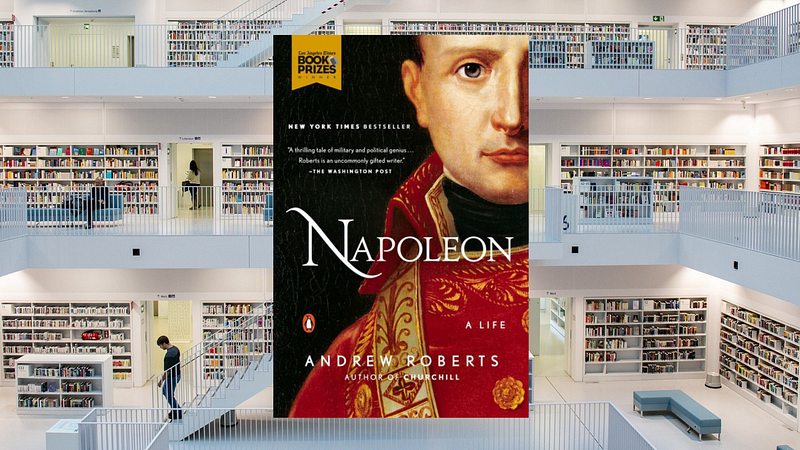
Napoleon: A Life, by Andrew Roberts:
It’s difficult to imagine how someone so active, so energetic, so alive could now be so still. There have been more books written with the word “Napoleon” in the title than there have been days since his death in 1821, but in a very real, visceral sense, this book brought him back to life, at least in my imagination.
It’s more than a biography — it’s a complete reimagining of Napoleon’s adventures, impact, and legacy. In this, the shortest 800-page book I’ve ever read, I found myself repeatedly swept up in the larger-than-life majesty of Napoleon’s life and campaigns, and I’ve pulled out some invaluable lessons that we can all apply to live bigger and better.
Even just the massive scale and scope of Napoleon’s campaigns, his sweeping vision, and yes, his humanity…they all come together via Roberts’ masterful storytelling to make this one of the greatest books I’ve ever read.
It’s actually astonishing how many of the institutions and laws and reforms that exist today come directly from him. Meritocracy, equality before the law, property rights, religious toleration, modern secular education and so much more were ushered in during Napoleon’s reign, and he championed all of them.
For example:
“By 1813 French secondary schools were the best in Europe and some of Napoleon’s original lycées, such as Condorcet, Charlemagne, Louis-le-Grand, and Henri IV, are still among the best schools in France two centuries later.”
Napoleon wasn’t a role model in every sense, but he was a creator, a builder; a deep thinker, and a thoughtful intellectual with a massive influence in the public sphere for literally centuries after his death.
He is, in large part, responsible for the creation of the modern world — “the Enlightenment on horseback” — and we could do a lot worse than extracting the vital lessons from his life, keeping what is useful, discarding what is abhorrent, and making our lives the monument that his was.
Sample Quotes from the Book:
“They seek to destroy the Revolution by attacking my person. I will defend it, for I am the Revolution.”
-Napoleon, after the failure of the royalist assassination plot of 1804
“He convinced his followers they were taking part in an adventure, a pageant, an experiment, and a story whose sheer splendor would draw the attention of posterity for centuries.
He was able to impart to ordinary people the sense that their lives — and, if necessary, their deaths in battle — mattered in the context of great events. They too could make history.
It is untrue that he cared nothing for his men and was careless with their lives. He lost a friend in almost every major battle, and his letters to Josephine and Marie Louise make it clear that these deaths, and those of his soldiers, affected him.
Yet he could not allow that to deflect him from his main purpose of pursuing victory, and he would not have been able to function as a general if it had, any more than Ulysses Grant or George Patton could have done.
Napoleon certainly never lacked confidence in his own capacity as a military leader. On St Helena, when asked why he had not taken Frederick the Great’s sword when he had visited Sans Souci, he replied, ‘Because I had my own.’”
“We are here to guide public opinion, not to discuss it.”
Read the Full Breakdown: Napoleon: A Life, by Andrew Roberts
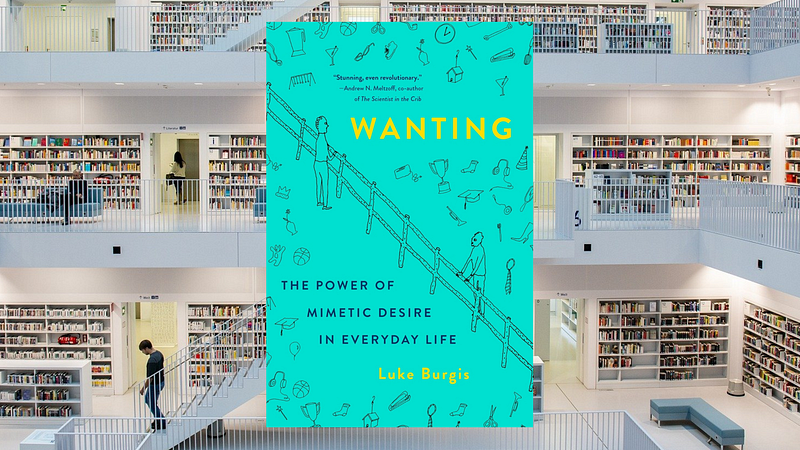
Wanting, by Luke Burgis:
It’s surprising how little that people know about where their desires actually come from. It’s not obvious why we want what we want, and it’s the endlessly fascinating “universe of human desire” that is the subject of this book.
Backed up by the hugely influential French intellectual René Girard, author Luke Burgis shows that humans rarely desire anything independently. Human desire is mimetic — we imitate what other people want.
But in the exact same way that gravity exerts an invisible force on our bodies, the psychological force of mimesis shapes human desire all the time, silently and invisibly, and hardly anyone is aware of it happening at all.
Wanting is about how we arrive at our desires, and about how we can transform our relationship with those desires in order to step into our full humanity, relate to each other more harmoniously, and intelligently select our desires in such a way that we enlarge ourselves, rather than diminish ourselves.
Sample Quotes from the Book:
“Each of us spends every moment of our life, from the moment we’re born to the moment we die, wanting something. We even want in our sleep. Yet few people ever take the time to understand how they come to want things in the first place. Wanting well, like thinking clearly, is not an ability we’re born with. It’s a freedom we have to earn.”
“The imitation of desire has to do with our profound openness to other people’s interior lives — something that sets us apart as humans. Desire, as Girard used the word, does not mean the drive for food or sex or shelter or security. Those things are better called needs — they’re hardwired into our bodies.
Biological needs don’t rely on imitation. If I’m dying of thirst in the desert, I don’t need anyone to show me that water is desirable. But after meeting our basic needs as creatures, we enter into the human universe of desire. And knowing what to want is much harder than knowing what to need.”
“We are generally fascinated with people who have a different relationship to desire, real or perceived. When people don’t seem to care what other people want or don’t want the same things, they seem otherworldly. They appear less affected by mimesis — anti-mimetic, even. And that’s fascinating, because most of us aren’t.”
Read the Full Breakdown: Wanting, by Luke Burgis

Further Reading:
There’s no easy, simple way to wrap this up, but there’s clearly a reason why Ayn Rand remains so popular: she still inspires incredibly strong emotions and whips up heated arguments between otherwise rational, civil people, and her ideas are too powerful to be ignored.
I have a somewhat complicated relationship with Ayn Rand — I loved Atlas Shrugged, The Fountainhead, and Anthem, hated We the Living, I don’t think she’s a good writer or a good person, but many of her ideas are amazing — I’m seriously all over the place.
But I do highly recommend reading The Fountainhead, and I’ve written a complete breakdown of the book with all the Key Ideas, Book Notes, Action Steps, and more to help you decide whether or not you want to read it for yourself.
For a limited time, my breakdown of The Fountainhead is totally free. Soon, however, I’ll be putting it back behind the paywall, and then it’s for members only at The Stairway to Wisdom, my library of 120+ expert book breakdowns.
With that said, I hope you enjoyed this article and the accompanying book recommendations, and enjoy the rest of your day!
All the best,
Matt Karamazov
P.S. Climb The Stairway to Wisdom
More than 500 people receive a complete book breakdown from me each week to help them gain knowledge, wisdom, strength, and power from the greatest books ever written. Join us right here!