
4 Books for Moneyphobes
They can turn you into a money-lover — in a healthy way.

People have all sorts of skewed perceptions when it comes to money. Some are living all about it. They pursue a version of success that focuses on the accumulation of wealth at the expense of their wellbeing, morals, and sanity.
But here, we’re not going to talk about them.
We’re going to talk about the other end of the extreme. It’s the people who developed an avoidant attachment type toward everything related to finance.
These people are the kind who’d think that money is a taboo topic. They’d rather ignore it, sometimes to the point that they don’t like looking at their bank account balance.
Why people become moneyphobes?
Growing up, people who are money-avoidant may have parents who preached that money is the source of evil. You read and watch on media how rich people are selfish, greedy, and how they should get taxed more. As a result, they loathe money and rich people. But it’s a tricky situation for them because deep down you want to be one of those riches. A love-hate kind of situation.
In another case, your problem may be ignorance. You are simply unbothered. Perhaps you grew up in a family that did not discuss finance at all. Or you just think finance is a too complicated subject.
Whichever the cause may be, money avoidant isn’t healthy.
People should understand that knowing all the intricacies regarding your financial situation is a great power. By knowing your spending habit, how to handle debts, and how to save and invest wisely, you become more in control of your life.
There are abundant potentials in taking care of your finances. The good news is, getting started with personal finance is not a dreadful task. These books below prove it.
I Will Teach You to Be Rich by Ramit Sethi
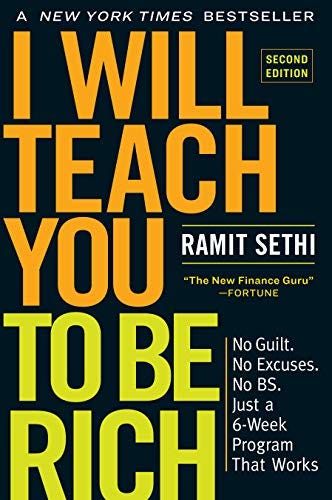
I would recommend this book to be the first thing you read among this list. Like what’s written on its cover, this book provides a no-nonsense approach. It’s practical and straightforward. It gives examples of what credit cards to use and which retirement fund you can set up first.
The books cover basic topics even beginner users can follow easily. It starts with the easiest process, like managing your spending, which gradually advancing to topics such as finding the optimal way to pay your debt.
On top of that, what I most enjoy about this book is its writing. Ramith Sethi writes like he is directly talking to you. He’s your bro, perhaps a bit like “slightly annoying but you like him anyway” kind of bro. Regardless, the writing makes personal finance a topic easier to digest and far from boring.
The Automatic Millionaire by David Bach
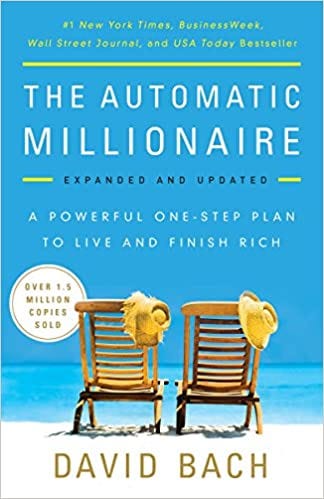
This book emphasizes on automation. Automate your saving, debt payment, and other financial responsibilities is how you get around your psychology toward money.
By automating, you left the hard tasks — from getting the motivation to save to remember the date of the bill — to a machine. Therefore you can achieve your financial goal without getting lost into the technicalities.
Automation here is also a system. It’s how you created a mindset to automatically pay yourself first, before spending the money on other expenses. The book also discusses a concept of automatic debt-free lifestyle. Overall, it’s an interesting read.
The downside of this book is that it’s anti credit cards, which is the opposite of Ramith Sethi’s belief (he believe being a smarter cardholder and max credit cards benefits). The book also boasts homeownership as a great investment, which is debatable these days. The real estate part of this book is also too simplistic. I recommend to just skip on them.
Learn to Earn by Peter lynch
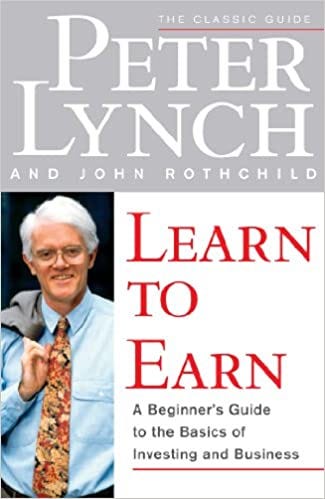
I enjoyed this book a lot and I’m a fan of Peter Lynch's witty writing. I found myself amused often when he slipped subtle humor in between the supposedly boring economic subject. Some even made me giggled, which no non-fiction book had such effect on me, let alone a finance book.
It’s the reason why I thought the book is good for beginners.
This book focuses on investing in the financial market, especially in stocks. But before jumping into the shares and the wall street intricacies, you’ll read about the history of capitalism and some other basics and history of the economy.
This is a book that makes you hooked by the story about how Isacc Newton loses his money trading shares. Or how Wall Street trading was at first held under a tree.
But on top of that, it will open your mind about the opportunities of the free-market and capitalism can offer. The stock market is the most democratic institution in the world. The market doesn’t care about genders, status, education level, the amount of money you have (as long as it meets your brokerage minimum), and other privileges — and the lack thereof. Everyone has the same chances.
If you are a liberal at heart and believe your capitalist country is a brink of collapse and rich people are all evils, you will need to be open-minded about this book.
What I recommend is to look at things from the mindset of abundance, which actually something I spot on every successful people in this world. They believe that one person’s success doesn’t take away others.
Your Money Your Life by Vicki Robin
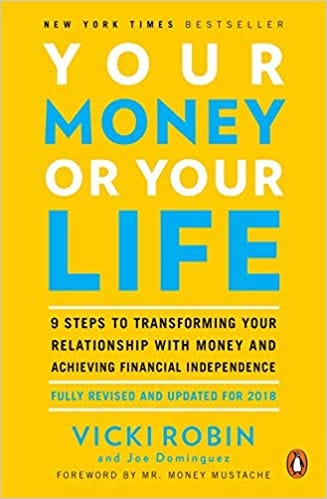
This book is your therapy-in-paper kind of book which goes deeper into your psychology related to wealth. It helps you get a better understanding of what is it that you actually want in life, money-wise.
While other books are more practical, this one is the most conceptual among the list. It’s not immediately actionable, but it’s going to make you reevaluate how you view money and wealth.
Your Money or Your Life is a heavier book, but it’s a worthy read and potentially life-changing.
Personal finance is sadly not a subject taught in school. But luckily, in today’s era of information abundance, we can get learning materials from the internet, or from books like what I just listed above.
Give the books a try, even if it’s hard for you. There is just so much value you can get in those pages.
Follow me on Twitter for future personal finance stories.