
Your Bitmoji Makes Me Sad
Your Step Into the Metaverse Is Adding to Our Loneliness
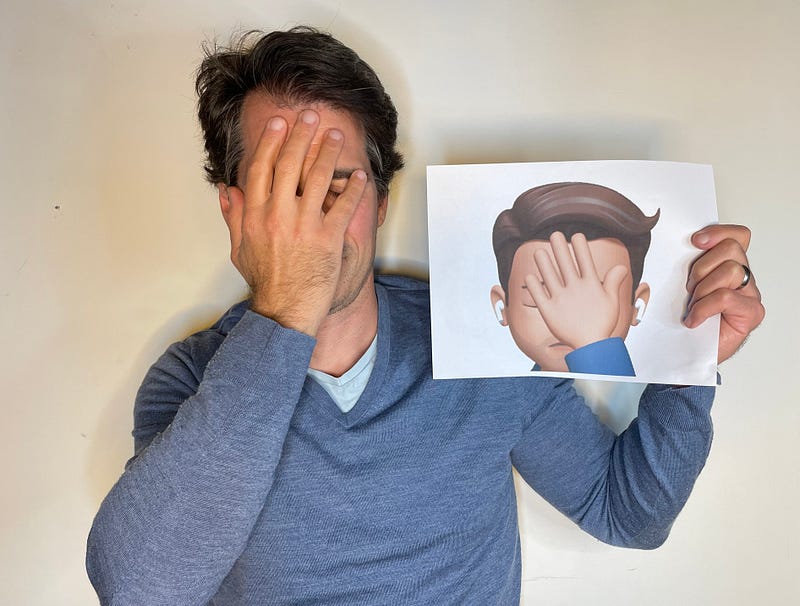
My iPhone wants to update your contact information to include your Memoji. When you send me a Snap, I see your Bitmoji. Both look a little like you, if there were only 200 people in the world, and all of them were thin, under 40 and maniacally excited about everything.
I appreciate that this is the version of yourself you want to project. You, as an adult, spent time on your phone building this digital avatar and are very proud of what you made. Shouldn’t you be able to present yourself as you like? To express the true you hidden underneath your unsmiling, messy-haired, pimply body?
While I have no doubt you think you’re merely having fun, what you are actually doing is hiding. When I called my mom and saw a photo I took of her, that reinforced a memory of our experiences together. Now, when I see her Memoji, I am taking an unawares step into the metaverse, where I am picturing my mom as a video game character. A little less her, a little more computer.
Your real face expresses much of your humanity. Your Memoji does not. Sure, it can flirt with a wink, or blow up its head in a mushroom cloud of excitement, but can a Memoji empathize? Is a cartoon more designed to express the message “Cheer up!” or “That sounds hard”? If you peeked through a confession booth and saw a priest in a Mickey Mouse costume, not only would it enforce every fear you have about the Catholic Church, but you’d also feel unheard.
After spring break this year, the middle school my son goes to made wearing masks optional outdoors. (Yes, I live in California.) Yet most of the kids still wear them.
It’s not that the kids who are choosing to keep them on are particularly worried about Covid. They have what my son has labeled, “lower face fear.” After two years of hiding behind masks, pubescent kids are scared of revealing the bottom half of their faces. Some, he says have “bad lower face game,” and know it. Others worry they might. So much emotion is revealed in your mouth that keeping that to yourself is safer. Masks are mouth sunglasses.
When I volunteered online during lockdown to help kids with their college essays, I was introduced to the fact that most teens turned off their video during Zoom class. Some kids went to school as Bitmojis with Bitmoji kindergarten teachers in their virtual classrooms.
Suicide rates for 10- to 24-year-olds, which held steady from 2000 to 2007, shot up after that — rising 60 percent by 2018. From 2007 to 2019, there was also a 60 percent rise in adolescents’ major depressive episodes. The reason? Bitmojis. Maybe some other stuff, too. But I’m guessing mostly Bitmojis.
Snap, which bought Bitmoji and presents every single user as a cartoon avatar on their contact pages, addressed their users’ mental health last year. They did this by offering a green ribbon to put on your Bitmoji’s t-shirt. It’s as if Diageo decided to address alcoholism by putting red ribbons on bottles of Smirnoff.
In his 1976 book, The Cognitive Development: Its Cultural and Social Foundations, Russian neuropsychologist Alexander Luria went to rural Uzbekistan to learn how cultures without modern technology thought. When he asked a 36-year-old peasant what kind of person he was, the man responded, “What can I say about my own heart? How can I talk about my character? Ask others. They can tell you about me. I myself can’t say anything.”
The homepage of Bitmoji advertises, “Create your Bitmoji and be yourself wherever you go.” But as with so much advertising, it’s really selling the opposite: You’re not yourself. And you’re not going anywhere.
A self-designed self is not a real self. Our humanity is our vulnerability, and our vulnerability comes from allowing our crappy lower faces to be seen. And judged. And occasionally understood. Without that opportunity, we’re smiling idiots bouncing from one fake interaction to another. It’s an exhausting way to fool yourself that you’re not alone.
Joel Stein is the senior distinguished visiting fellow at the Joel Stein Institute. A former columnist for Time, the L.A. Times, and Entertainment Weekly, he is, amazingly, also the author of In Defense of Elitism: Why I’m Better Than You and You’re Better Than Someone Who Didn’t Buy This Book and Man Made: A Stupid Quest for Masculinity. Follow him on Twitter, Facebook, Instagram, Friendster, or Google+.