
OpenAI’s Sora AI Video Generator Is Insane

OpenAI, the company behind the most powerful AI tools like ChatGPT and Dall-E 3, has released their first ever video generator, Sora. I am not exaggerating when I say that my jaw dropped when I first saw the first few videos generated by Sora.
What is Sora?
Sora is an AI model that can generate videos out of simple text prompts. It is capable of generating a minute of high-fidelity video.
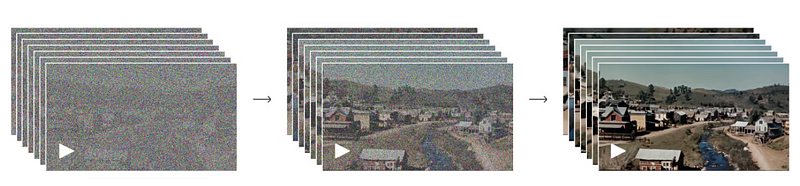
Sora is a diffusion model, an advanced AI technique with a unique way of “learning.” Diffusion models begin with clear data, like images or videos. They then gradually add noise until the original content is obscured.
The core of their power lies in reversing this process—learning to remove noise step-by-step until the original data is restored. This creates an AI system that can generate realistic results.
To guide Sora, it uses GPT (the technology behind ChatGPT) to expand simple text prompts into detailed descriptions tailored for video generation. This ensures even your brief ideas translate into visually rich, accurate results.
Here are few examples
Let’s cut to the chase—here are some prompts and sample videos demonstrating Sora’s remarkable abilities.
Prompt: A movie trailer featuring the adventures of the 30 year old space man wearing a red wool knitted motorcycle helmet, blue sky, salt desert, cinematic style, shot on 35mm film, vivid colors.

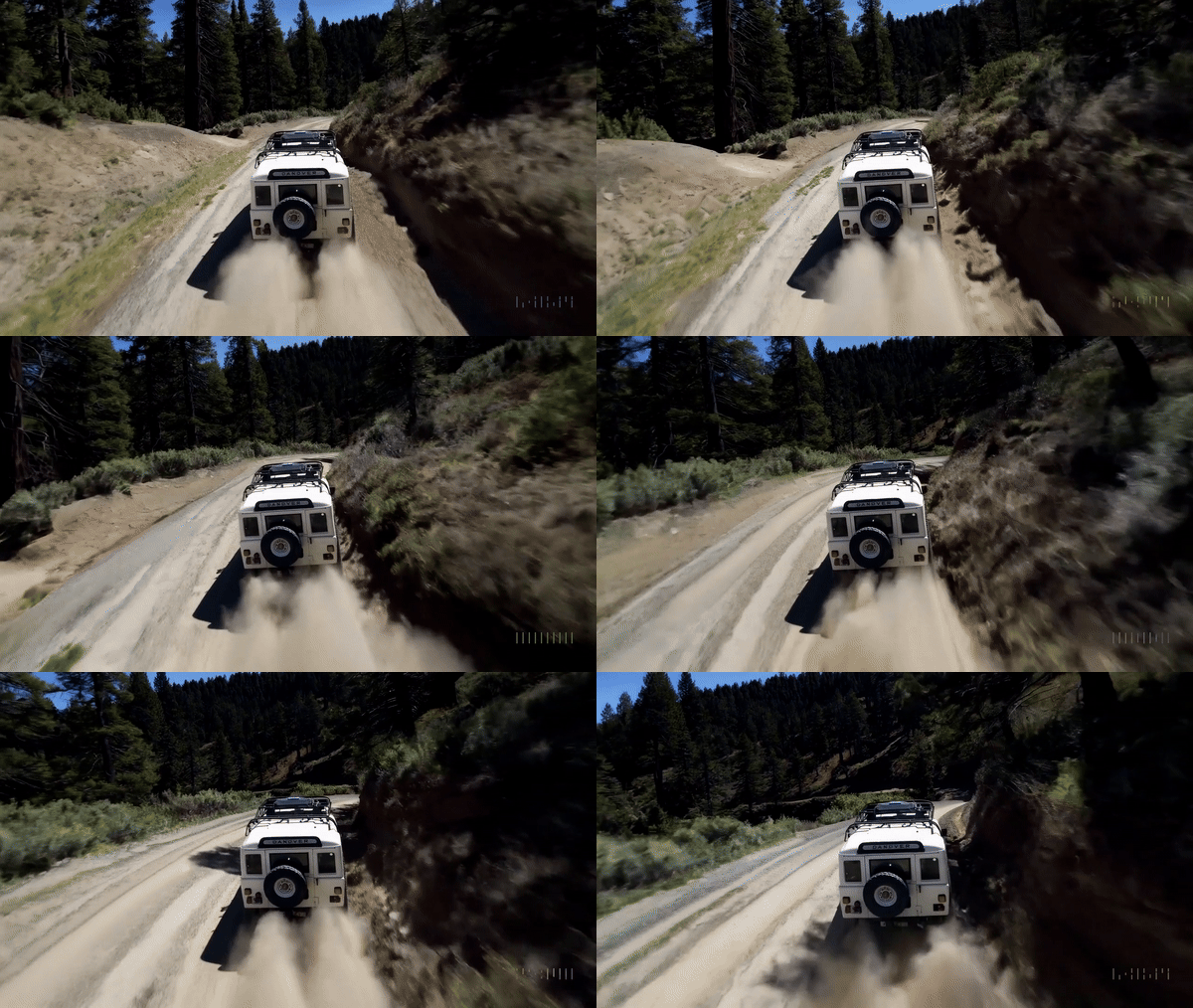
Prompt: The camera follows behind a white vintage SUV with a black roof rack as it speeds up a steep dirt road surrounded by pine trees on a steep mountain slope, dust kicks up from it’s tires, the sunlight shines on the SUV as it speeds along the dirt road, casting a warm glow over the scene. The dirt road curves gently into the distance, with no other cars or vehicles in sight. The trees on either side of the road are redwoods, with patches of greenery scattered throughout. The car is seen from the rear following the curve with ease, making it seem as if it is on a rugged drive through the rugged terrain. The dirt road itself is surrounded by steep hills and mountains, with a clear blue sky above with wispy clouds.
Prompt: Prompt: An extreme close-up of an gray-haired man with a beard in his 60s, he is deep in thought pondering the history of the universe as he sits at a cafe in Paris, his eyes focus on people offscreen as they walk as he sits mostly motionless, he is dressed in a wool coat suit coat with a button-down shirt , he wears a brown beret and glasses and has a very professorial appearance, and the end he offers a subtle closed-mouth smile as if he found the answer to the mystery of life, the lighting is very cinematic with the golden light and the Parisian streets and city in the background, depth of field, cinematic 35mm film.

These examples are already miles better than what the competitors are capable of.
Keep in mind that these aren’t cherry-picked. OpenAI’s CEO, Sam Altman, is actively taking and sharing prompt requests on X.
Sora can animate DALL-E images
Aside from generating videos from text descriptions, Sora is also capable of generating videos with an image as input.
Prompt: A Shiba Inu dog wearing a beret and black turtleneck.

With this capability, we can expect Sora to be integrated into ChatGPT in the future.
Sora can generate images
I noticed that not a lot of people are talking about this feature. Sora is also capable of generating images
It works by arranging patches of Gaussian noise in a spatial grid with a temporal extent of one frame. The model can generate images of variable sizes—up to 2048 x 2048 resolution.
Here are some examples:
Prompt: A snowy mountain village with cozy cabins and a northern lights display, high detail and photorealistic dslr, 50mm f/1.2

The example image looks even better than what Dall-E 3 can produce.
More Sora capabilities
When trained on scale, video models can generate interesting emergent capabilities like the following:
- 3D consistency: Sora can generate videos with dynamic camera motion.
- Long-range coherence and object permanence: Sora can generate multiple shots of the same character in a single sample, maintaining their appearance throughout the video.
- Interacting with the world: Sora can sometimes simulate actions that affect the state of the world in simple ways.
- Simulating digital worlds: Sora is also able to simulate artificial processes; one example is video games.
Another fun experiment you can do with Sora is generate 3D models out of videos. X user metamike demonstrated this with a Santorini video turned into a 3D scene with the Poly.cam tool.
Limitations and ethical considerations
Despite its impressive capabilities, Sora faces challenges in accurately simulating complex physics and understanding detailed cause-and-effect scenarios.
For example, the video below shows the AI generate an implausible motion.
Prompt: Step-printing scene of a person running, cinematic film shot in 35mm.
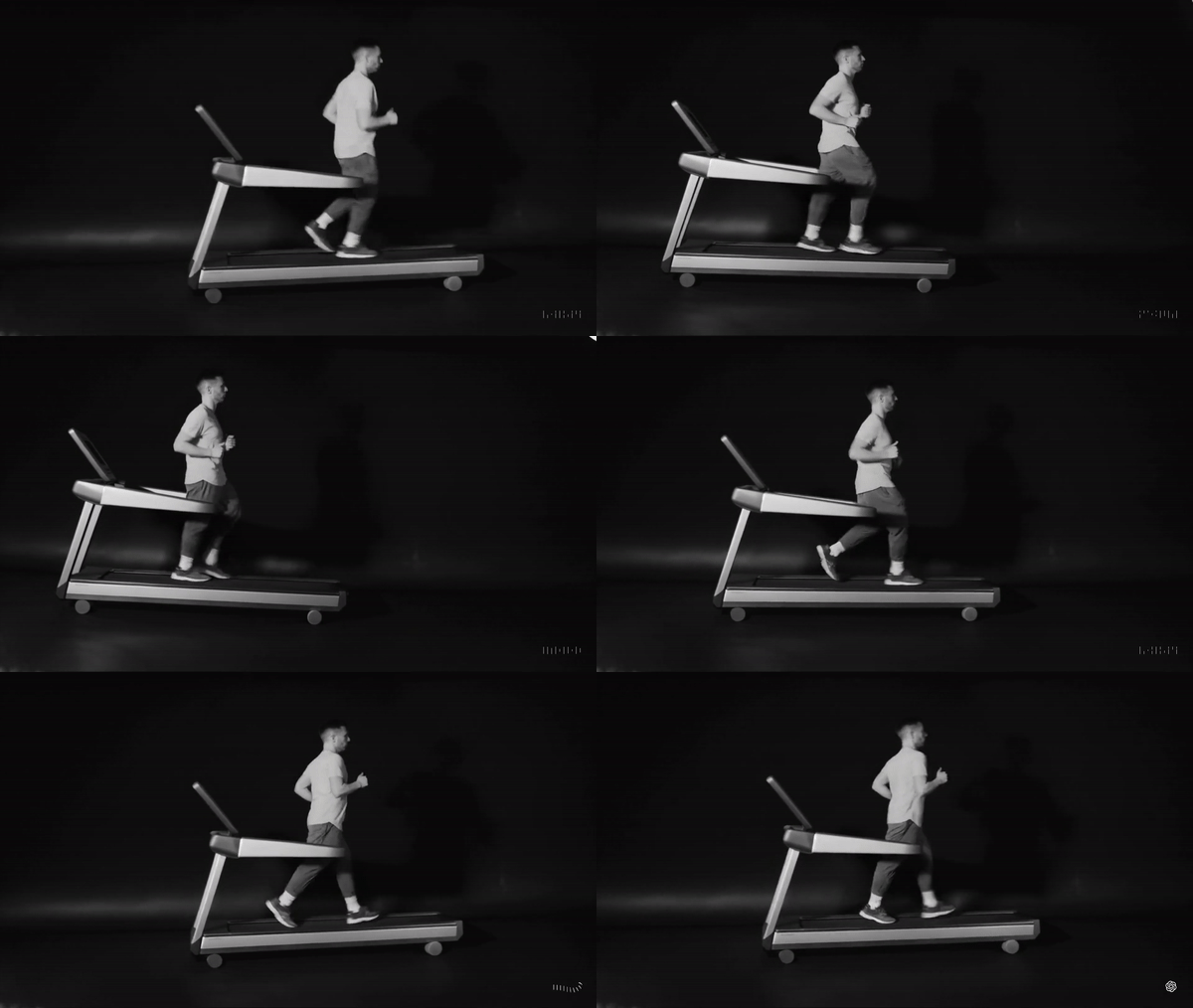
That looks really weird.
Also, like many AI models, Sora reflects the biases and limitations of its massive human-generated training data.
And oh, speaking of training the model, one debate right now in the AI industry is whether AI companies should credit and compensate people whose work is used for training.
Technology is moving at a really fast pace, while regulations lag behind.
Who’s in trouble?
If anyone should be scared of AI, it’s the film studio executives and shareholders. When any person with internet access can create and then share an entire movie by simply typing a prompt into some AI, the film and TV industry gatekeepers are all but guaranteed to fall into complete obsolescence.
While they currently aim to use AI to replace human creativity, it may backfire on them. As the saying goes, they sow the wind but will reap the whirlwind.
Should you be worried too?
Smart people who aren’t afraid of change and seize opportunities won’t ever be replaced.
Final Thoughts
This has been the craziest week in the AI world with the announcement of Google’s Gemini 1.5 and OpenAI’s Sora.
It was just a year ago that the Will Smith spaghetti video went viral, and now we’re seeing close-to-realistic videos.

If progress continues at this breakneck pace, we may soon have access to photorealistic video simulators limited only by our imagination. The applications could be groundbreaking and disruptive across many industries, like film, gaming, content creation, and beyond.

This story is published on Generative AI. Connect with us on LinkedIn and follow Zeniteq to stay in the loop with the latest AI stories. Let’s shape the future of AI together!



