
The Color of Climate
Protecting National Parks Doesn’t Matter If We Continue to Pollute Communities of Color
For some activists, the Great American Outdoors Act isn’t all that great
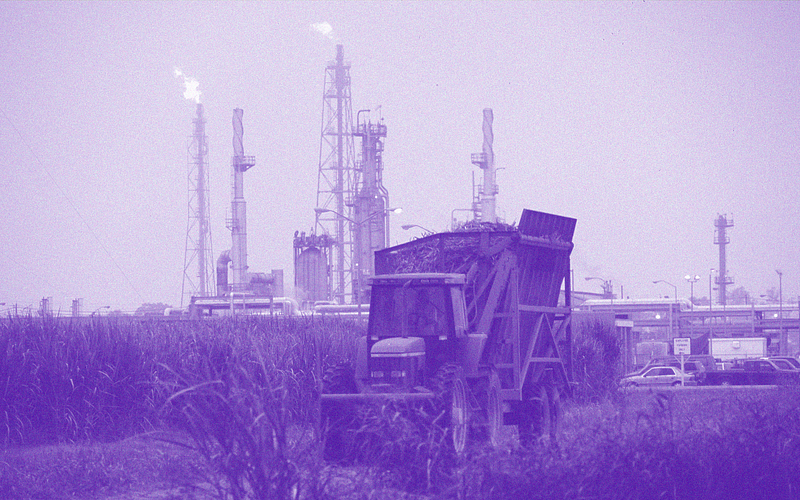
This is The Color of Climate, a weekly column from OneZero exploring how climate change and other environmental issues uniquely impact the future of communities of color.
Last week, Donald Trump signed the Great American Outdoors Act into law. The bill, which was passed by Congress with bipartisan support, will fully and permanently fund the conservation of the country’s land and water and provide $9.5 billion over five years to national parks for repairs and upgrades. It’s a pretty major piece of legislation, as far as conservation is concerned.
Environmental groups, including the Sierra Club and Natural Resources Defense Council, and politicians from both major parties celebrated the bill for being the largest federal investment in public land and conservation in nearly half a century. There is even a provision in the bill that provides investment for expanding green spaces near and in communities of color.
But to some environmental activists, the bill doesn’t represent meaningful change. For decades, conservation policy has preserved the country’s so-called national treasures but not the areas in which vulnerable communities live. The Great American Outdoors Act is no different.
“One good deed does not wipe away the pain and suffering and harm caused by this administration over the last three and a half years.”
“I think the Great American Outdoors Act is a very important and historic piece of legislation. It’s definitely needed and the legislation rises to the level of preserving our national treasures,” Robert Bullard, PhD, distinguished professor of urban planning and environmental policy at Texas Southern University, tells OneZero. Bullard, who is widely considered the father of environmental justice, has been working on these issues for over 30 years.
“However — and it’s a big however — one good deed does not wipe away the pain and suffering and harm caused by this administration over the last three and a half years by rolling back… over 100 environmental regulations.”
Bullard says he and his peers are “concerned” that the Trump administration is investing in national parks while leaving communities of color and poor communities vulnerable to climate change and environmental degradation. Weakening limitations on emissions from coal- and gas-fired power plants, loosening regulations aimed at limiting toxic emissions from major industrial polluters, and allowing companies to apply for noncompliance waivers because of the coronavirus are all examples of rolled-back environmental regulations that harm people of color. Most recently, the Trump administration reversed Obama-era limits on methane emissions. These rollbacks have negatively impacted the health of communities of color and poor communities.
There is a tendency, Bullard says, of historically white-led environmental organizations and the government to preserve the immaculate wilderness while allowing pollution to poison vulnerable communities. “For decades, the general environmental protection paradigm was this: Let’s not pollute pristine green fields, and if we must [build] something that creates pollution… let’s put it in a low-income community or community of color,” Bullard says.
If this bifurcation continues, he warns, it will create two disparate worlds. In one, the air and water are clean, the tree canopy is dense, and the mountains have tops; in the other, the air is smoggy, the water is contaminated, trees are sparse, and mountaintops have been removed. Take one guess which of those worlds will be inhabited by people of color and poor people.
Nongovernment groups are also guilty of perpetuating these inequalities. A little over two weeks before Trump signed the Great American Outdoors Act, the Sierra Club, the nation’s oldest conservation group, had a public reckoning with the racist past of its legendary founder John Muir. Muir, often referred to as “father of the national parks system,” once called Black people the racial slur “sambos,” described indigenous people as dirty, and maintained a close association with a eugenicist. All the while, Muir was advocating for the protection of the environment.
In 1990, environmental justice activists accused mainstream environmental organizations like the Sierra Club, the National Resources Defense Council, and the Audubon Society of doing a “miserable job of reaching out to minorities.” And a 2014 report out of the University of Michigan found that white people filled 89% of the leadership roles at environmental organizations.
“For decades, the general environmental protection paradigm was this: Let’s not pollute pristine green fields, and if we must [build] something that creates pollution…let’s put it in a community of color.”
Despite the continuing inequalities in the American approach to conservation, there is some hope for environmental justice policy on the national level. Last week, Sen. Kamala Harris and Rep. Alexandria Ocasio-Cortez introduced sweeping environmental justice bills to Congress that are aimed at protecting vulnerable communities from environmental discrimination and holding polluters accountable. And Democratic presidential candidate nominee Joe Biden’s selection of Harris as his running mate on Tuesday was praised by climate and environmental justice groups like the Sunrise Movement and the National Black Environmental Justice Network, where Bullard is a co-chair.
They praised her for her history of using the law to hold corporations accountable for polluting California, including several multimillion-dollar settlements with Big Oil companies. She also created an environmental justice unit, which was the first of its kind in the United States, when she was district attorney of San Francisco. The unit is responsible for investigating and prosecuting environmental crime with a specific focus on those that impact San Francisco’s communities of color. Environmental justice activists are hoping that they have a champion for not just the environment, but specifically communities that bear the brunt of environmental degradation and climate change.
Bullard responded with joy when OneZero broke the news to him yesterday about her selection. “I think it’s an excellent pick, it’s an excellent choice in terms of environmental justice and climate justice,” he said. “She’s done some great things.”