
Reengineering Life
A New Kind of Gene Editing Could Fix What CRISPR Can’t
The technique is capable of precisely editing mitochondria
Reengineering Life is a series from OneZero about the astonishing ways genetic technology is changing humanity and the world around us.
Ever since CRISPR was first used to edit human cells in a dish in 2013, scientists have been hopeful about its potential to treat — and hopefully, eliminate — a wide spectrum of genetic diseases.
With the first experiments to use CRISPR in people underway, the gene-editing technique is showing promising signs in a few patients. But it turns out not all DNA is amenable to CRISPR.
Some genetic diseases, like those caused by mutations in the genome of the mitochondria — the body’s energy sources — can’t be corrected with CRISPR. Last week, a team at the Broad Institute of MIT and Harvard and the University of Washington School of Medicine announced that they figured out how to precisely edit mitochondria for the first time.
The discovery could help scientists better understand mitochondrial diseases and test treatments for these disorders, which affect about 1,000 to 4,000 babies born in the United States every year. Philip Yeske, science and alliance officer at the United Mitochondrial Disease Foundation, a patient advocacy organization based in Pittsburgh, says the results are exciting. “At minimum, it opens up a whole field of research,” he tells OneZero.
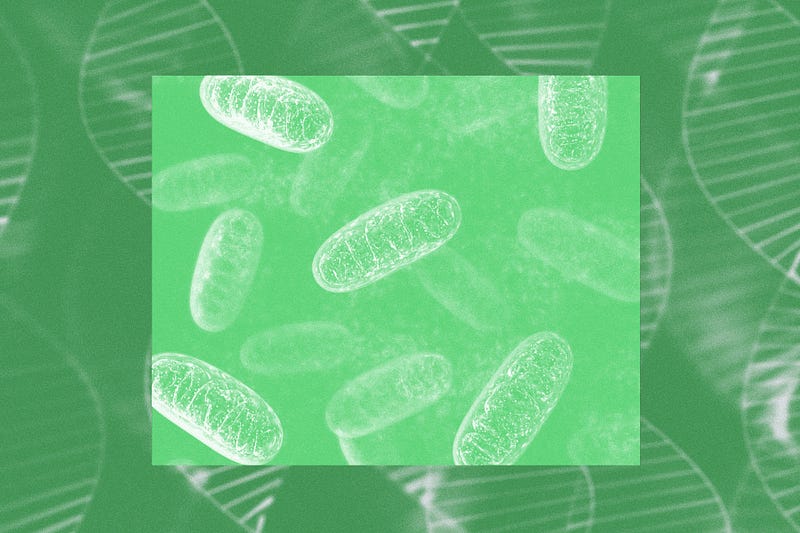
You might remember from high school biology that mitochondria are the powerhouses of the cell. These structures are responsible for converting energy from food and creating most of the energy the body needs to sustain itself. Mitochondria have their own DNA, and when that DNA goes awry, cells break down, and eventually, whole organs begin to malfunction.
Mitochondrial diseases commonly affect infants and children but they can occur at any age. Some of these disorders can kill children within the first few months or years of life. Others have a profound impact on a person’s quality of life, causing neurological problems, loss of coordination, muscle weakness, developmental delays, or visual or hearing problems. Currently, there are no effective treatments for mitochondrial diseases.
But a new gene-editing approach described July 8 in the journal Nature is raising hope that a cure may someday be possible.
“Each of your cells has thousands of copies of mitochondrial DNA,” says co-author David Liu, a faculty member at the Broad Institute of MIT and Harvard and a gene-editing expert. “As you might expect, mutations in mitochondrial DNA are associated with a variety of human genetic diseases.”
Along with his collaborators, Liu, who is also a Harvard professor of chemistry and chemical biology and an investigator at the Howard Hughes Medical Institute, discovered a bacterial toxin that can directly change one DNA letter to a different one inside mitochondrial DNA. Our DNA is made up of the chemical bases A, C, G, and T, the order of which determines our unique genetic code. When one of these letters gets changed, inserted, or deleted, the result is known as a point mutation. A large number of known genetic diseases are caused by these single-letter point mutations.
After rendering the toxin harmless and attaching it to DNA-binding proteins, Liu and his collaborators were able to use it to convert the DNA letter C into a T in human cells. Liu says about 42% of mitochondrial diseases caused by point mutations could be treated by making this single correction.
To test the editing system, the researchers used it to make single-letter edits in five different human mitochondrial genes. One of the genes they modified is called MT-ND4, which plays a role in the cell’s energy production processes. When they changed a single C to T, mimicking a mutation, the mitochondria began to break down. Across their experiments, they found that the new method edited about 20% to 40% of the mitochondria that they aimed to change.
“20% to 40% might not sound particularly impressive, but many genetic diseases can be treated by levels of correction that are in that ballpark,” Liu says. “You rarely need to correct 100% of genes to have a benefit to a prospective patient.”
In an accompanying commentary in Nature, Magomet Aushev and Mary Herbert, scientists at the Wellcome Centre for Mitochondrial Research in the U.K., say the approach “might cause a reduction in — rather than complete elimination of” mutations in mitochondrial DNA. But given that the severity of disease symptoms increases as the number of mutated mitochondria increases, they say the ability to correct even some of these mutations holds promise.
Yeske says if the technique can be applied to animals, it will be “immediately transformative.” Scientists haven’t had a good way to directly edit mitochondria in animals, making it difficult to study mitochondrial disorders. They desperately need animal models that mimic aspects of these diseases because treatments for people first need to be tested in animals so researchers can make sure they’re safe and effective.
Liu says he and his collaborators are hoping to use the new editing system in lab animals. “When that is published, we’ll really know the potential of this technology,” Yeske says. “We’re a long way from the mass distribution of therapies to solve all these various genetic diseases, as much as we’d love to have them.”


