
America’s Private, White, Elite Schools Need Reform. Now.
Their diversity statements are long on words but short on action
All across the United States and at least three other continents, protestors insist: Black lives do in fact matter. The United States seems to be experiencing a seismic shift in what counts — to some White people at least — as an acceptable protest. A chorus of usual suspects has begun to lend a voice to matters that, just weeks ago, enjoyed their decades-long silence. As of now, the list includes Microsoft, Amazon, Airbnb, Nike, and, among others, the NFL. Now, in a come-to-Jesus moment, these organizations claim to be in solidarity with the Black community.
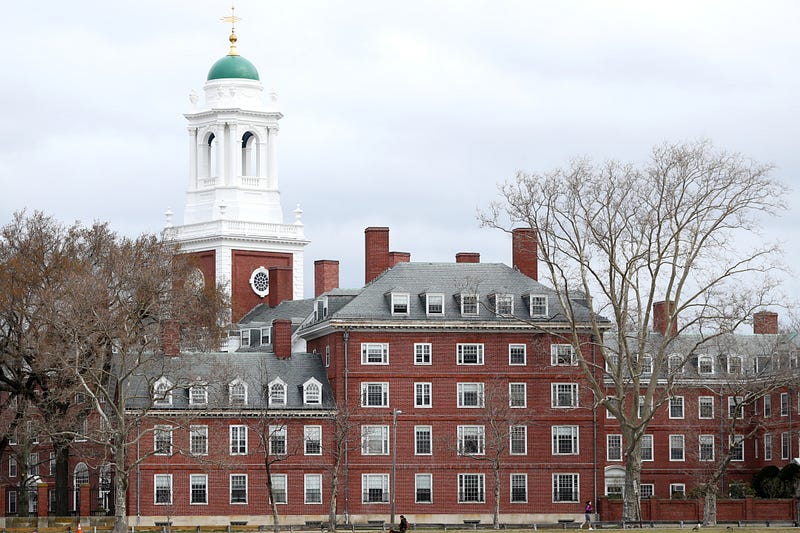
Of those, the latest organizations vying for the title of Grand Ambassador to the Black Lives Matter Movement are a slew of educational institutions that have issued diversity statements calling for more nuanced and extended conversations about race and identity. Harvard University, Emory University, and Boston College are among those who issued statements, as well as Princeton University and Dartmouth College, schools I attended.
While it’s nice to hear from these predominantly White institutions, much of what they are saying either falls flat or is mystifying in that the statements tiptoe around the issue of racism. For example, my former employer issued a diversity statement that reads: “As a school community that includes many races and ethnicities, we seek to see, hear, and value everyone equally. Our work to create an inclusive learning experience compels us to understand and acknowledge all of the identities that students, faculty, staff, and families bring to school each day, and how those identities impact learning.”
I read this statement with surprise since, at no point during my time serving this predominantly White institution did I experience anything resembling “equity” or “inclusion.” This was the principal reason I packed up my PhD — one of few in the entire school — and my many years of teaching experience and bounced.
The latest organizations vying for the title of Grand Ambassador to the Black Lives Matter Movement are a slew of educational institutions who have issued diversity statements.
Yet, despite these calls for reform inside and outside of school communities, the healthy dose of skepticism that Black people carry in our pockets — as a mere matter of survival — looms large. We are unwilling to calculate our racial victories just yet. We know that, in capitalist America, the “bottom line” matters more than anything. And, as we learned in the post-civil rights period, “polite” discrimination and so-called “de facto” racism yield greater dividends than that which is blatant and overt. For the moment, it pays to be on the right side of history.
We also know that once White lives and/or livelihoods become directly impacted — and there’s a chance that their children will disinherit generational privilege bequeathed to them from supremacists of old — the continuation of protest among White liberals is likely doomed to meet the dustbin of history.
“The white liberals are more dangerous than the conservatives,” Malcolm X once observed, while also remaining critical of the infiltration of White liberal voices into mass movements created by African Americans. This included the 1963 March on Washington, which he famously labeled “The Farce on Washington,” in part because of the support it enjoyed among the Kennedy administration and other White liberals. “[T]hey lure the Negro, and as the Negro runs from the growling wolf, he flees into the open jaws of the ‘smiling’ fox,” Malcolm continued. “One is the wolf, the other is a fox. No matter what, they’ll both eat you.”
So, now our inboxes become cluttered with diversity, equity, and inclusion statements from quasi-liberal institutions who echo the hollow sentiments of the various corporations engaging in a bit of “damage control” for their brands. It is quite convenient for institutions to jump on the current #BLM bandwagon, of course. Often regarded as progressive bodies and training grounds for the indoctrination of neoliberal values, rarely are these institutions implicated in matters that pertain to policing (unless one counts policing Black hair and Black comportment). So far removed are many of these predominantly White institutions from the scene of the crime of police murder that it becomes easy for them to take such a stand.
Yet, institutional racism has just as much of a nefarious impact on Black lives as any kind, and, if the administrators and leaders of these schools want us to take seriously their anti-racist commitments, then they need to acknowledge the undue harm that these institutions continue to inflict on their scarcely diverse communities. Like many colleges and universities, they must acknowledge the racist-filled legacies that date back to the period of American slavery when, not only did they exclude African Americans from their lily-white academies, many relied heavily upon slave labor for financial stability.
As we learned in the post-Civil Rights period, “polite” discrimination and so-called “de facto” racism yield greater dividends than that which is blatant and overt. For the moment, it pays to be on the right side of history.
Reflecting on their longstanding commitments to segregated schooling, these bastions of White supremacy — which also include elite, private secondary schools—must consider how they have worked in tandem with our federal government to circumscribe Black opportunity through legal mechanisms and political maneuvering while advancing that of the doubly privileged and enfranchised.
Not only that, but these institutions will also have to come to grips with how their diversity initiatives have failed Black and Brown people. Many of these schools have been of the mind that, in order to satisfy their commitments to diversity, all one need do is sprinkle in a bit of Black or Brown and stir. Much of what they are interested in is the appearance of diversity, however. They recruit Black educators and other teachers of color merely as a matter of PR, but they don’t ever really expect that their institutions will be transformed by these additions. Rather, they fully expect their recruits to morph into a more acceptable, albeit hued version of the majority.
Meanwhile, believing that all of us so-called “minorities” think alike, speak alike, and, in all too many cases, look alike, they rush to reward Black people who have mastered racist double-speak and other methods of assimilation. Often, these are the “tokens” or the “shiny Negros” who rise to positions of prominence and authority as ploys for yet some new, improved, and often more costly diversity initiative. Yet, while patting a few good men (and women) on the back for much of nothing, these institutions stifle voices of dissent that do not align with the more palatable messages they hope to serve to their predominantly White and quasi-liberal constituencies.
Invariably, these expectations create hostile work environments for anyone who rejects assimilation and a full embrace of the institution’s code of ethics (or “un-ethics,” in my opinion). Working under these conditions, Black people muster the courage necessary to brave jobs that, for some, feel like crossing a virtual picket line each and every day. Not only does our physical health begin to suffer, but our mental and emotional health also deteriorates. If a knee to the neck kills relatively slowly — compared to most police shootings that involve speedy bullets — then educational institutions are where Black people go to die a slow death, the tragic consequence of our labor, our insights, and our spirits being devalued.
No. We don’t want any shallow words of consolation, suggesting to us how institutions stand with us in this critical moment. We don’t want our White colleagues to express sympathy, as they contemplate a return to the usual business of apathy or, worse, sabotage via the use of their White privilege to crush dissent and climb ladders of mediocrity that land them in positions that often require double or triple the amount of sacrifice and labor on the part of most Black people.
What we want is for our educational institutions to acknowledge the ways that they have harmed Black people. And to understand that their lackluster diversity initiatives have failed to address the realities of structural racism day in and day out. And, if they fail to act now to rearrange their institutional social order, then they are just as complicit in Black death as the Derek Chauvins or the Greg and Travis McMichaels of the world, who murder Black people in the light of day. Or, as in the case of Breonna Taylor, the death squad who comes for Black people under the cover of darkness, and in the case of some universities, is disguised as so-called diversity.