
Ode to Lily, A Black Cat Who Went to Heaven
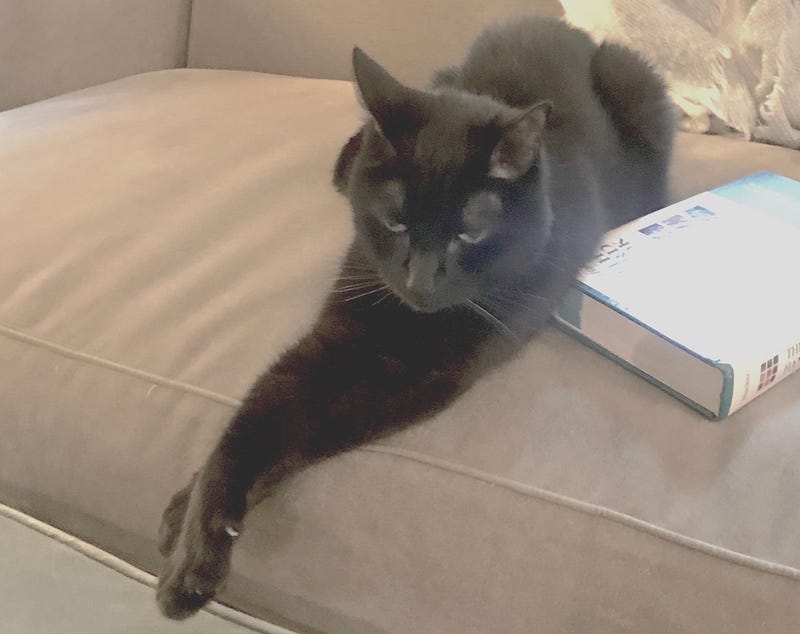
It was the first morning in sixteen years without Lily hurrying my slog to the bathroom just after waking up. She wasn’t there to pace by the door, waiting for me to finish, nor did she escort me down the hall to make sure I stayed on a direct path to the kitchen and her breakfast. Even Ricky, our other cat, seemed baffled about her whereabouts, looking over his shoulder, expecting her to stride into the kitchen at any moment. He wouldn’t know that yesterday, while holding a stethoscope to her heart, the vet let me know that Lily was now in cat heaven.
It was the book, “The Cat Who Went to Heaven,” by Elizabeth Coatsworth that transformed my kids into cat lovers. They began drawing cat comic strips, chronicling their adventures as ninjas or superheroes, with the not so subliminal message to mom and dad that they wanted a cat.
My wife and I relented, getting a cat once we had gotten through the challenges of getting them started in grammar school. We also considered their need for a distraction after they lost their maternal grandmother. But it was how much they loved Good Fortune, the cat from Coatworth’s book, that sealed the deal. The book made an impression on them, especially my son who sobbed over Good Fortune’s fate.
I had to warm up to the idea of cats living with us. Previously, cats and I had not fared well. When I was younger, I had a friend who owned two unfriendly fat cats, protective of their couch. They were about four times Lily’s size, who even at her meanest was too small to instill too much fear. I was so worried about the overweight cats scratching me bloody, that I would use my friend as a shield when we walked past them.
Then there was the tragedy on Cape Cod. I was at my former girlfriend’s family home visiting for the weekend. Rather than driving home late Sunday night, I chose to go straight to work Monday morning. It was my first job after college, so I got up very early to make sure I made it to the office on time. I had a two-hour drive ahead of me.
The temperature had dropped overnight, cold enough that my aging VW Beetle needed to warm up before I could put it in drive. I sat in the freezing car, waiting for heat to pour in from the vents, a sign the car’s engine was ready to roll. I put the car in reverse, looked behind me, and started to roll back. Immediately I felt a big bump under my right rear wheel. I rolled forward, eyeing my rearview mirror to see what was on the ground. At first, I wasn’t sure what it was in the dim morning light. I jumped out to check. It was a flattened fur ball. It was their cat, crushed.
I bounced around the driveway cursing my bad fortune, yelling at the cat for taking a nap in my wheel well. What do you do with a dead cat at dawn? I panicked and took off. I had to get to work on time, rationalizing that my job was more important than the dead cat. Once on the road, I convinced myself that my girlfriend’s stepfather would be up shortly, before anyone else. He was familiar with the unforgiving animal world. He would give the cat a proper burial. More importantly, I knew he would be gentle with the news to my girlfriend, her three sisters, and mom. Nothing like ruining the first pot of coffee for five women in one shot.
Stepdad Dave did take care of the cat, but I never lived down my reputation as the killer of cats with my girlfriend’s family.
Putting aside my troubled history, we welcomed Lily home with an outpouring of love. Lily was a rescue cat. We knew little about her past. She was small and skittish. She resembled a Bombay cat, solid black, nose to tail, with green eyes. Once she matured, she became extremely protective of her territory. Her post was near the front door, perched on the back of the love seat. She swiped at anyone entering who didn’t meet her approval. When my son and his best friend played ro-sham-bo, the loser had to pet Lily. In one of her most aggressive moves, she got her claw stuck in just above the eyelid of one of my daughter’s friends. That was too close. I started clipping her claws.
As our cats got older, I became their principal caretaker, eventually inheriting all chores, the feedings, the litter, the trips to PetCo for supplies, and the visits to the vet. My wife is mildly allergic to cats, so, after the kids moved out to college, I was their only human touch. Whichever cat got to my lap first, would get the love. That I fed them every morning made me their best friend. They both appreciated that I never posted a single picture of them on social media.
Lily mellowed out with age. She even learned to meow late in life. We had assumed she was mute, then one day, she let out a partial meow that she would eventually perfect — maybe that’s why no one says, ‘you can’t teach an old cat new tricks.’ My theory is she learned how to vocalize from Ricky, a loud yapper when he is hungry.
Lily was indifferent to our world most of the time. She didn’t exist for us, living in her own umwelt, a cool word for the world an animal perceives. She could be withdrawn, unpredictable, and lazy. She liked to knead on my belly, reminding me that I was getting soft and should work out more. She liked routines. I will always remember her escort to the kitchen in the mornings, looking up and then at my bare feet, making sure they were on the right path. Her bowl was on the left and always filled first.
“The Cat Who Went to Heaven” takes place in Japan, and features The Buddha. When Lily got sick, I was reading a book based on Buddhism. I was on “Step 4: Finding Joy in Difficult Times.” The book offered just the right perspective for talking with my adult children about their Lily. They sat on the kitchen floor, petting her, as Lily struggled to stay upright. They would comfort her to the end, escorting her path to heaven.
(Monday, August 31, 2020.)
For a listing of my writings on Medium, see medium.com/matiz