
The (Black) History of Lady Liberty
Yes, the iconic Statue of Liberty was built to recognize the end of slavery
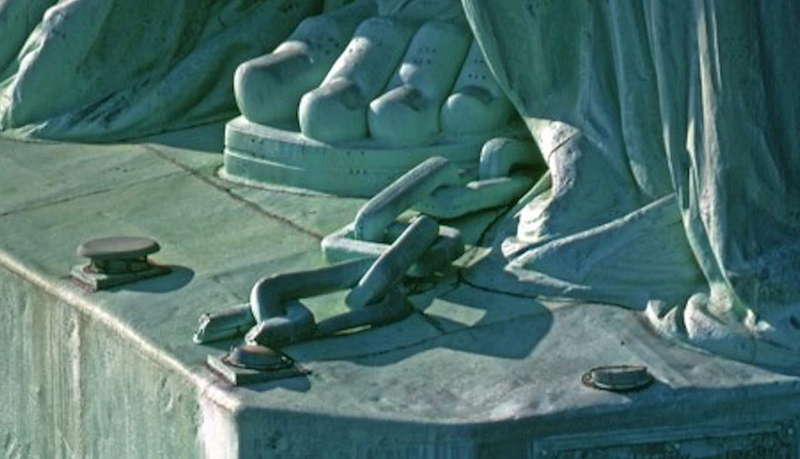
In early 1998, the National Park Service began to seriously entertain the idea of researching the true history of the Statue of Liberty. This came after numerous inquiries about the raison d’être of the statue and the cultural appropriation of the statue’s meaning by white people who chose to ignore the original point. To be clear, the statue was built to commemorate the end of slavery and the end of the Civil War. Other interpretations entered the conversation much later in history.
Let’s revisit a more robust view of what happened.
Per the Washington Post in 2019: “One of the first meanings [of the statue] had to do with abolition, but it’s a meaning that didn’t stick,” Edward Berenson, a history professor at New York University and author of the book The Statue of Liberty: A Transatlantic Story, said in an interview with the Washington Post.
Per the park service: “The conventional interpretation of the statue as a monument to American immigrants is a 20th-century phenomenon. In its early years (1871–1886), that view was only rarely and vaguely expressed, while references to the Civil War and abolition of slavery occur repeatedly from its first introduction to the United States in 1871 up to and including the dedication celebrations in 1886.”
Here’s more background: Édouard de Laboulaye, of France, first proposed the idea of this monument in 1865. He was an expert on the U.S. Constitution and was sitting on a reparations committee overseeing payments to freed, formerly enslaved people. At a meeting of abolitionists at Laboulaye’s home, per Berenson, via the Washington Post: “They talked about the idea of creating some kind of commemorative gift that would recognize the importance of the liberation of the slaves.”
Ten years later, the sculptor Frédéric-Auguste Bartholdi designed it. The initial iteration had the Lady holding broken chains in one hand. A final iteration has the broken chains at her feet; a little hard to see now via a boat but easy to view via helicopter.
Also, per the National Park Service’s extensive report on the matter, Laboulaye was an abolitionist who “believed that the end of slavery marked the realization of the American democratic ideal embodied in the Declaration of Independence. His use of references to the French role in the American Revolution to generate support for his efforts on behalf of American slaves and freedmen are critical to understanding his conception of the Statue of Liberty.”
History buffs might be interested to note that Laboulaye was also an honorary member of the Philadelphia branch of the Union League Club, founded in 1862. This club was dedicated to the “new Republican Party” and abolition.
Meanwhile, the history of the statue on other websites affiliated with the statue neglect to use the word slavery at all. It’s clear why some people today remain confused about the whole point of it all.
When the statue was unveiled in 1886, local newspapers — unsurprisingly — failed to mention the connection to the end of slavery. This type of erasure of American history is common. That said, when you know better, you can do better, and uncovering and teaching the truth of American history is a key part of anti-Black racism efforts.
At the same time, Black newspapers wrote editorials encouraging Black Americans to donate to the pedestal fund. In later years, those same newspapers — like the Cleveland Gazette — derided Lady Liberty because it was clear that Reconstruction introduced new terrors and hardships for Black people. Liberty was a joke.
But in light of George Floyd’s death and his utterance of the phrase “I can’t breathe,” it is worth noting again the words that grace the Lady’s pedestal. Though these words weren’t added until 1903, they are poignant still.
It reads: “Give me your tired, your poor, your huddled masses yearning to breathe free…”


