
It Probably Came From Bats
Tracing the evolutionary lineage of the coronavirus
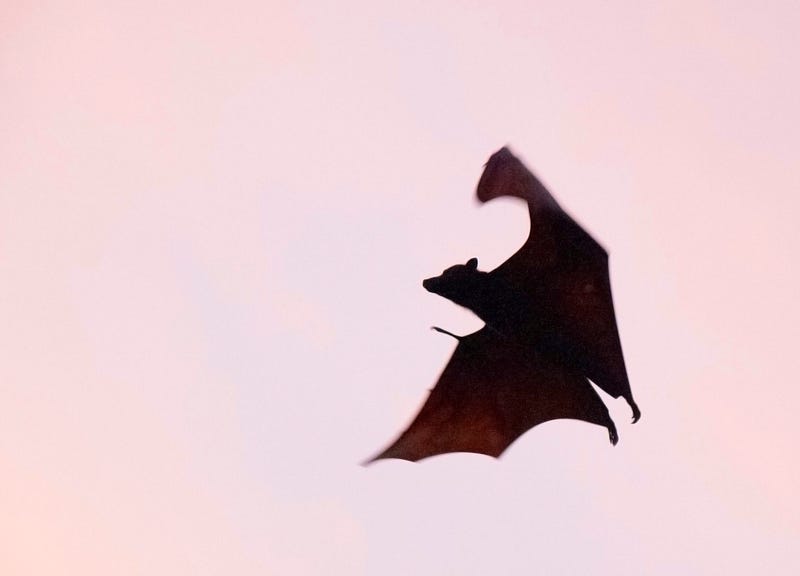
One of the most enduring mysteries of the coronavirus is where it originated. It was first traced to a wet market in Wuhan — where vendors sell produce, meat, seafood, and occasionally live animals — which raised the likely possibility that it came from an animal. But which one? Much of the research pointed to bats (which are common reservoirs for viruses), but other work implicated pangolins, a cute species of anteaters that’s highly prized for its scales. Research published in Nature in March made very clear that it was not designed in a lab, despite the conspiracies entertained by the White House.
Research published in Nature Microbiology on Monday shed more light on the true animal origin of the coronavirus. The researchers, led by Maciej Boni, PhD, of the Center for Infectious Disease Dynamics at Pennsylvania State University, reconstructed the evolution of SARS-CoV-2 by looking closely at its genome as well as that of closely related viruses. They wanted to know where on the virus evolutionary tree SARS-CoV-2 branched off. Whatever virus it stemmed from would tell them what animal it originated in.
The succinct summary of the paper by MIT Technology Review reporter Neel Patel on Twitter is hard to top: “It’s bats, you guys. It came from bats.”
It wasn’t easy to trace the origins of SARS-CoV-2 because coronaviruses tend to trade genetic material with one another. The patchworked genome that results from this process, known as recombination, is hard to place on an evolutionary tree because its ancestry isn’t linear. To work around this, the researchers had to identify parts of SARS-CoV-2’s genome that definitely did not exchange genetic material in this way. These parts would be easier to compare to known related viruses, like the bat virus RaTG13 and the pangolin virus known as Pangolin-2019.
Their analyses revealed that SARS-CoV shares a recent ancestral lineage with the bat virus RaTG13. This means they came from the same branch of the evolutionary tree, but SARS-CoV-2 eventually peeled further away through other evolutionary events that occurred 40 to 70 years ago.
Further evidence for a bat origin comes from their analysis of SARS-CoV-2’s much-discussed spike protein, which has garnered a lot of attention because of its crucial role in infection. One part of this spike protein makes it especially good at infecting human cells. This part, known as the receptor-binding domain (RBD), latches onto a receptor on human cells called ACE2, which allows the virus to enter.
They found evidence that the genes that make up the spike protein and its RBD came from the ancestral lineage that gave rise to SARS-CoV-2, RaTG13, and Pangolin-2019. However, while these viruses all share a common ancestor, SARS-CoV-2 shares a much more recent common ancestor with the bat viruses, so it’s unlikely that pangolins were an intermediate host.
Notably, this research came out soon after a rare public statement from Shi Zhengli, PhD, a virologist nicknamed the “bat woman” for her work at the Wuhan Institute of Virology. The institution has been harshly criticized and scrutinized because of its research on bat viruses and the conspiracy, fueled by President Donald Trump, that its researchers might have released or even created the coronavirus.
“U.S. President Trump’s claim that SARS-CoV-2 was leaked from our institute totally contradicts the facts,” she told Science last week. “It jeopardizes and affects our academic work and personal life. He owes us an apology.” In April, the U.S. National Institutes of Health canceled a grant that funded bat research at the institution via the EcoHealth Alliance at the request of the White House.
The research by Boni and colleagues shows exactly why research on bat viruses, like Zhengli’s, is so critical. It also highlights the unwise decision of the Trump administration to pull back from bat research at the time that it’s needed most. Without it, how could scientists draw connections between the viruses that affect bats and humans? Let’s not forget that SARS and MERS were caused by bat viruses, just like Covid-19. Understanding as much as possible about the origins and genetic makeup of these bat viruses will only make our chances of curing these diseases better, not worse, so supporting the scientists who do the work — no matter where in the world they’re from — is in everyone’s best interest.