
3000 Years Ago One Doctor Called All Women Crazy And It Stuck
Most women don’t even know the one woman who made sure we can’t be medicated without consent anymore
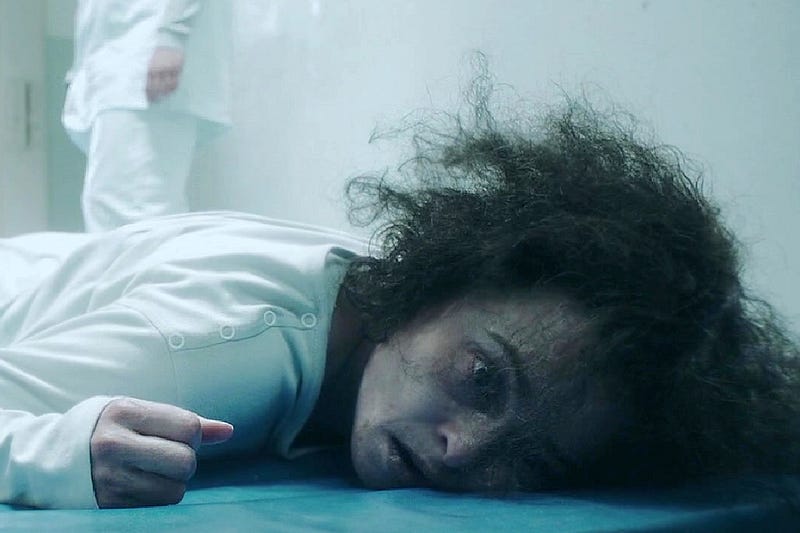
Eleanor Riese was 47 when she died of the side effects of drugs she was forced to take against her will. In an asylum. In America.
It wasn’t even forever ago.
Because that’s a thing we think about those terrifying stories of women being thrown in asylums. We think it was a horrible thing that happened to women hundreds of years ago, like in the Victorian era.
But no. She died in 1991.
She didn’t know they’d make a movie about her life, and she didn’t know Helena Bonham-Carter would play her.
Here’s all she knew. What was happening to her was wrong. And she had to fight the powerful men who did this to her. Because it wasn’t just her.
The case went all the way to the Supreme Court. And she won. But it was too late. At least for her.
Let me tell you a stupid thing the ancient Egyptians believed.
They believed a woman’s uterus could detach and float around inside her body. When it bumped into other organs, it made women go crazy.
But no worries. They had a cure.
You put something stinky under the woman’s nose and something pretty-smelling, like lavender, down at her hoo-ha to encourage the uterus to float back down where it belongs so she won’t act crazy bananas anymore.
That’s so stupid I can’t wrap my head around it, but it’s true.
It was documented in the Eber Papyrus, the oldest medical document known to man. It’s dated 1600 BC and filed in the historical records at the National Library of Medicine.
Centuries later, Hippocrates gave this malady an official name.
Hippocrates, if you didn’t know, was an ancient Greek physician. Regarded as the father of medicine, he’s credited with the Hippocratic Oath, which is an oath doctors take pledging to refrain from doing harm.
Hysteria, he called it. From hystera, the Greek word for uterus. The actual movement of the wandering uterus was hysteron, and hysteria was what happened to women when their womb went wandering.
Only women go mad, he said, and all madness comes from the uterus.
According to the National Library of Medicine, the entire field of psychiatry was created to treat women who were acting crazy.
Refrain from doing harm, indeed. The irony.
When the movie opens, Eleanor is being carried down a hallway by three men. She’s sobbing and saying no, no, no, it’s too much. Please, don’t take me there. Please, I don’t want to go in there. Please.
They open the door to a small room. It’s empty except for a mat on the floor. The men throw her on the mat. One of the men lifts her hospital gown and shoves a needle in her buttock while she screams that she does not consent. They lock the door and leave her crying on the floor.
The movie flashes to Eleanor leaning against the door, knocking and calling out. Please. Someone. I need to use the bathroom. Please.
She’s knocking and pleading until finally, unable to wait any longer, she wets herself. Oh, no. No, no, no, she cries. Still, no one comes.
When they finally let her out, she says she wants to make a phone call. They say okay and take her to the phones. She calls a lawyer.
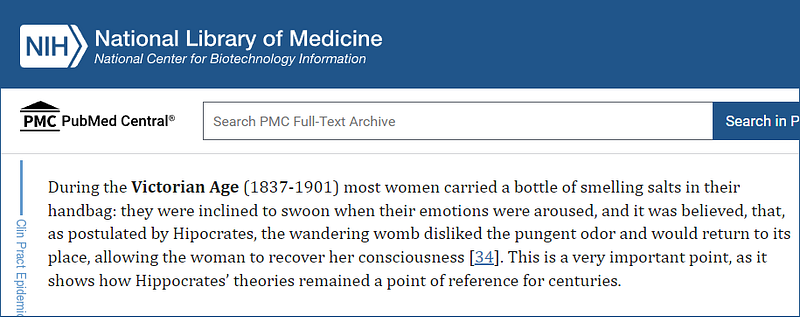
In the Victorian era, most women kept smelling salts in both their home and their handbag. That way, if something made them emotional, a quick sniff would send that wandering uterus back where it belonged so they could regain their composure before they acted crazy.
According to the National Library of Medicine, it’s important to realize those beliefs persisted for literally centuries.
It was always women. Fighting this.
Women like Nellie Bly, the journalist who got herself thrown into an asylum so she could write about what happened inside there.
Women like Elizabeth Packard, who finally got out after her husband put her in “for life” and spent the rest of her life showing up at politicians’ doors to protest what was happening until laws got changed.
That’s what makes this movie special.
It was written by a man. A man who was a college student in 1964 when he visited a psychiatric institution and couldn’t forget the 60 year old woman with a European accent, left there to rot. The 16 year old girl, put in there by her parents because she let boys “become intimate” with her.
It consumed him for 24 years. One day he was listening to public radio and heard a mental health advocate speaking. And he remembered the old woman and the teenager, sitting there in a stupor.
The West Virginia Division of Culture and History has a list of 125 reasons people were tossed into the Hospital for the Insane.
Snopes even confirmed the list is real.
Basically, it amounts to anything men didn’t approve of.
She challenged his authority. She didn’t obey. She thought her opinion was as valid as his. She had outbursts. Yes, that’s on the list. Outbursts.
She wouldn’t go to church or she went to church too much. Men didn’t want a woman that was annoyingly pious. Or a heathen. Like Goldilocks and the porridge, it had to be just right.
She preferred to read novels instead of doing womanly things like cooking, cleaning and sewing. That’s what Virginia Woolf’s psychiatrist said. No, it wasn’t that her brother raped her. It was books that made her mental.
She didn’t want to have sex with him. Or she liked sex too much. Women are supposed to agree to sex, not necessarily like it. Ho.
And heaven forbid she try prevent pregnancy. Women should want babies. What kind of selfish, mentally ill woman didn’t want babies?
She was unpleasant. Bad disposition. She didn’t smile enough. Women should have a cheery countenance and smile at men.
Smile, honey. Sound familiar?
The movie was called 55 Steps.
That’s how many steps there were to the Supreme Court where Eleanor’s case was heard. Getting up those steps was a challenge. She was in critical kidney failure. Her feet were swollen from the medications.
Plus, she had tardive dyskinesia. Let me tell you what that is.
It’s uncontrolled twitching caused by antipsychotics and it never goes away, even if you stop the meds. She said it made her look crazy.
See, “hysteria” was removed from the DSM in 1980. But doctors still had the legal right to give meds to mental health patients without consent. In 1985. She aimed to change that. And she won.
When the movie debuted at the Toronto Film Festival, the audience thundered to their feet and gave it a standing ovation. They said Bonham Carter gave an Oscar-worthy performance.
And then it was killed.
The movie never hit theatres and went straight to streaming. You can watch her life on YouTube for $3.99 and I don’t know what to think about that.
If you gaze long enough into an abyss, the abyss will gaze back into you.” ― Friedrich Nietzsche


