
RETROSPECTIVE
30 Years Of Pearl Jam’s Ten
Is the debut album from this iconic band still relevant three decades after its release?
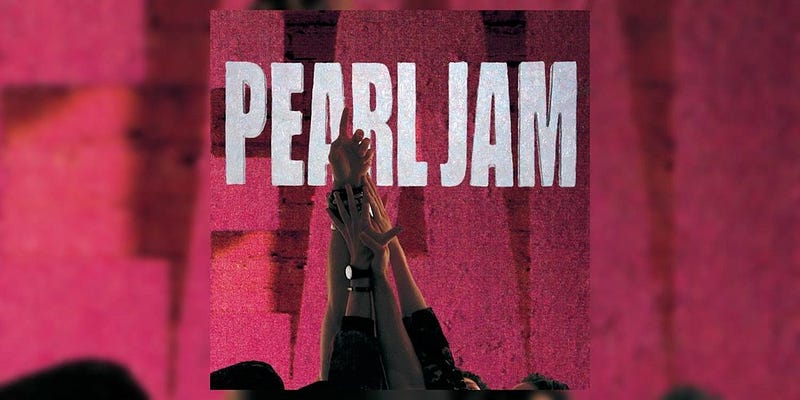
I’m one of those people who will hear a song from the 90s, particularly from the early part of the decade, and still believe it’s only about 10 years old. The struggle is real.
On this date (August 27th) in 1991, Pearl Jam, a band born of the ashes from some of Seattle’s most important and influential bands, released their debut album Ten. Thirty years on, it’s become one of the most important American rock albums of all time. If you care about lists and things of that nature, Rolling Stone magazine agrees with this assessment.
Upon its release though, Ten failed to make the splash many in the music industry thought it would. That splash finally occurred once another Seattle band called Nirvana released their second album Nevermind and turned the entire planet on its ass for good.
How It All Started
The Seattle music bomb may have dropped in 1991, but the fuse was lit several years earlier in the mid-1980s. Bands such as Soundgarden, The U-Men, Skin Yard, Malfunkshun, Melvins, and Green River were already recording and releasing music that would pave the way for what would become known to the rest of the world as “Grunge”.
Without these early bands and the labels they worked with, such as C/Z Records and the soon-to-be world famous Sub Pop Records, the Seattle explosion would have never happened. Specifically speaking, without Green River and Malfunkshun, Pearl Jam would never have come into existence.
In 1984, Seattle musicians Mark Arm, Steve Turner, Alex Vincent, Jeff Ament, and Stone Gossard formed Green River. Their sound was a dark, dirty combination of hard rock and post-hardcore punk. It had attitude and raw energy. By 1987 however, after conflicts surrounding the direction of the band, Stone and Jeff had effectively quit. They did finish production on their album Rehab Doll, but Green River as a band was no more.
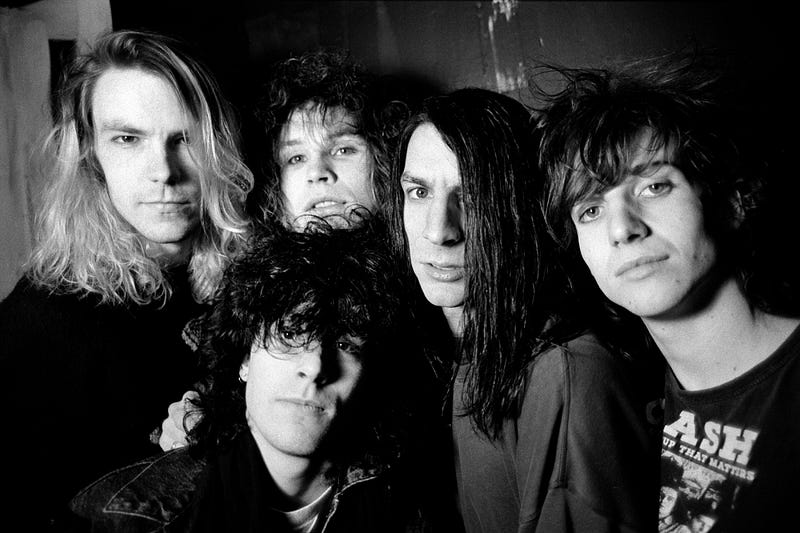
One of the first bands to influence what would become Grunge from the Seattle area was Malfunkshun. Formed in 1980 by brothers Kevin and Andrew Wood out of Bainbridge Island (10 miles and a 35-minute ferry ride from Seattle), Malfunkshun, like Green River, played a massive role in not only the Seattle rock scene but in the formation of Pearl Jam specifically.
Unlike the sludgy punk rock of Green River, Malfunkshun was a glam-punk band with a flair for the dramatic. That’s due in large part to their ostentatious lead-singer, Andrew Wood. By the mid-80s, Wood had developed a serious drug habit which led to stints in rehab and what was essentially a hiatus for the band. During this time Andy had begun playing music with Stone and Jeff, formerly of Green River. This collaboration would prove incredibly important to the future of rock music.
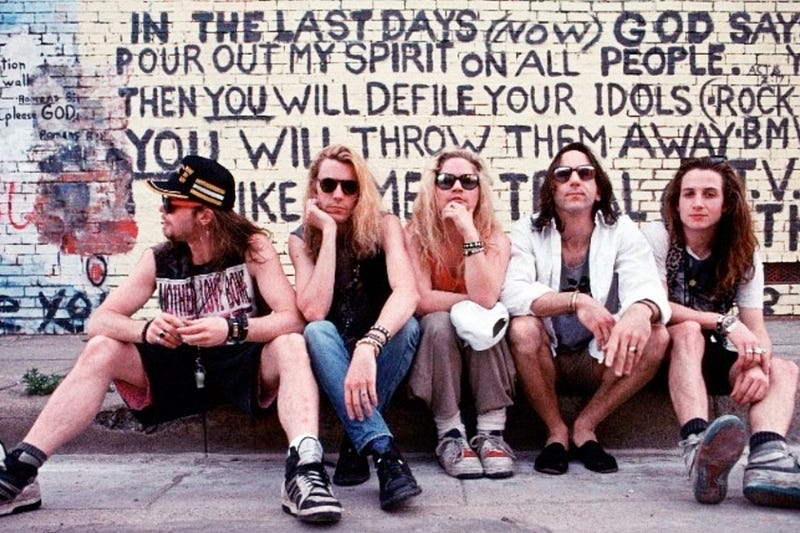
In 1987, drug abuse and break-ups notwithstanding, Andy Wood, along with Stone Gossard, Jeff Ament, Bruce Fairweather, and Greg Gilmore formed Mother Love Bone. Different than other Seattle bands, Mother Love Bone was focused on commercial success and landing a major-label record deal. They achieved that goal in November 1988 by signing with Polygram, and by March of 89', Mother Love Bone released their debut EP, Shine.
Success for the band was not to be. On March 16th, 1990, just days before their debut album Apple was to be released, Andrew Wood was found unresponsive from a heroin overdose and put on life support. He’d be taken off just three days later and pronounced dead on March 19th. Along with Wood’s death came the demise of one of the most promising bands coming out of Seattle. Little did anyone know at the time, this tragic event would help spawn a scene and two new bands to mega-rock stardom.
“I, I never wanted To write these words down for you With the pages of phrases Of all the things we’ll never do Hey, so I blow out, out the candle and I put you to bed Since you can’t say to me now How the dog broke your bone There’s just one thing left to be said
A’say hello to heaven, heaven, heaven “— Say Hello To Heaven/Temple of the Dog
Seattle, like most local music scenes pre-internet, was a living, breathing entity. Everyone knew everyone, bands fired, rehired, swapped, and borrowed members, fans packed the local bars and venues, and the entire scene was connected like that of a large, extended family.
Chris Cornell was the lead singer, rhythm guitarist, and main songwriter for one of the earliest Seattle bands of the era, Soundgarden. He was also a one-time roommate of Andrew Wood.
In November of 1990, Cornell, along with former Green River and Mother Love Bone members Stone Gossard and Jeff Ament, as well as Soundgarden drummer Matt Cameron, ex-Shadow guitarist Mike McCready, and singer Eddie Vedder (both musicians were currently playing in a new band with Jeff and Stone), formed Temple of the Dog, a one-off project paying tribute to the late Andrew Wood.
The Birth of Pearl Jam and the release of Ten
During the time that Temple of the Dog was recording their tribute to Andy Wood, Stone Gossard and Jeff Ament had already begun working with guitarist, Mike McCready on songs Stone and Jeff had been writing. They had sent a demo out looking for a drummer and vocalist and it wound up in the hands of a singer living in San Diego named Eddie Vedder. The rest, as they is history.
There’s a more detailed story of how Eddie wound up with the tape (it was via Jack Irons, formerly of the Red Hot Chili Peppers) and what Ed did with the songs on it (recorded vocals with lyrics he’d written which became “Alive”, “Once”, and “Footsteps”) but that’s something that deserves its own article.
For the purposes of this piece, Vedder was around during the recording of Temple of the Dog which he appears on at the request of a newfound friend in Chris Cornell while he was rehearsing with the other band members who would go on to form Mookie Blaylock, eventually evolving into Pearl Jam.
A Masterpiece is Made, A Legendary Band is Born
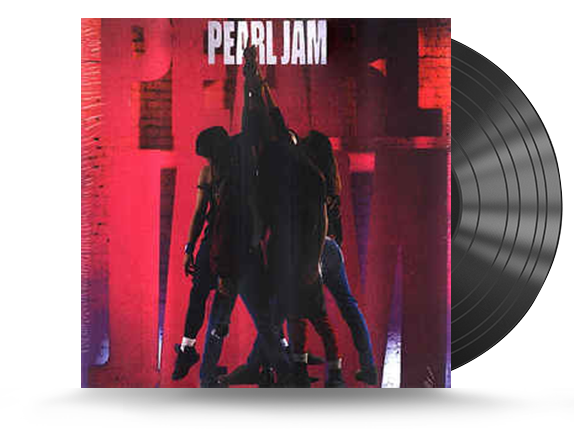
By March of 1991, the new band created from the demise of Seattle upstarts Green River and Mother Love Bone had entered London Bridge Studios as Mookie Blaylock ready to record their debut album.
The band tabbed producer Rick Parashar who was fresh off the Temple of the Dog sessions and would go on to produce the likes of Alice in Chains, Blind Melon, Three Doors Down, and others to produce the record.
The record was completed by late April/early May and mixing began in June. The album was released on August 27th, 1991 and the reviews came pouring in, even though commercially Ten failed to move the needle much, if at all.
Steve Huey of AllMusic wrote:
“Pearl Jam tackles weighty topics — abortion, homelessness, childhood traumas, gun violence, rigorous introspection — with an earnest zeal unmatched since mid-’80s U2, whose anthemic sound they frequently strive for… Eddie Vedder’s impressionistic lyrics often make their greatest impact through the passionate commitment of his delivery rather than concrete meaning.”
I was 18 by the time Ten was released and if you were at least that age or older, you’ll probably remember that popular music at that time was pretty vanilla in both sound and substance. A quick look at the Billboard Hot 100 from the week after Ten was released isn’t exactly a “who’s who” of substance and lyrical strife.
Names like Bryan Adams, Paula Abdul, C + C Music Factory, Color Me Badd, and Michael Bolton weren’t known for diving deep into their souls and singing about the dark shit that makes up a lot of who teenagers and young adults are. Pearl Jam, however, touched that nerve and began laying the groundwork that would evolve into sonic therapy for a generation.
I, like several people around me at the time, was already knee-deep into what was turning into Alternative music. My punk and metal roots had led me to discover bands such as Soundgarden, Sonic Youth, The Replacements, REM, Jane’s Addiction, Violent Femmes, and even Nirvana. I was given a mixtape in 1989 which included the track “About a Girl” off of Bleach (Nirvana’s debut album) and I was hooked.
Even those without some knowledge of these underground bands had started to find solace and a “home” in Ten. The kids listening to hair metal like Poison, Warrant, Ratt, Cinderella, etc. kicked that slosh to the side the minute they heard “Once”, “Alive”, or “Porch” off of this new record from a band no one had really heard of.
Popular UK magazine Q said this about Ten:
“raucous modern rock, spiked with infectious guitar motifs and powered with driving bass and drums…it may well be the face of the 90’s metal.”
As time went on, and certainly after Nirvana broke, the reviews of Ten would be nonstop. Most would be favorable as the record has wound up on many “Best Album”, “Best Debut Album”, and “Greatest Albums of All-Time” lists the world over.
It’s difficult to find current numbers, but as of 2013, Ten was certified 13x platinum (over 13 million copies sold) and has certainly surpassed that total by now. The record peaked at №2 on the Billboard charts and spent a total of 264 weeks on the charts, which makes it one of the top 15 charting albums ever.
The Songs
I could go on about the formation of the band, the Seattle scene, its global and cultural impact, etc. but this was just meant to give some background for those who either weren’t around for it or simply didn’t know. So let’s get into Ten, the record, shall we?
“Once” — The album starts with part I of an ominous, mostly instrumental drone, known as “Master/Slave”, leading straight into the frantic, whirling riff signaling the beginning of “Once”. This is one of the three songs Vedder received on the now-infamous “Momma-Son Trilogy” from Stone Gossard when first looking for a singer. Gossard’s music was turned into a story, which was part II of the trilogy and describes a character who suffered great trauma, lost his mind, and became a serial killer.
“I gotta bomb in my temple that is gonna explode I got a sixteen gauge buried under my clothes, I play
Once upon a time I could control myself Once upon a time I could lose myself, yeah”- Once/Pearl Jam
My favorite lyric though comes from a seemingly throwaway, whispered line after the second chorus where Vedder states:
“You think I got my eyes closed I’ve been looking at you the whole fucking time” — Once/Pearl Jam
“Even Flow” — One of the album’s, and the band’s, most popular songs to date, Even Flow is a blues-influenced scorcher about the plight of being homeless. Here’s Eddie Vedder introducing the song at a show in Miami in 1994:
“I thought I’d throw in a bit of street education while you still have an open mind….Right across the street there’s a little homeless community that lives under the bridge. You should just know that those people ain’t all crazy and sometimes it’s not their fault. This song is called ‘Even Flow’.” — Eddie Vedder before playing Even Flow live, 1994.
The song resonated with fellow musicians at the time as well. In a quote from former Skin Yard, Soundgarden, and Temple of the Dog drummer Matt Cameron (who also happens to be the longest-tenured Pearl Jam drummer as well, joining full-time in 1998):
“When I was in Soundgarden and we were making Badmotorfinger, Eddie brought up the mixes to Ten and I distinctly remember hearing the chorus for “Even Flow” and thinking that’s HUGE. So hooky, it’s got a really rad Zeppelin huge rock feel to it. Although we’ve played it a couple of thousand times since I’ve been in the group I think that’s the quintessential Pearl Jam song. Even though it gets played out, the nuts and bolts of that song are just amazing.” — Matt Cameron on “Even Flow” in Songfacts
“Alive” — The mysterious ways in which music makes its way around all of us is on full display with “Alive”, the first single off of Ten. The reason I say this is because Stone Gossard wrote this song while still in Mother Love Bone and could have easily never made its way into the hands of Eddie Vedder who penned the semi-autobiographical lyrics to this now iconic song.
Although “Alive” was the first single the band released off of Ten, it wasn’t made available for sale as a single in the United States until 1995. It was an “import only” release and had more popularity overseas at first.
The song opens with a dark, yet instantly memorable guitar riff which leads directly to a small breakdown as if to prepare us for the deeply personal story about to be sung with angst and passion that was nonexistent in music back in 1991.
The story Vedder, along with the powerful music of Gossard, Ament, Dave Krusen (drums), and Mike McCready delivers is one of deadly serious proportions. You can feel it in Vedder’s vocal delivery as well as the purposeful and driven playing of the band. The guitar solos from Mike McCready are some of the best of his career.
As mentioned earlier, “Alive’s” lyrics are semi-autobiographical. Eddie grew up with a man who he’d always known to be his father. In his early teen years, it was revealed to him that that man was actually his stepfather and a family friend, someone he’d met just a few times over the years, was his biological father. Eddie was only told this after this man, his real dad, had died of Multiple Sclerosis. At this time, his name was Edward Mueller (his stepfather’s name) but his biological name was Edward Louis Severson III. After learning this insane tale about his upbringing, he began using his mother’s maiden name, Vedder, as his own.
The opening verse lays it all out there:
“Son,” she said, “have I got a little story for you What you thought was your daddy was nothing but a While you were sitting home alone at age thirteen Your real daddy was dying Sorry you didn’t see him, but I’m glad we talked” — “Alive”/Pearl Jam
The hurt and devastation from the nonchalant admission from his mother had to be maddening beyond belief. The next verse is where Vedder takes some poetic license and veers off of the autobiographical road the song began on:
“While she walks slowly across a young man’s room She said, “I’m ready for you” Why I can’t remember anything to this very day ‘Cept the look, the look Oh, you know where, now I can’t see I just stare” — “Alive/Pearl Jam
Eddie has never admitted to an incestual relationship with his mother but this verse was the creation of the character in the song “Once” who loses his mind and becomes a serial killer. “Alive” is part I of the “Momma-Son” trilogy Vedder recorded on the Stone Gossard demo he received from Jack Irons. The third song on the trilogy, “Footsteps”, about the serial killer now reflecting on life from his prison cell awaiting execution, didn’t appear on Ten but was released as a B-side and is a fan favorite at live shows.
The third verse brings us back to the autobiographical nature of the song which plays out in a heavy dose of survivors guilt:
“Is something wrong”, she said, of course there is “You’re still alive,” she said, oh, and do I deserve to be? Is that the question? And if so, if so who answers? Who answers?- “Alive/Pearl Jam
What I haven’t discussed yet is the chorus. New in 1991, embedded in the brains of most rock fans by now, it’s a dichotomy of emotions using just one sentence, albeit several times.
“Oh, I, oh I’m still alive Hey, I, oh I’m still alive Hey, I, oh I’m still alive Hey, oh” — “Alive”/Pearl Jam
The bigness of the music and melody of the chorus suggests a powerful affirmation, “I’m still alive”. It’s much more though. Is he happy he’s alive? Is he wrought with guilt or anger? Both can easily be true. The genius here though is the uplifting, epic sound of it being played and sung. It hits EVERY emotion a song can.
“…he’s still dealing with love, still dealing with the death of his father. All he knows is ‘I’m still alive’…that’s totally out of burden.” — Eddie Vedder on “Alive” /Rolling Stone Magazine
“In the original story, a teenager is being made aware of a shocking truth that leaves him plenty confused…It was a curse — ‘I’m still alive.’” The audience’s response to the song is what has brought about the change in meaning for Vedder. “They lifted the curse. The audience changed the meaning for me.”- Eddie Vedder on “Alive”/Billboard Magazine
I’ve seen hundreds of concerts in my lifetime, seen some of the biggest bands play the most popular songs, and I can say that seeing Pearl Jam play “Alive”, whether in front of 80,000 at a festival, 20,000 in an arena, or 2,000 in a club (I’ve witnessed all), is the pinnacle of live music for me. If you never saw them, or will never get to see them, at least watch this and you’ll hopefully understand why I can make such a bold statement.
I wanted to share their performance of the song from their DVD “Immagine in Cornice”, a live concert film from 2006 but the band blocks linking it here. Go watch it on youtube for yourself and tell me it’s not life-changing.
The performance starts around 1:49…please watch it all and pay close attention to the singing of the crowd. If you don’t get goosebumps, Pearl Jam fan or not, you simply are not…alive.
“Why Go”- A raucous drum beat introduces this song, one of two written solely by bassist and founding member, Jeff Ament, (“Jeremy” being the other one) with lyrics by Vedder. It’s one of the heavier songs on Ten and its subject matter fits in perfectly with the theme of anger, disillusionment, and neglect. It tackles how poorly some people treat mental health and the people who struggle with it.
“It’s been two years and counting since they put her in this place She’s been diagnosed by some stupid fuck and mommy agrees” — “Why Go”/Pearl Jam
“The song ‘Why Go’ was written about a specific girl in Chicago… I think her mom caught her smoking pot or something. She was about 13 years old and she was just fine. I think her mom thought she had some troubles when I think it was really maybe the parents that were having troubles and the next thing you know, this young girl was in a hospital. They kept her there for quite a long time. She was so strong that she refused to accept many of the accusations of her doing terrible things when she wasn’t really doing anything and the next thing you know, she’d been hospitalized for like two years. The fact is that this is going on all over the place and this insurance thing that goes on with hospitals and insurance and these kind of counseling… prisons that they set up and it’s really something that I think is really addressed subliminally in the song, but it has to be addressed on a bigger level. It happens everywhere and I just hope that someday we’re able to change the fact that it is happening.” — Eddie Vedder on “Why Go”/radio station KLOL in Houston, 1991
“Black” — Never officially released by the band as a single, “Black” is arguably one of their most popular songs to date. It reached №3 on the Billboard Mainstream Rock Tracks chart even as Pearl Jam tried to keep the song as just another cut on Ten. Eddie Vedder went so far as to call radio stations at the time to make sure their label, Epic, had not released it as a single.
Pearl Jam has always been known to take their careers seriously and knew what they wanted, without compromise. The band knew if a ballad like “Black” became the standard with which they were known, it would eventually swallow them whole. The song was too personal and was never meant to be a declaration of who and what they’re about.
Eddie discusses this in an interview for Rolling Stone with Cameron Crowe:
“…fragile songs get crushed by the business. I don’t want to be a part of it. I don’t think the band wants to be part of it.”-Eddie Vedder
When a band releases an album, those songs then become part of the culture that hears them. They’re no longer truly the artists’. That being said, a band can choose not to promote certain songs by not releasing them as singles or making videos for them, which Pearl Jam did neither in the case of “Black”.
As for what the song is about, it’s a theme all of us can relate to. Lost love, regret, and yes, even some hope.
“Sheets of empty canvas, untouched sheets of clay Were laid spread out before me as her body once did”- “Black”/Pearl Jam
The music is somber and dark. A muted guitar riff guides us into the first lines which are listed above, and we know instantly what type of ride we’re in for.
“Now the air I tasted and breathed has taken a turn Mm, and all I taught her was everything Mm, I know she gave me all that she wore” — “Black”/Pearl Jam
The gradual building of instrumentation and intensity match each verse and the molecules within your body change and contort accordingly as the song marches towards its epic finale.
“Mm, and twisted thoughts that spin ‘round my head I’m spinning, oh, I’m spinning, how quick the sun can drop away” — “Black”/Pearl Jam
The crash hits like a bomb as the band is in full, emotional swing, and Eddie’s voice is riddled with pain.
“All the love gone bad turned my world to black Tattooed all I see, all that I am, all I’ll be, yeah Mm, mm, ooh
I know someday you’ll have a beautiful life I know you’ll be a star in somebody else’s sky, but why Why, why can’t it be, oh, can’t it be mine? Ooh, ah yeah, ah, ooh” — “Black”/Pearl Jam
If just about any other band had written and recorded “Black” as Pearl Jam did, they would have ridden it to stardom only to crash and burn like the main character in the song. Just like love sometimes, “Black” is a shooting star not meant to last or carry a band forever. It was not sustainable and Pearl Jam knew that.
“Jeremy” — This song has “hook” dripping all over it. From the opening bass riff, played by the song’s writer, Jeff Ament, to the multiple vocal harmonies and violent musical push that fades the song out, “Jeremy” couldn’t be denied its place in rock radio history from the moment fans first heard it.
A good rock song on its own, “Jeremy” would not have reached the heights it did, and they were massive, had it not been for the video accompanying it.
Officially the third single off of Ten, “Jeremy” peaked at №5 on both the Mainstream and Modern Rock Billboard charts. This song follows others on the album in that the subject matter is bleak, the tone is anxious, and although this track was written with two real-life stories in mind, it’s a story we can all unfortunately relate to in our lives as school shootings in the United States are sadly not uncommon.
The song, as well as the video, depicts the story of 15-year-old Jeremy Wade Delle, a high school student from Richardson, Texas. Jeremy shot and killed himself on January 8th, 1991 in front of his teacher and 30 classmates. Eddie had read about this incident and it compelled him to write the lyric to Jeff’s music.
“It came from a small paragraph in a paper which means you kill yourself and you make a big old sacrifice and try to get your revenge. That all you’re gonna end up with is a paragraph in a newspaper. Sixty-four degrees and cloudy in a suburban neighborhood. That’s the beginning of the video and that’s the same thing in the end; it does nothing … nothing changes. The world goes on and you’re gone. The best revenge is to live on and prove yourself. Be stronger than those people. And then you can come back.”- Eddie Vedder on “Jeremy”/Rockline 1993
The second story built into the song came from Vedder’s life in junior high school while living in San Diego, California.
“I actually knew somebody in junior high school, in San Diego, California, that did the same thing, just about, didn’t take his life but ended up shooting up an oceanography room. I remember being in the halls and hearing it and I had actually had altercations with this kid in the past. I was kind of a rebellious fifth-grader and I think we got in fights and stuff. So it’s a bit about this kid named Jeremy and it’s also a bit about a kid named Brian that I knew and I don’t know…the song, I think it says a lot. I think it goes somewhere…and a lot of people interpret it different ways and it’s just been recently that I’ve been talking about the true meaning behind it and I hope no one’s offended and believe me, I think of Jeremy when I sing it.”- Eddie Vedder on “Jeremy”/KLOL Radio, Houston, 1991
As mentioned earlier, the video propelled the song to monumental heights and in part, caused the band to cease making videos for years after. In 1993, “Jeremy” won four MTV Music Video Awards, including Best Video of the Year, Best Group Video, Best Metal/Hard Rock Video, and Best Direction (Mark Pellington). Controversy surrounding the song, video, and the band took off like a rocket.
“Oceans” — The fourth single released off Ten, “Oceans” is quite the departure from the rest of the album. The simple instrumentation and airy atmosphere, combined with the gorgeous vocals and melody provided by Vedder, offer the listener the first break from the darkness of previous tracks.
The way the song came to be is just another example of how the stars certainly aligned for Pearl Jam’s debut album.
“I remember for “Oceans”, someone asked me to put change in the parking meter for them. I went and did that and then I came back and was locked out. It was drizzling and I wasn’t dressed for an outing in the rain. I had a scrap of paper and a pen in my pocket, and they were playing this song [inside]. All I could hear was the bass coming through the wall, this window that was boarded up. So I wrote the song to the bass. I wasn’t even listening to hear the song at first. When I heard a break, I’d start pounding on the door…trying to get out of the rain. So as I was doing that, I thought, fuck it, I might as well write something.”- Eddie Vedder on “Oceans”/Seattle Sound Magazine. March 2009.
Although not their most popular song commercially, it’s a huge fan favorite at live shows and one that several members of the band themselves cite as a high point on Ten.
“Porch”- The most aggressive song on Ten is also the only track fully credited to Eddie Vedder. It’s said that he wrote the song on his way from San Diego to Seattle to meet the guys for the first time.
A frenzied guitar riff alongside Vedder’s questioning tone leads straight into the band joining in, gradually at first, with chaos ensuing soon after. It’s the first time we hear the punk rock roots coming from the band that would become obvious on all future records. It’s an indication of how Vedder would compose future punk-influenced songs right through the present day.
“What the fuck is this world running to? You didn’t leave a message At least I could have learned your voice one last time Daily minefield, this could be my time by you Would you hit me? Would you hit me? Oh, oh-oh Oh, oh-oh, aw” — “Porch”/Pearl Jam
The first verse sets the tone extremely well and once the long instrumental break in the middle of the song ends, there’s a steady climb in passion, aggression, attitude, and power. The song blasts its way to the finish line and leaves you breathing heavily as if you’ve just played it in front of 20,000 screaming fans.
“Garden”- Written by Jeff and Stone, “Garden” begins with light, swirling guitars that sound like what floating might feel like. Not a lot changes musically throughout the song other than the other bandmates joining in and a rise and fall in volume and intensity. This song is all feel, melody, and vocal performance.
The lyrics, written by Vedder, are some of the more mysterious on Ten. Even 30 years later, “Garden” is a song not often discussed by the band. Some songs are simply meant to mean something different to each person.
The chorus has a general feel and vibe about being led astray, being involved in something you don’t want or believe in but involved nonetheless.
“I will walk with my hands bound I will walk with my face, blood I will walk with my shadow flag Into your garden, garden of stone
After all is done and we’re still alone I won’t be taken, yet” — Garden/Pearl Jam
This has imagery of war or a relationship/situation you’re trapped in yet you go along with it. To me, it’s always had an air of hopelessness to it. As for the “garden of stone” reference, it could be where everything eventually leads all of us to, a cemetery.
Regardless of what Vedder was actually writing about, this track was meant to live in between knowing and not knowing and it fits the end of Ten perfectly.
“Deep” — The next to last track on Ten explodes off the record with drums, a wah-wah guitar sound, and solo leading into an impassioned scream by Vedder before the main riff and melody kick in.
Written by Stone and Jeff once again, it feels like it was/is a continuation (albeit a heavier continuation) of “Garden”. It’s slightly experimental, disjointed, and chaotic. It feels like it can go off the rails at any moment musically.
Lyrically it fits most of Ten’s themes of sadness, anger, confusion, and possibly death. In the first verse, it sounds like Vedder is discussing the plight of a drug addict with nothing left to live for:
“On the edge, a windowsill Ponders his maker, ponders his will To the street below, he just ain’t nothing But he’s got a great view And he sinks the needle deep, yeah
Oh, can’t touch the bottom In too deep, yeah Uh-huh, can’t touch the bottom”-Deep/Pearl Jam
The second verse could bring the character to suicide with a line like:
“To the sky above, he just ain’t nothing But he’s got a great view And he sinks the burning knife deep, yeah” — Deep/Pearl Jam
The song is already one of the darkest on the record and the last verse doesn’t do anything to shy away from that assertion:
“On the edge of a Christmas-clean love Young virgin down from heaven Visiting hell To the man above her, she just ain’t nothing And she doesn’t like the view, she doesn’t like the view She doesn’t like the view, but he sinks himself deep” — Deep/Pearl Jam
Drug addiction, suicide, and now rape, “Deep” isn’t meant for the faint of heart. It is however a glaring example of how rock music in the early 90s was making a full 180 degree turn from the bubblegum music and content being played on the radio at the time. A change was coming…quickly.
“Release” — The final song on Ten is one of the most important. Not only is “Release” a great choice for an album closer in terms of sound and feel, but it’s also the most personal and organically written song the band may have in their entire catalog.
If “Alive” is the anger and shock of Eddie learning of his twisted and sad family history about his biological father, “Release” is the love and vulnerability towards his dad.
The story behind “Release” is as organic as the creation of a song can be. It’s the only track on Ten with music writing credits given to the entire band. It wasn’t really an attempt at a song at all. It was a moment that was captured and simply became a song.
The band was in the studio and essentially feeling out some ideas and jamming a little. It’s a bit of guitar noodling and droning rhythm, that’s all the music really is. Something about its feel or vibe struck Eddie and he approached the mic and freelanced some lyrics. His vocal melody mimicking the dark drone of the band.
It was quickly obvious to Vedder and the band that this song was a guttural response to pain and loss. Eddie was singing about his dad and Jeff and Stone were still grieving over the loss of close friend and singer of Mother Love Bone, Andy Wood.
“I see the world, feel the chill Which way to go, windowsill I see the words on a rocking horse of time I see the birds in the rain Oh, oh Oh, oh
Oh, dear Dad, can you see me now? I am myself, like you somehow I’ll ride the wave where it takes me I’ll hold the pain, release me Oh, oh I Oh, oh
Oh, dear Dad, can you see me now? I am myself like you somehow I’ll wait up in the dark for you to speak to me How I’ve opened up, release me Release me, release me, ah, release me Oh, oh I Oh, whoa, ah ooh, ooh” — Release/Pearl Jam
The song has a slow build and climb toward its climax and then, as if holding you by the hand, gently lets you down for its completion. When played live, the band will almost exclusively open the show with it and the quiet frenzy it creates is something mere words cannot describe.
Ten fades out with “Master/Slave II”, just like the intro to start the record before “Once”, and you’re left with a full slate of emotions from an album that just kicked your ass.
Thirty years is a very long time in just about any walk of life. So much happens, changes, and evolves over three decades that it’s hard to chronicle everything. Thirty years of listening to and literally growing up with a rock album, that’s something altogether different.
Ten was released at a time in history when the culture was begging for change. Kids in the late 80s and early 90s weren’t satisfied with their parents’ music, art, or worldview. The pot was just about ready to boil over and music has always played a role in the revolution of youth.
This record influenced countless people to pick up guitars, sit behind drum kits, or write lyrics and scream them into microphones. I know and have spoken with musicians who don’t play this kind of music at all and yet were influenced by Ten. Whether it was the production, the song structure, Eddie’s vocal style, or the passion and energy with which the band performed the songs, this album seemed to have touched everyone who heard it.
I was 18 when Pearl Jam released their debut album and like tens of millions just like me, it took me on a journey that will simply never end. Music has a way of doing that sometimes. A song, an album, even a band…sometimes it’s just right. Right for you, right for the moment, and in some cases, right forever. Ten is one of those albums.