
30 Day to Sustainability-Day 2: The Planned Waste
Last week my grandma died in the midst of the Coronavirus outbreak and on my 40th birthday. Not exactly a day I envisioned for my birthday. Bless her heart, she was 95 years old and had a very tough but fulfilling life behind her. Rest her soul in peace. She survived The Second World War and as an 8-year-old, she cared for her younger siblings because her mom died of cancer. She went through a war depression, a communist regime, and democracy. Despite her harsh life, she was always positive, smiling, and content. To this day, she is still alive in my memory.
My grandma was all about planned waste. She would keep everything and reuse it for years. Many times, when I got to visit her, she would have plastic bags washed and hung to dry in the sun, soon to be reused. All the biological waste was composted or given to domestic animals. She was indeed the grandma who lived a zero-waste life. Despite not having any kind of higher education, she taught me many valuable lessons about sustainability.
How You Can Start with Planned Waste
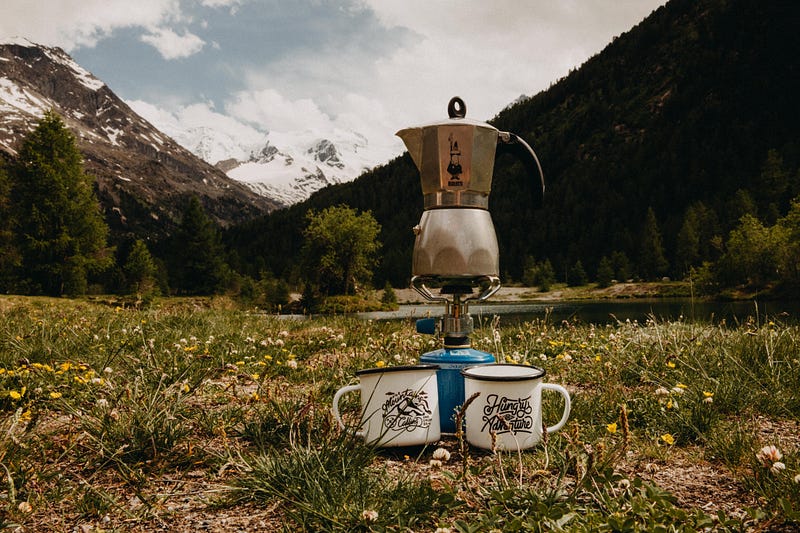
1. Start with coffee. Many of us don’t realize how much coffee is wasted a day. My grandma used the pour-over method where you pour hot water over the finely ground coffee beans. The French Press and Bialetti methods are also very sustainable. Electric coffee makers use too much energy, and coffee filters are bleached and are not environmentally friendly. You can replace your drip coffee filter with a reusable one. Please, don’t use the coffee capsules which are a disaster for the environment.
11 ink cartridges per second and 1 million cartridges per day are thrown away. That’s a waste we should stop.
2. My grandma did not use the printer, but my family does use one in daily lives. I use refillable ink cartridges for my printer. Also, I recycle the ink at the company I bought it from. Nowadays, many Europeans Ink Companies are offering recycling services to minimize the carbon footprint. I always plan and research ahead before I buy a product. I choose the best quality for a reasonable price.
3. I try to plan on how much we eat and what we eat. I create a basic menu for a week and this way I know, I buy only what we need. It is healthier and sustainable. And as my grandma said:” Never go hungry and unprepared to the grocery store.” Here are more household tips on how to decrease food waste
According to OLIO, an English Company that collects food waste has written powerful facts:
In most developed countries, over half of all food waste takes place in the home. In the home food waste is worth £800 per year to the average UK family ($2,275 in the USA), which collectively adds up to £15 billion per year.
Planning and eating responsibly leads to decreased waste of food which can feed according to statistics 70 % of our planet and is definitely more sustainable.