TRUE CRIME
3 Women Who Faked Their Deaths
One did it to avoid prison. One did it for love. One did it to sell books.

_(Copy).JPG)
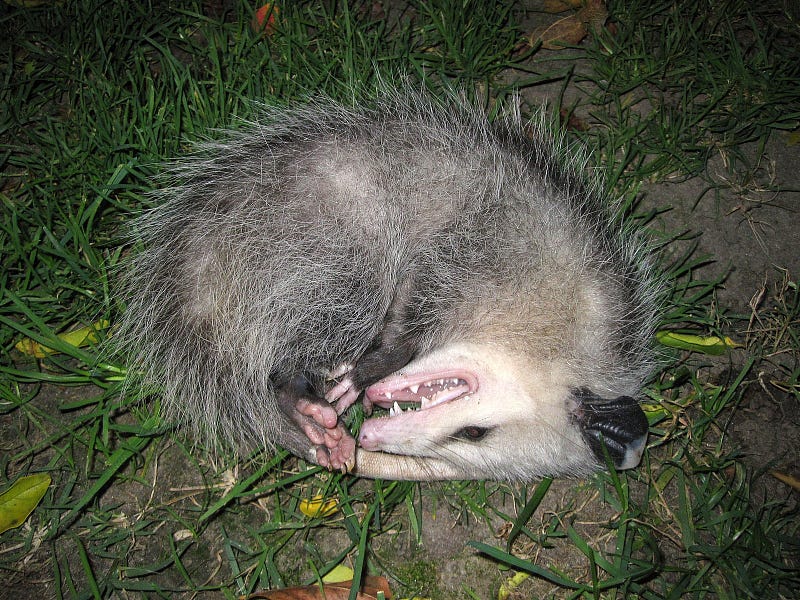
Nonhuman animals like opossums, hognose snakes, and cobras sometimes feign death when they perceive a threat. Even female frogs appear to fake death to avoid unwanted advances from male frogs.
We’re not that different from other species. Humans try pseudocide to escape threats like imprisonment or loss of reputation. Maybe a few have tried it for the adventure but I haven’t run across one yet.
Have you ever been tempted to fake your own death and start afresh? If so, you may be interested in the stories of Julie M. Wheeler, Grace Oakeshott, and Susan Meachan.
Julie M. Wheeler
There’s something about fraud that enrages people, and rightly so. Nobody likes to be fooled, especially if it costs them money. That’s why if you fake your death you’d better make sure not to get caught or you’ll be doing serious time. For fraud.
As usual, the devil is in the details. How can you avoid fraud when trying to ditch your old life and begin a new one? You’ll need a place to live and a source of income. A driver’s license.
There’s no law against faking your death but there are tons of laws against fraud. And they have teeth.
That’s what Julie M. Wheeler, 43, of Beckley, W. Virginia found out when she joined the century-long list of women who faked their deaths to stay out of prison only to wind up behind bars for years.
On May 31, 2020, the police got a disturbing call from Julie’s husband, Rodney. While looking for an earring on the Grandview Overlook in the New River Gorge, his wife Julie tumbled off a cliff.
It took two days for investigators to crack the case. By then, they’d scoured the area looking for her and come up with only a shoe and a cell phone, conveniently planted beforehand.
Detectives should have saved the National Guard, rescue dogs, hundreds of volunteers, and diving crew a lot of time and headed straight for the Wheeler’s home.
Wheeler was a wheeler-dealer. She’d already pleaded guilty to healthcare fraud and was due back in court for federal sentencing. She overbilled a VA program for her sister’s spina bifida care — care her sister never received.
The police found her at home hiding in the closet.
The healthcare fraud came with a hefty price tag — 42 months in federal prison. The judge tacked on another year for the mystery of the missing earring. Rodney got two months in federal prison, followed by six months of home confinement capped off with three years of supervised release.
The couple had planned to go into hiding and start afresh with shiny new lives. Instead, they’re eating mystery meat in separate chow halls.
The moral of the story: Make sure your motive is not too obvious.
Grace Cash Oakeshott
It’s much harder to get away with faking your death than it was before the advent of surveillance cameras and cell phones. Englishwoman Grace Oakeshott pulled it off without much trouble. She did it for love.
Turn-of-the-century Britain frowned on divorce. To seek one was equivalent to gluing a scarlet “A” for adultress to your forehead. But people always seek an escape clause. In 1907, Englishwoman Grace Cash Oakeshott found one.
She’s not the first or last person to stash a pile of clothes on the beach and disappear, giving the impression that she’d drowned.
Grace lived in the Victorian era when the population of London skyrocketed from one to five million people, including many poor immigrants living in squalid conditions. London was filthy and smelled bad.
She became an activist and entered a long-term marriage with an equally activist husband, Harold Oakeshott. Both were socialists. Grace helped found a trade school for girls and wrote about women who eked out a living in London’s cigar trade. She promoted the interests of working women in general.
One summer night, someone, perhaps a fisherman, found Oakeshott’s clothing by the sea in Arzon, Brittany where she was vacationing.
Did she walk into the sea nude and drown?
Her body never washed up but after her death, historians traced Oakeshott to New Zealand. She acquired a new husband, Dr. Walter Reeve, three children, and a new life as “Joan Reeve.”
Her former partner also remarried.
Moral: The purer your motive the greater your chance of success.
Susan Meachan
It’s much easier to fake your death if there are no actual bodies involved. That’s what indie romance author Susan Meachan, found out.
Who knew the romance-lit world could be so cutthroat? Meachan says the online drama and bickering exacerbated her mental health struggles to the point where she overdosed on Xanax in September 2020 at the age of 47.
Her husband Troy found her in time and told their daughter, then 22, to post that Susan died from suicide due to online bullying. It was a lie. He felt the community was bad for his wife’s mental health, he explained later.
In October 2020, a person claiming to be Susan’s grieving daughter asked the online community to buy her mother’s final book, Love to Last a Lifetime.
A lot of people mourned Meachan. Some felt guilty or were angry at those they believed should feel guilty. Her Facebook page also hawked her other 13 books. Some mourners say they contributed to funeral expenses.
On Jan. 2, 2023, Meachan came back from the dead. She posted on her Facebook page, the Ward.
I debated on how to do this a million times and am still not sure if it’s right or not. There’s going to be tons of questions and a lot of people leaving the group I guess. But my family did what they thought was best for me and I can’t fault them for it.
I almost died again at my own hand and had to go through all that hell again. Returning to the Ward doesn’t mean much but I am in a good place now and I am hoping to write again. Let the fun begin.
It sucks for someone to use suicide as a tool to manipulate people, especially to manipulate them into buying books. If someone is willing to do so how can we believe anything they say?
Many of us struggle with mental health but to mislead people into thinking you’re dead from suicide is evil. People were angry enough to report Meachan to the FBI. They said she did not extort a significant amount of money from her followers and declined further investigation.
Moral: Take a break from social media. It is not necessary to fake a suicide or murder to unplug. Meachan took deception to a whole new level and got off scot-free.
Conclusion:
As the world gets scarier more people may seek escape. Pseudocide could be a healthier choice than suicide, alcohol, or madness. It also seems the behavior occurs in various species.
Have you ever been tempted to fake your death? Do you think that as long as someone has no dependents and is not fleeing a crime, they should have the right to start a new life?