
MENTAL HEALTH
3 Ways To Tackle Chores On Bad Days
Stay on on track with these tips!

Let’s say you’re having a bad day. On those days, whether the bad days are due to fatigue, medication side effects, mood fluctuations, chores reasonably fall to the wayside.
The big conundrum is the feedback loop this creates. It’s important to acknowledge that if you find yourself in a rut, you’re absolutely allowed to and should take a break.
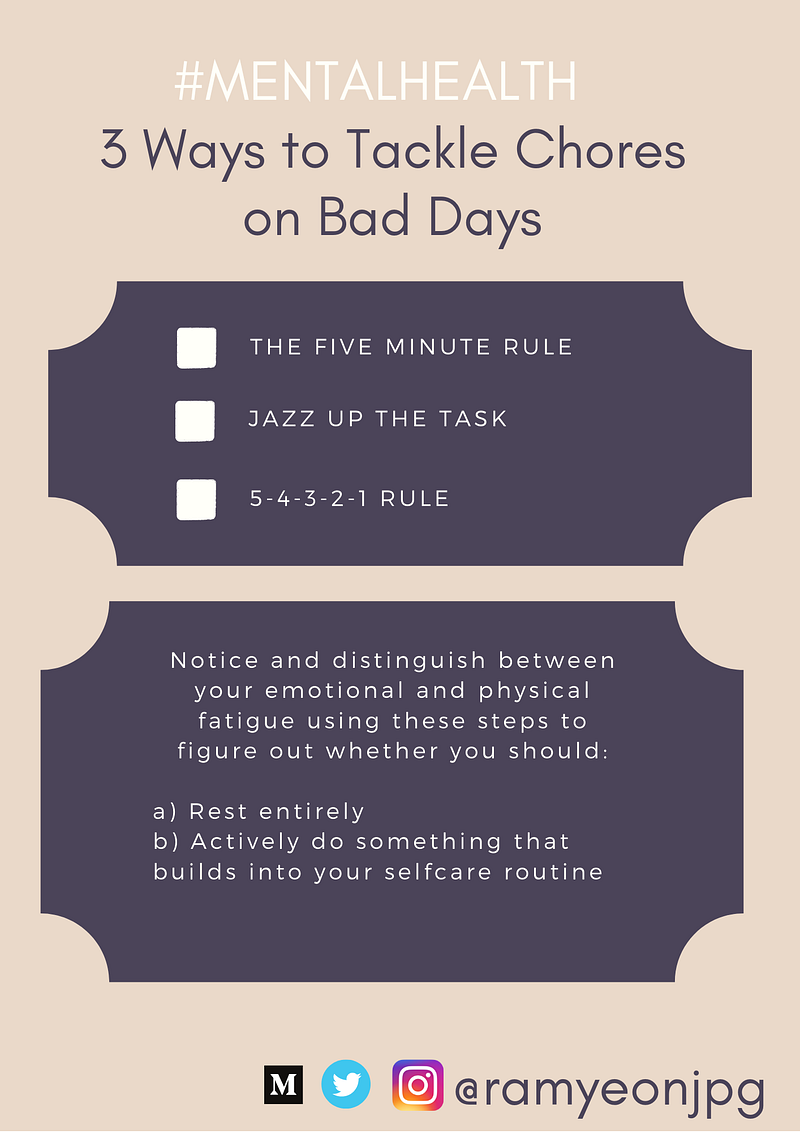
It’s important to take the time to check-in on whether you need to think of ways to push yourself a tiny bit further, or whether you’re already at your limit and absolutely need to recharge.
But if you’re like me, sometimes you realize that part of the low mood comes from the clutter or build-up of chores. Not doing the chores further builds up the frustration, in this never-ending loop of growing despair (the rock). Yet, doing the chores adds to the fatigue (the hard place).
Here’s what I do that has been helpful to break that loop of doom.
The Five Minute Rule
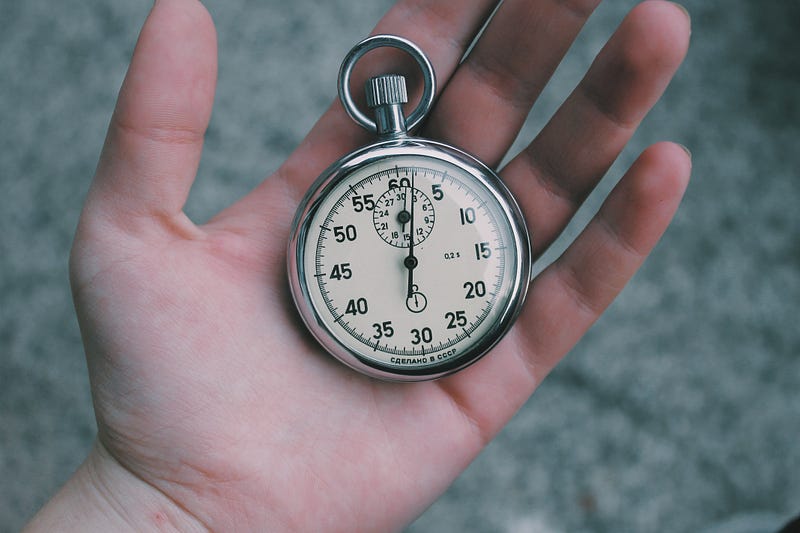
What it is: You set a timer for five minutes. You stay committed to doing at least five minutes of a specific chore.
There are two outcomes of this chore that need to be acknowledged.
The Foot-In-The-Door Tactic
The more commonly discussed outcome is getting over the initial motivation hump. Sometimes we overperceive how much energy it takes to do certain chores.
For example, washing a sink full of dishes realistically takes me 10–15 minutes but I seem to think it’ll take me an hour. The five minutes get your foot in the door and before you know it, the five minutes is up, you’re pretty much done, and you might as well finish the rest anyways.
Bite-Sized Pieces Tactic
There is a second less discussed outcome to this trick too. Sometimes, you do the five minutes and you realize that you are actually really tired and you need to lie down. Those moments are valid too, and you should absolutely honour them.
Even when you do this, those five minutes a day still tackles a bite-sized piece of the chores. You might not get all the dishes done that day, but you’ve tackled a portion of it so it’s harder for the dishes to entirely pile up.
Jazzing up the task

What it is: Our brains like novelty, so adding a variation to the way you do a task might make it fun to do. One way that I make boring old chores fun and engaging is to pair it with something fun.
Chores like folding clothes and laundry are so mundane that I often pair it with a good audiobook or podcast so that my mind is engaged. I also no longer try to rush through the chores in hopes of just getting it done perfunctorily because now I’ve dedicated a 30-minute chunk to enjoy a whole podcast episode or chapter of an audiobook.
It shifts my attention away from the unpleasantness of the task towards something fruitful from the task that I can enjoy.
5–4–3–2–1

What it is: Count down from five. At one, get up and try out the task. Recommended by so many different YouTubers, all citing Mel Robbin’s book The Five-Second Rule (which I have yet to read, but will do so — soon!).
This tackles whether the barrier right now is emotional fatigue or physical fatigue.
Emotional fatigue
Sometimes I’m tired emotionally and can’t make any more decisions or tap into my willpower to get up and get moving. Being distinct from physical energy, I could sometimes a) have all the physical energy in the world but lack that initial push vs. b) be tired, emotionally and physically. That’s important to distinguish.
The 5–4–3–2–1, similar to the 5-minute rule helps with getting over that initial motivation hump. It’s helped for me in scenario A, where I might be too tired to decide on exactly which chore I need to get done and so nothing gets done, but I absolutely can do something.
In fact, for some chores that involve no thinking whatsoever, I find those healing because I can mix it with staying present and mindful on the doing.
Physical fatigue
If the 5–4–3–2–1 and five-minute rule doesn’t work, it’s a sign to me that I’m at my limit at all fronts. I shift my energy instead to thinking about recharging and resting rather than squeezing one last chore out of myself, risking burnout.
Conclusion
We all have days that are less productive than others. For me, noticing whether I’m emotionally exhausted or physically exhausted is important for me. In noticing this distinction, I can focus on whether there’s something else I can do for self-care (e.g., minimizing the number of remaining chores) that could build into my self-care.
This is an important note because I firmly believe that as a society we need to shift away from the concept of productivity for the sake of productivity. We are not productivity machines. We need to start prioritizing self-care and mental health.
Sure, some of these tips are often presented as hacks for increasing the amount of work you can tackle: write more, read more, produce more. Sometimes that can be self-care, based on your situation. Sometimes it’s not, because you need a basic level of functioning in order to produce the quality work you want to.
Prioritizing your needs, especially on bad days, is especially important.
I use these tips to tackle things that I know weigh into my mental health. I use these tips to get myself out the door for a walk or into workout clothes. I use these tips to tackle chores like decluttering that weigh on my mental health when it builds up. Or to invest in the habits that save me time in the long-term like meal prep.
Sometimes I even use them for other self-care tips, like starting a meditation session.
Instead of feeding to a hamster wheel of pushing people to squeeze one more ounce of brain juice into their work, if you’re finding yourself on your last legs, squeeze that energy into something that recharges you, or better yet — rest. You deserve it.
Lucy (The Eggcademic) wants to tackle the shame of discussing non-productive days. Not everyone has the circumstances and capacity to work 24/7/365 — in fact, most don’t. There is considerable privilege that comes with being able to function at 100% capacity amidst a situation of ongoing political unrest and a pandemic. Let’s acknowledge and support each other in growing from where we are, instead of shaming people for not being able to “chase their dreams hard enough” by blaming it on them not wanting something enough. There’s often something larger than that going on.
What’s your next adventure? 🐇🌌
- 🔁 A random poem: A Writer’s City
- 🧡 A piece that deserves more love: Three thoughts about Dark
- 🔊 A voice to amplify: I’m no longer living with a secret wreaking havoc on my mind by Susan Scandiffio