
3 Ways to Apply Behavioral Science to Customer Journey Maps
Make a great tool even better with a little psychology

One of the biggest ways learning about behavioral science impacted my work as a customer experience strategist was realizing that sometimes talking to customers can do more harm than good.
Why?
- When customers are asked why they did something or if they would do something, their responses are clouded with all sorts of cognitive biases that get in the way of the truth.
- The context of a customer interview can change its outcome, like feeling pressure to answer questions a certain way from the other members of a focus group, or even the interviewer themselves.
- Since most decisions are made subconsciously, people don’t actually know the real reasons behind why they did what they did — but when pressured to come up with an answer, they’ll lie (not purposefully, they just aren’t consciouly aware of the truth).
Does that mean qualitative research should be thrown out? No, but it means we can’t only rely on qual to make business decisions — we have to dig deeper.
Luckily there’s a proven tool that can help us get some clarity — and by adding a behavioral science twist, we can make it 10x more powerful.
Adding a Behavioral Science Twist to Customer Journey Maps
If you’re not familiar with what customer journey maps are, they’re basically visual stories about how people interact with your brand or experience. They help teams gain a deep understanding of their customers and act as a bridge between businesses and buyers.
In a single illustration, the journey map aims to capture the entire customer experience. No small task.
Are journey maps perfect? No, they’re models. And as the saying goes, all models are wrong but some are useful.
All models are wrong, but some are useful.
Sometimes a good model can get even better. And that’s the case when you start layering psychology and behavioral science on journey maps. Your insight improves, and you can go deeper on why customers do what they do (and how to change it).
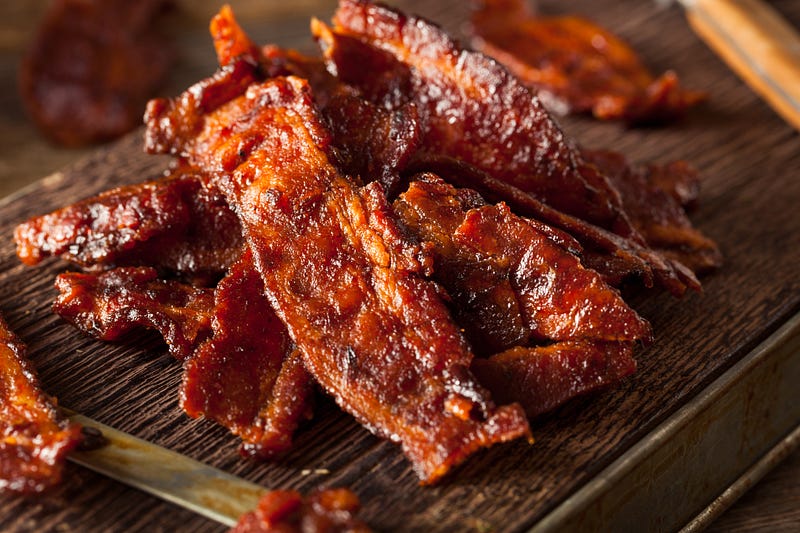
It’s like adding bacon to a burger. Sure, the burger was good before but bacon just adds a little something special (apologies to the vegans):
Here are three ways behavioral science cand customer journey maps can be better together:

1. Use the emotional journey to find moments that punch above their weight.
The Peak-end Rule says that people create memories and judgments of an experience based on only two points — the emotional peak and the ending.
But how do you figure out where those moments are, and how do you know if they’re different from one customer to the next?!
When you combine the Emotional Journey section of a map with the Peak-end Rule, you start to see its power. This approach can even help you prioritize time, effort, and budgets.
2. Support your journey map with a behavioral “swim lane.”
Swim lane is just a fancy name for a horizontal section of a journey map, like the ones shown below (to learn more about the parts of a journey map, check out my article here):
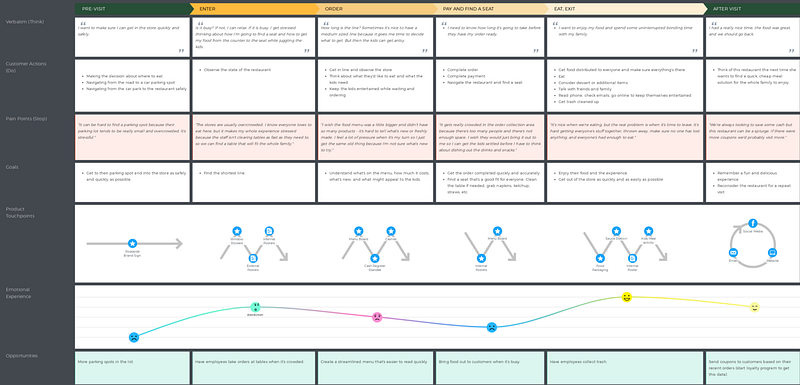
This simple addition can have huge benefits. A behavioral swim lane can help you spot barriers and potential solutions faster and more easily, because they’re in context with the rest of the journey.
You can use this swim lane in various ways, but I’ve found it’s helpful for documenting some rough ideas and combination of the following:
- Behavioral Barrier
- Behavioral Objective (later to be refined into a Target Behavior)
- Principle that can help overcome this barrier
- Potential Opportunities
For example, you might populate one section of this swim lane with a version of the following:
- We’ve observed that customers are spending too much time browsing and not enough time buying because they’re overwhelmed by all the product options on product details page. They’re getting frustrated and leaving the site.
- To get customers to move from browsing to buying, we need to make our product detail pages easier to scan, reduce the amount of information, and make customers feel comfortable by the amount and structure of our product detail pages.
- Some potential behavioral science principles we could use to solve this include Salience (to make sure people are noticing the “right” parts of the product page), Simplicity Theory (reducing the number of options and information to combat Overchoice), Chunking (to break down a page full of product features into smaller sections that are easy to scan), Picture Superiority Effect (to convey information with less text but more with pictures and make descriptions feel less overwhelming to read).
3. Get a holistic view of how you can go “beyond the nudge.”
One of the reasons journey maps are so useful is that they look at all your touchpoints to give you a big-picture view of what customers experience.
When you have a 10k-foot view of your experience, you see ways to use behavioral science to influence customers before they get to the point of nudging. It’s a more strategic approach, it’s more effective, and it helps behavioral science go “beyond the nudge.”
But why do we need to?
Nudges can change behavior, but nudges are tactical.
And in traditional companies, tacticians hit a “ceiling of influence” — they aren’t invited into rooms where strategic discussions about the future of the company, so they’re limited in terms of their impact and ability to persuade.
The more holistic the integration of behavioral science to the business, the more persuasive behavioral scientists (and people who apply behavioral science) can be.
The Bottom Line
Consultancy NNGroup asked a group of experience professionals how journey mapping had positively impacted their customers:
- 71% said journey maps “increased customer satisfaction.”
- 53% said they “increased NPS (Net Promoter Score).”
- 48% said maps resulted in “fewer customer complaints.”
The best part?
Because they’re already a proven and well-known tool, Journey Maps can be easier to sell-in to you or your client's business than a brand new behavioral science framework like COM-B (but don’t worry behavioral scientists, you can throw that one in later).
Now just imagine how much impact they could make when behavioral science is thrown in the mix.
Getting traffic but not enough sales, leads, or clients? 👇
What if you could quickly understand a customer’s impressions of your digital experience, get rapid expert feedback, and immediately understand how to improve your experience with marketing psychology and behavioral science?
My popular Choice Hacking CX Audit can help you.
✅ 43-point CX Audit
✅ Drive sales and retention
✅ Build your brand for the long-term
// What is a Customer Experience Audit?
Part expert review, part user research, and part behavioral diagnostic, I record a video teardown of your website or marketing experience and share my initial recommendations in an actionable 43-point CRO report.
Each audit will help you:
✅ Instantly understand flaws in your messaging, visuals, design & information architecture
✅ Quickly identify areas where behavioral science and persuasive design can help your business accomplish its goals
✅ Predictive AI Salience analysis to understand what users are noticing, and what they’re missing.
To see an example audit or schedule yours, visit: https://www.choicehacking.com/customer-experience-audit


