
3 Unusual Techniques for Boosting Your Creativity
Get an unending flow of ideas

Imagine your typical workday. You’re deep in your routine tasks, the third mug of coffee cools down on your desk, multicolor stickers pepper your monitor, and your email is so messy you’re afraid to peek inside. In the middle of a phone call with one more dissatisfied client, your boss shows up. Smiling like Santa Clause, she announces your company needs an idea. A brilliant one. A scheme which will save everyone from a terrible crush.
You attempt to hide under your desk. Your boss promptly invites you to a brainstorm session which will take place right now.
Two pizzas and innumerable balls of paper later, your team comes up with eight solutions. Most of them suck. No one has listened to what you’ve said, and, to be honest, you haven’t said anything feasible. No one has.
You put your hopes on one idea which seems less weird than others. As you come home, you realize it is bullshit, too. You have to think of something better.
You sit on a chair with a notepad and a pen ready on your lap. After fifteen minutes, the notebook is still blank, as well as your mind. So you google “How to enhance your creativity” and find so much information your head spins. Brainstorming, changing of context, taking a nap, walking, music… You end up sleeping on your sofa — undressed, dissatisfied, and still lacking ideas.
This flop wouldn’t happen if you knew the three techniques for boosting creativity I’m about to share. They work. They work so effectively you’ll have trouble shutting down the flow of ideas. Combine them for the best results, but used separately, they will help you as well.
Sleep less
Check out this abstract from Salvador Dali’s book 50 Secrets of Magic Craftsmanship:
“The most characteristic slumber, the one most appropriate to the exercise of the art of painting…is the slumber which I call ‘the slumber with a key,’… you must resolve the problem of ‘sleeping without sleeping,’ which is the essence of the dialectics of the dream, since it is a repose which walks in equilibrium on the taut and invisible wire which separates sleeping from waking.”
Was Dali creative? I think so. And this “slumber with a key” madness seemingly helped him.
The artist sat in a bony chair with his head tilted back and a massive key in his hand. At his legs, he put an upside-down plate. Dali relaxed his body and eventually began to doze. As he fell asleep, the key slipped from his hand to the plate, banging loudly. Dali immediately started painting. He thought the border between dream and reality the best state of mind for creating real art.
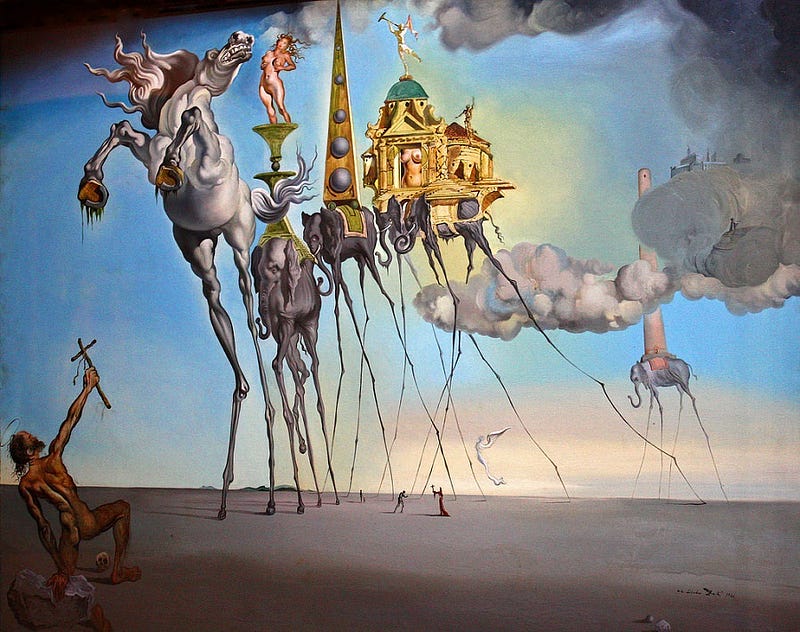

Although I don’t suggest such radical methods, I noticed sleep deprivation is perfect for generating ideas.
To create means to come up with something new, something which does not exist; something which doesn’t have a place in the picture of reality yet. Non-existing is out of order, and to catch it, your brain has to be out of order, too.
Sleep deprivation kills your concentration, but to be creative, you shouldn’t concentrate. You should relax. Your spirit has to be vague, unstable, placid. Ideas live under the surface of your mind. You should set your subconsciousness free to get to them. Dali knew it perfectly well; his “slumber with the key” is an extreme way to be just conscious enough to create.
You may follow his steps or choose a more discreet manner. Sleep three hours less than usual. Moderate sleep deprivation will put your brain in a half-awake state without damaging your routine tasks.
Change your spot
Changing your context is a popular method of boosting creativity. Many people don’t understand this concept fully, so it doesn’t help them.
The key is, you have to drag yourself out of your comfort zone.

It means relocating to the nearest cafeteria won’t help. It doesn’t cause enough discomfort. A walk in an unfamiliar neighborhood is better. A journey to another country works most effectively; do it whenever you get a chance. But what if you can allocate neither time nor money?
Have a weekend trip to a town you haven’t seen before. If you can spare one night, spend it in a hotel in your city. If this is out of your budget, try to get invited to your friends’ or relatives’ place.
You have to stay in alien territory. You can’t feel comfortable there; this is your goal.
The unfamiliar means potential danger. In this situation, your brain will be stirred to find new solutions. You’ll get a proper state of mind. Just use it to generate the ideas you need.
Believe in impossible
“Why, sometimes I’ve believed as many as six impossible things before breakfast.”
― Lewis Carroll, Alice in Wonderland
“Alice in Wonderland” is a masterpiece. Disguised as a kids’ story, this novel is the book of life. The older you get, the better you understand which treasure Lewis Carroll shared with us, creative people.
Believing in impossible is a crucial skill.
To come up with a new solution, you have to master a unique way of thinking. The so-called normal people may call it strange, ridiculous, crazy. They won’t generate new ideas, though: they’re stuck in the boundaries of the habitual.
The movie “Alice in Wonderland” shows how a girl with a unique way of thinking finds solutions no one could imagine.
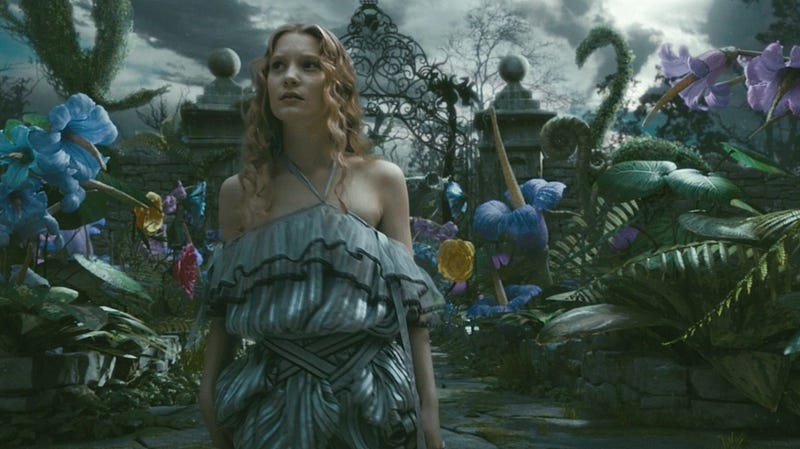

The Queen speaks about believing in impossible as about an exercise. This is precisely what it is: an exercise. It amps up your mental abilities like squats amp up your body. You don’t squat in real life, but you run, jump, hike, climb. You don’t believe in impossible things in real life, but you create, compose, suggest, develop.
Check it out.
Start with something simple but absolutely weird, for example, flying elephants. Or a state where no one older than twelve is allowed to vote. Or dogs’ conspiration against humanity.
Think about it in details. Ask questions.
How should an elephant body be adjusted for flights? What kind of wings would it have? Maybe, a reactive thrust will work better?
What was the last law the government elected by kids adopted?
What could be the dogs’ goal? Could they be aliens?
Take it seriously. Think weird.
You may want to include believing in impossible in your morning routine like the Queen in “Alice in Wonderland”. I prefer doing this exercise as a warm-up before writing. Don’t spend more than fifteen minutes, though, or you risk to forget your initial task.
Being creative is easier than you think. With these three simple techniques, you will boost your imagination to the unchallenged heights.
Sleep 4–5 hours. Go to a place where you don’t feel comfortable. Believe in impossible.
Create.