
3 Unconventional Entrepreneurial Lessons From NASA’s Perseverance
None of them are about perseverance
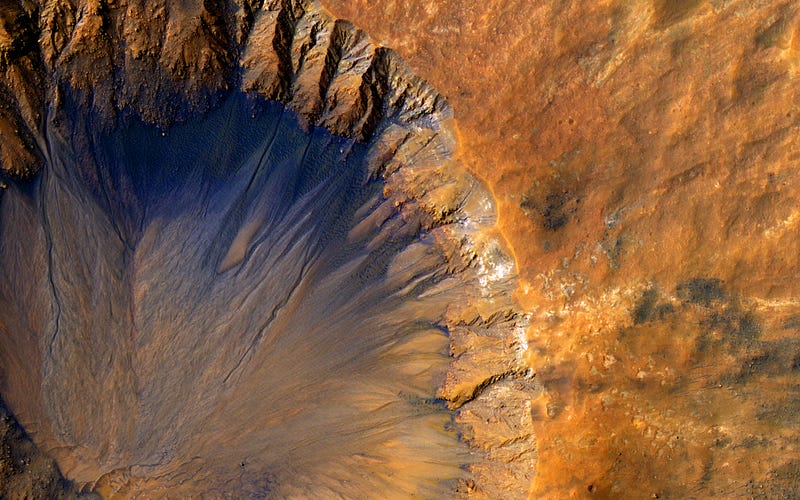
NASA’s Perseverance successfully landed on Mars today. After many years of NASA’s work and the seven-month journey to Mars, the scientist and engineers of NASA have finally achieved the success of the second rover on Mars.
Perseverance launched on July 30, 2020, and landed in Jezero Crater on Mars on February 18, 2021. However, the work on Perseverance started much earlier and required hundreds of scientists and engineers. This mission will be imperative to establishing the history of Mars and give essential information for manned trips to Mars.
However, the success of Perseverance holds key lessons for entrepreneurs both in creating successes and handling failures.
Timing Is Important
Perseverance launched last summer because of the time to reach Mars and the alignment of the Planets. Had the team missed this window and launched anyway, the entire mission would have failed.
The team had to choose the right window so that the product, Perseverance, would be fully ready by the launch time. Attempting to rush the project to meet an earlier launch window would have resulted in an inferior product that may have destroyed the mission, as well.
Bill Gross, the founder of IdeaLab, suggested that 42% of the success of a startup depends on timing. The right idea at the wrong time will probably result in a failure. As an entrepreneur, we have to develop the ability to determine when our audience or the public is ready for a product.
“Being a little early is okay, but being late is a disaster.” — Patrick Henry
If your product launches early of prime conditions by 12–24 months, it may have a slow start, but it will still likely succeed. However, if you launch late, it's difficult to set yourself apart from the competition in order to succeed.
Therefore, whenever entrepreneurs prepare to launch a product, we need to think about the timing of the product’s launch in the audience's context’s preparedness and the capacity to complete the project within the timeframe.
The Right Plan Runs Itself
Perseverance was not controlled continuously along its journey to Mars. Instead, engineers create a plan that can safely deliver Perseverance to Mars primarily based on automation. There are opportunities for engineers on Earth to make slight adjustments, but overall the plan runs without regular interference.
Once Perseverance is launched for most of the trip, engineers primarily only monitored it. However, prior to the launch, there was heavy planning that went into every aspect of the design, trajectory, and launch. Creating the right plan prior to launch will increase your likelihood of success and decrease your stress after launch.
When planning the launch of a product, you can become hyper-focused on the product development itself and forget about the other aspects of your launch. A primary aspect that can be easily automated — if considered beforehand — is marketing.
Especially if you already have an email list, you need to plan how you will inform those that are on your list already. Today, emails are easily automated but waiting until after the product launches to perform marketing can cause unnecessary panic.
You do not want to remind your list every few months about a specific product to catch any new people who have found you since the last pitch. However, if you create an email sequence for all new subscribers, then once you launch your all people who subscribe will learn about your products.
Putting your marketing plan into place will allow you to relax after you launch and enhance your product’s success.
Once Is Never Enough
Perseverance is not the first rover on Mars. The first rover, Curiosity, landed on Mars on August 6, 2012. While it has been sending back invaluable data about the Martian landscape, NASA sent a second rover.
However, they did not just send a second rover; they sent an upgraded rover. Perseverance has been specifically designed with upgrades from lessons learned from curiosity, from the wheels to the cameras.
Perseverance will help expand and complete NASA’s mission further.
Once you have launched your first product, you shouldn’t consider your job done. Your mission should be bigger than the launch of a single product or service. You should celebrate the success of your first launch. Then, start learning from the lessons of your first launch to create an even better or complimentary product.
If any company created one version of a product and never updated it, it would likely cease to exist. Their competitors would quickly overcome them.
Therefore, just like Perseverance, as entrepreneurs, we need to consistently be working towards creating new products and better versions of our existing products.
Conclusion
NASA’s Perseverance is a feat of innovation that will forever change space exploration. It may answer the questions of whether there was previous life on Mars and give insight that will guide manned trips to Mars in the future. The success of Perseverance required more than simply building a great product, which is an important lesson for entrepreneurs.
As an entrepreneur, there are more factors than the quality of your product that will cause the success of both your product and your business. If the timing of your product does not match your audience's receptiveness, then your product is likely to fail despite how great of a product it is.
Even if your timing is right, you still need the right plan that can be automated for your product to succeed. You should not need to do everything by hand in your business for it to stay afloat. Therefore, it is important to use automation such as in marketing and content scheduling to inform potential customers of your products.
Once you land your timing and marketing on your launch, you shouldn’t be done. You should always look for ways to upgrade and enhance your products to further advance the mission of your business.
By using these three lessons, entrepreneurs can increase the success of their products and business, with ultimately less work and stress.


