
3 Uncommon Medium Strategies for New Writers and Their Coaches
Developed in my first six weeks on Medium
Uncommon Medium Strategies?
Uncommon? Seems odd. There are so many stories, webinars, courses, and other steps already published about how to succeed on Medium. How can these strategies be called uncommon?
Well, I call them uncommon because I didn’t learn them from any of the available sources. I encountered struggles, couldn’t find answers that worked for me, and filled the holes with these strategies. Other writers may be using them, or variations of them, but I haven’t yet come across anyone sharing these three specifically. I also added several bonus strategies at the end — ones that I did learn from others and found super helpful.
Who are These Strategies For?
These strategies are great for anyone facing the same struggles I faced. Of course, for people that are just getting started. They are also great for those that are coaching new writers. I have been a coach in education for over ten years. It is sometimes hard to remember your own struggles from however long ago you got started. It is also hard to anticipate the range of struggles those that you coach may face. Everyone faces different struggles. The more strategies we all have for ourselves and to share, the better!
Results From These Strategies
In my first six weeks, I didn’t go viral or get rich…
- I publish 70 stories (they are not all super long, some are short poems)
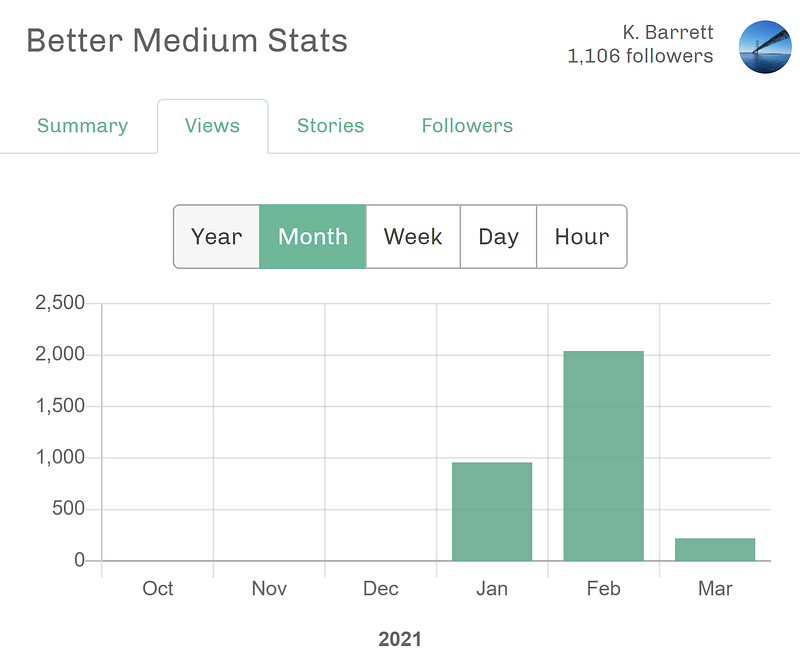
- Gained 1,000 followers and 2,100 views
- Made $32.94
Now in my seventh week, I still don’t have any indication that I am going viral any time soon. More importantly, I am thoroughly enjoying the journey! I created these strategies so that I can stick around and grow.
Struggle 1: Publication submission guideline overload
Strategy 1: Create Publication Drafts
I keep a draft story for each publication that I have submitted to. I use this as a document to keep important publication-specific information so that it is readily available when I am writing a new story for that publication. Here is what I find helpful to include:
- The feedback that I have gotten from the editors of that publication. It is very important to me (and probably to every editor alive) that they don’t ever have to give me the same feedback twice. I also include a link to stories that they have accepted and a note about stories that they have rejected. (I got rejected four times already.)
- Guidelines that are specific to that publication. For example, do they require a kicker, a specific tag, or any other points to consider when writing and submitting? I also add a link to the publications guidelines so I can revisit the entire document when needed.
- Best Stories and Favorite Authors are also saved here. One of the best ways to contribute great content to publications is to dig deep into their niche and understand what their readers are looking for. What is already successful in their publication. It is important to follow some of those formats, but not repeat topics that are already repetitive.
- Page Set-Up Templates are helpful for the frequent prompts that I participate in. I just copy the header, title, subtitle, and closing prompt mention from a prompt/story that has already been published in that publication and save it in my Publication Draft. I then copy, cut, and paste it into my new story and get straight to writing! This saves time and helps me make sure I have met all of the formatting guidelines.
I think I could have published about ten more stories if I had this set up from the beginning. I had been spending too much time pulling up guidelines, locating examples, and formatting when I was writing and then again when I was ready to publish.
Now it is all in one place. It also helps me build a great relationship with my favorite publications and their editors because I adhere closely to their guidelines and demonstrate that I use their prior feedback to get better. I don’t have personal evidence of this yet, but through my readings, viewings, and conversations —I have learned that this is important to them!
Struggle 2: Rushing to apply feedback to get published
Strategy 2: Apply Feedback to All Stories
Usually, feedback from one story can be applied to other stories as well. For example, I received feedback that I didn’t use the little t for my subtitle on a story. This causes Medium to place the subtitle below my name instead of below the title. I took that feedback and applied it to several of my other 64 stories where I found the same mistake.
Practice makes perfect! It is important that we don’t just grab feedback and apply it as quickly as possible to get that story published. Every bit of feedback is a valuable learning opportunity for broader success. We can’t, and don’t always need to, go back to past stories but in this case —that practice engrained that process in my head. I think of it every time I start a new story! I did add it to my publishing checklist as well…just in case.
Another bit of feedback that I found very helpful was about subtitles —add them to move the reader's eye through the page and also to better frame and label the content. Then, readers don’t have to guess about the purpose or order of anything because it is well structured and labeled. And, as a writer, it keeps me on track and on the topic as well. This is also on my publishing checklist. I have not yet gone back to apply this to previous stories, but I may as I see that my stories are still getting views. I may have happier viewers if I do. Those stories will continue to live on Medium and the editing process, applying the new learning, would be great practice. (Weekend to-do list!)
Struggle 3: Overload of learning opportunities
Strategy 3: Keep a Learning Log
There is so much great free and paid help available to support writers. I am consuming as much as possible. I found that I was wasting time searching for the tips and ideas that I had accumulated. I didn’t have them well organized.
I started a learning log. For each opportunity, I document the source, links, a quick summary, resources, and story ideas sparked while learning. I also keep questions in my learning log so that I can ask or find the answers at the next opportunity.
I use a google doc for this because I need a table format. My learning log has archived ideas from a few 5-day email courses, a six-week video course, phone calls, articles, videos, webinars, Facebook Live events, and a few other opportunities I have participated in. Now, it is easy to go back to each to review the key points and access the resources quickly when I am ready to apply them.
I have done entirely too much learning in six weeks to expect myself to keep it all readily available in my forty-five year old brain. It was also clear that some of the learning such as SEO and email lists will not be applied until a little further along in my journey. When i is time to revisit those topics, it will be easy to access the resources because of the structure of my learning log.
Bonus: Helpful Strategies I Learned From Others
Remove private rejection notes: If a story was rejected, remove that note if, or when, you submit it to another publication. It is a private note, not only between you and that editor but also between you and other editors that you submit it to. (See strategy one above…copy the note for your publication draft before deleeting it so you can remember the story that was rejected from the publication and especially make sure to save any extra feedback about why.)
Connect with others: Slack/Facebook groups, events, coaching, emailing with other writers, responses on stories. This allows you to discover answers to questions you didn’t even know yet that you you would have. It can also serve as a great source of feedback. (You can always ignore anything that you don’t find helpful.) I have even emailed some authors and professionals that I quoted in my stories. I let them know I was quoting them. For me, this already started one relationship that I plan to use as an interview for part of a future story. This is one of the things that keeps me going…growing a community!
Know your stats: Claps are crap…but I love them! I want to say thank you for every one that I ever received! But, claps have given me an inflated sense of how well my pieces are doing. For instance, my best producing story has over 1,500 claps. That feels pretty big to me. But, in reality, it has 125 views and has earned $3.30. That is not really big! The three most important things I look for in stats are the views, reads, and ratio.
- Views — means that someone saw the title and photo and opened the story.
- Reads — means my writing was good enough to keep reading once they opened it.
- Ratio —a quick measure of how many people opened the story and actually read it.
I review these stats and consider which publications they are published in to guide my next moves. Of course, I also consider how much money a story has made. But, honestly —I mostly go by how I feel. I write because I am enjoying it. I publish mostly in publications that have a supportive community.
Study publications that are of interest: Not following the submission guidelines is the best way to get an immediate rejection. Studying/reading to become familiar with the publication is the best way to get published. Publishious is a publication that I like. I tried to apply as a writer but since I have not been on Medium for 3 months…it’s a no-go. I will study for the next two months and try again.
Dig into the simple repetitive advice. It is simple to dismiss this repetitive advice as if you get it because it seems so easy. But, it keeps coming up in the learning opportunities because many people mess it up. It is more important than we think, and there is more to it than meets the eye.
Images — one of my strengths and downfalls. There is plenty of advice avainlable about how important this is. I have never used an image that I didn’t create or take as a photo. Some of my images are great. Some of my images are quite a stretch in terms of appeal to readers and suitability for formatting. This leaves me with some stories that are not well represented visually.
Just because an image is special to me or is a point of pride because I created it or took the photo —that doesn’t mean it is the best choice. My publishing checklist includes the question…From the readers' shoes, does this image draw me into this story? My to-do list includes: Review and Update Images. I will go back to improve a few of my worst images and to review others so that I increase the quality of my future images.
Title is another repetitive topic. There is so much information available about titles. Dig into it. Don’t listen to that little voice in your head that says, yeah, yeah, I know about titles. If you are new to writing you probably don’t. (I thought I did…I didn’t.) I am not going to go back and change the titles of my stories from the past but I am going to review them to see where I have gone wrong, so I go right in the future!
We do not learn from experience…we learn from reflecting on experience. John Dewey
The Best Strategies are Your Own Strategies
Figure out what strategies work for you! Make them your own. Of course, for strategy one above, you may find that you prefer to keep a paper notebook, or a word/google doc instead of a story draft…do what works for you. These are the strategies and habits that I am developing to support my success. I hope they will help you increase yours or if you coach others, you may suggest these ideas to help them.
Final Thoughts
Read (read, and read some more), keep a document of story sparks, and don’t hoarde ideas — you will think of more! Lastly, ENJOY the journey! Don’t enjoy it quite as much as I did…you should still stay on top of your other responsibilities and eat — I have skipped both at times in the last six weeks!
Thanks for reading! Good luck with your writing journey! If you are interested in reading more about my writing journey click for part 1. Part 2-coming soon!


