
3 Ugly Truths About Fitness No One Tells You — A Trainer Spills the Beans
I promise you’ll walk a clearer, straighter path on your fitness journey without stumbling over the same hurdles — fitness plateau, weight loss reverse, muscle loss, and many more.
It’s been over a decade since I took the role of a fitness trainer, dedicating my time and energy to helping others reach their fitness goals.
And in my journey, I’ve learned stuff that would make you think twice about everything you’ve heard/known/read about getting fit.
The sheen of the fitness world belies a darker truth, thriving on misinformation and often leading its followers astray. There are secrets that only fitness trainers know. They want you to play the game without knowing the rules.
The reason is that there’s money to be made and people are eager to see results yesterday.
So, why am I spilling the beans?
It’s not to scare you off. Far from it. I’m here to pass on the hard-earned truths that no “fitness trainer” bothered to tell me.
My hope? You walk a clearer, straighter path on your fitness journey without stumbling over the same hurdles — fitness plateau, weight loss reverse, muscle loss, and many more.
#1 — Chasing a Perfect Body Can Do More Harm Than Good
When I got serious about fitness, my goal was to get shredded. Cut down body fat to single digits. Limit carbs. It’s easy to get caught up in wanting to look like those ultra-fit models on social media.
And I even succeeded in my plans. I did get those dream abs. But I paid a hefty price. My health took a serious hit. I lost muscle mass. My strength vanished, and I felt terrible both inside and out.
Looking back, I was a mess. My obsession with food and counting every calorie took a toll on my mental health too:
- Ensure precise sleep and recovery routines.
- Prepare your meals with precise measurements for every ingredient.
- Avoid dining out completely.
- Stick to simple foods like lean proteins, steamed veggies, and basic carbs.
- Always carry your meals to eat exactly on schedule.
- Follow a designated workout plan without deviation.
- No allowances for illness or lack of motivation.
- Expect multiple training sessions daily.
- Skip late-night activities and parties.
- Feeling constantly hungry and exhausted is common.
- Your life centers around diet, exercise, and rest.
Essentially, you’re on a gradual path to starvation.
I was preoccupied with numbers, overshadowing the enjoyment of eating. This relentless tracking of calories sapped the pleasure from meals, turning each eating experience into a source of anxiety.
And those picture-perfect fitness models?
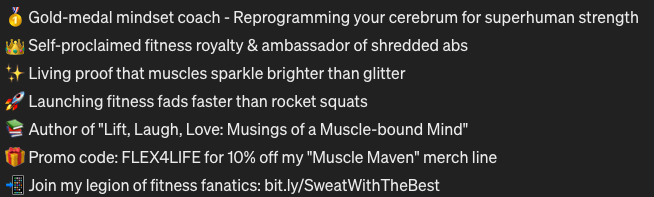
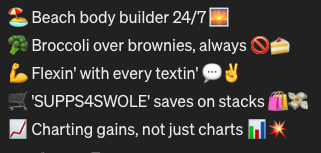
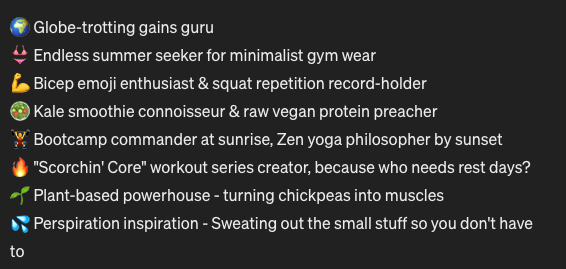
My general observation is almost all top Instagram accounts lack uniqueness, mirroring each other closely.
Plus, they all have common content — exotic photoshoots, fitness videos, healthy recipes, pet photos, motivational quotes, and before/after pics.
Influencers’ posts are crafted with professional photos and beauty teams, merging vibrant visuals with a luxury and fitness blend. This strategy highlights Instagram’s visual power in the fitness industry, sparking debate on its impact on beauty and success ideals.


Turns out, that being ultra-lean isn’t all that healthy.
Research shows ultra lean can lead to a bunch of health issues, like mood swings, heart trouble, and even more serious risks like social isolation, amenorrhea, low libido, disordered eating, bones like Swiss cheese, etc.
So, now, you’re not just looking at a fitness goal but a heap of potential health problems.
An exciting research that caught my eye was about steroid usage in male bodybuilders where a whopping 54% were found to be using some sort of PEDs or artificial performance enhancers.
In a nutshell, we’re embracing an idealized life that’s often far from real. It creates unrealistic standards, making us feel inadequate.
Avoid comparing yourself to fitness influencers to dodge frustration and negative self-feelings.
#2 — Steroids Are Omnipresent
Many people, including me before, thought that only the top-tier bodybuilders used steroids or other performance-enhancing drugs (PEDs). But, these substances are found far beyond those elite circles.
If you step into almost any gym worldwide, chances are you’ll meet someone who uses steroids. It’s not just the muscle-bound folks at the gym, either. Many of the fitness models you see on Instagram use steroids. Without confessing.
Back in 2013, James Ellis, a seasoned personal trainer and aspiring bodybuilder, noticed a surge in his online followers but a frustrating halt in his gym progress. At 32 and on the verge of his first big bodybuilding show, he ditched his earlier stance against doping for a quick fix with oral steroids, a move he found simpler than injections.
Ellis candidly shared,
“I quickly chose the darker path, lured by the industry’s validation and the promise of more followers.”
It’s a lot more to take on than just aiming for that magazine cover look.
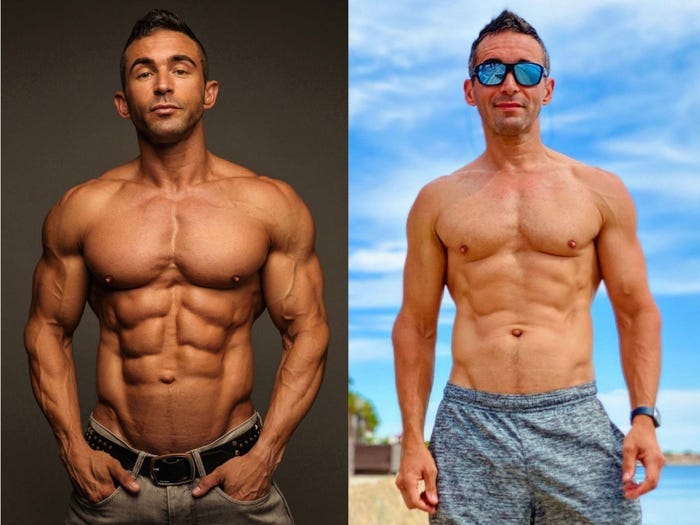
Many other fitness influencers have openly admitted to taking steroids despite knowing its downside.
Take Nate Blackwell, who competes in bodybuilding and has a growing following as a micro-influencer with around 4,800 followers on TikTok, shares his experiences with steroids across various platforms like TikTok, Instagram, and YouTube. His TikTok content blends videos showcasing his bodybuilding progress with humorous takes and memes related to steroid use.
And that incredible body transformation of your favorite movie star? Yep, steroids played a part in that too.
Dwayne “The Rock” Johnson, the ex-WWE Superstar turned actor, opened up about his past experiences with steroids during a 2009 chat with MTV while promoting his film, Race to Witch Mountain:
“I experimented with it. Back when I was 18 or 19, my friends and I gave it a shot. We really had no idea what we were getting ourselves into.”
When Sylvester Stallone was gearing up to return as Rambo, he found himself in a bind at an Australian airport in 2008, caught with bottles of human growth hormone (HGH). Later on, he openly admitted in several interviews, including with Time and The Today Show, that he had been taking HGH. However, he tried to downplay its significance by describing it as “an amino acid” and comparing its use to something as common as taking aspirin.
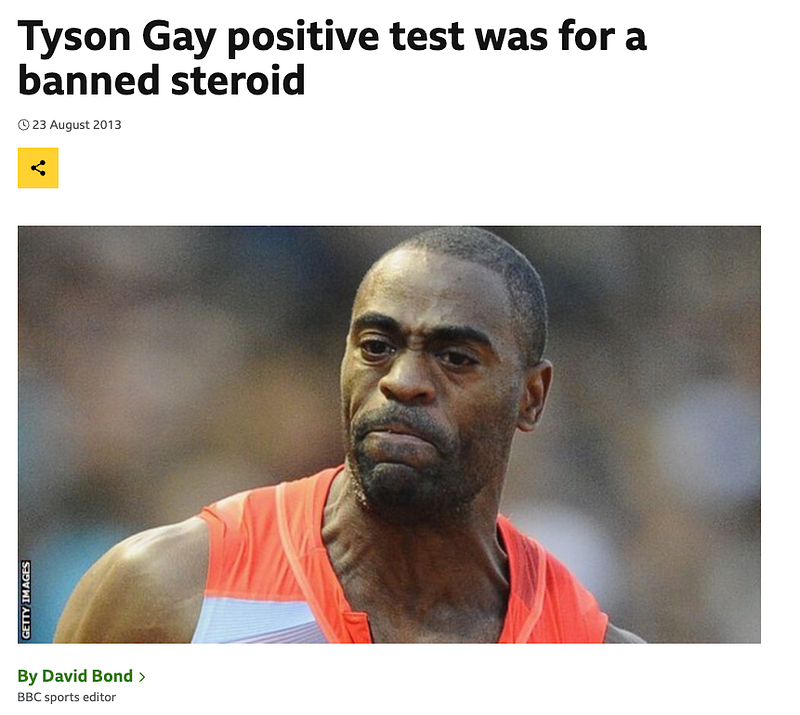
Steroids and PEDs are not strangers to competitive sports, either. Even top athletes like Tyson Gay have also been found guilty.
The list is endless. Many others use them without getting caught.
While I don’t outright condemn the use of steroids, and see their potential benefits if used responsibly. However, I am critical of the unrealistic expectations they create.
This deception can lead to a skewed perception of what is achievable naturally. I was so much inspired by this kid’s fitness journey who enhanced his body without supplements.
#3 — A Perfect Workout Program Is a Myth
Online feeds are mostly filled with two things:
- News
- Thirst-trap photos of male/female influencers
The reason is simple.
It sells easily by hijacking your rational thinking brain. And fitness influencers use it to their advantage to sell their fitness programs and workout plans that are far from being practical and trustworthy.
Reason №1: The “Brutal” Reality We Don’t Pay Attention To
Why are we all rushing to throw our money at the latest, most complex fitness fads?
The truth is the health and fitness world loves to complicate things. Because it’s tough to sell simple. Wrap up an old idea in a new, complicated package, and suddenly, everyone’s reaching for their wallets.
No wonder a report from the Global Wellness Institute, a nonprofit focused on research in preventative health and wellness, found that Americans spent $264.6 billion dollars on physical activity every year far more than any other nation.
Achieving health and fitness is about showing up and putting in the effort. Not just thinking or talking about it. Action is what counts.
Complex methods might seem exciting at first. They give you plenty to talk about and might even kickstart your journey. But, they’re often just distractions. They offer an endless array of excuses to switch gears or give up entirely when the going gets tough.
Simplicity, though, doesn’t allow for any of that. It demands consistency and hard work, day after day. No hiding, no shortcuts. Just the relentless pursuit of progress.
Reason №2: The “Reality” We Don’t Know
Do fitness influencers or coaches walk the talk? Do they follow the workout plans they share with the world?
Perhaps not!
To some, it’s just a job. They do the minimum. Others treat fitness as a side hustle for extra cash (dreaming of acting fame, perhaps?). Now, many aim for social media fame.
Ask your trainer to share their journey — The pitfalls? The plateaus? The solutions?
If they draw a blank on these, consider looking elsewhere.
Reason №3: The Real-Life Experience
A six-pack/chiseled body doesn’t automatically mean someone knows their stuff about fitness or nutrition. Seriously.
The fitness world is easy to jump into. Anyone can get fit, doing pretty much anything. That’s the funny part. Even if you mess up and keep at it, you’ll probably end up in decent shape.
I’ve met folks with six-packs and fancy degrees who were terrible at training others. Meanwhile, some of the best trainers I know don’t have picture-perfect abs.
It might seem weird, but it makes sense. Think about it. Not all top soccer managers were star players. The same goes for golf instructors.
Coaching and doing are worlds apart.
Sure, you wouldn’t trust a completely out-of-shape trainer. But they don’t need to be magazine-cover ready all year round or lift crazy weights.
Reading a bunch of fitness books doesn’t make someone an expert, either. Knowledge without practice is just theory.
Look for a trainer with real experience. One who’s helped hundreds or thousands get actual results. Not just someone good at taking selfies and writing fitness articles.
“Knowledge without mileage is just talk.”
A common myth is that to keep progressing, you need to constantly change your workout routine to “surprise” your muscles. This isn’t necessarily true. I’ve been loyal to a slightly modified version of the same workout plan for over five years now and still see remarkable improvements.
If you’re progressing and having fun with your current routine, there’s no rush to switch things up.


