
3 traits that make me want to hire you
I think that the more books I read and the more articles I write, I’m starting to believe that despite how cool and awesome Agile, Scrum, SAFe and all these frameworks, methodologies and tools are, they are not the key to success. All these things serve one purpose and one purpose only, to help people to interact and communicate with each other by giving them some structure, some direction to conversations and by creating reference points to have a common understanding. I appreciate this a lot, but I believe that success starts with having the right people with the right mindset. If you just jump into Agile or anything else without dealing with the people first, you will make your life very difficult. In “Can you push organizational change?” I already wrote that a company and its culture can only change if the employees and their mindset changes. In this article I want to talk about hiring the right people in the first place.
A job interview is like a date, everybody tries to show their best, try to learn about each other, try to raise some interest. Just like a date, a job interview also tells a lot about a company, the way they deal with the candidates, the interviews and especially how they deal with the rejected applicants perfectly reflects the company’s culture and values. Like most people I’ve had some good and some very unpleasant interview experience too, especially with companies promising you rainbow and unicorns and then suddenly kicking you out of the backdoor. The contrast is just too big and it makes you wonder if they do the same with their employees too, if they have any loyalty or respect to them at all. So I had my fair share of good and bad interviews and a few years later, when it was my time to conduct them, I did not want to commit the same crimes I had to suffer myself. It cost me a few sleepless nights but at the end I figured out who I was looking for. Let me share some of these key aspects with you, without playing the corporate bullshit bingo.
Have the basic knowledge and mindset
First of all you to have a proper schooling according to your seniority level. I hear a lot of arguments that the quality of education is not the best and what is being taught in the school is not reflecting what the job market requires. Some may argue that Steve Jobs and Bill Gates never graduated, but at the same age they were already running their own businesses.
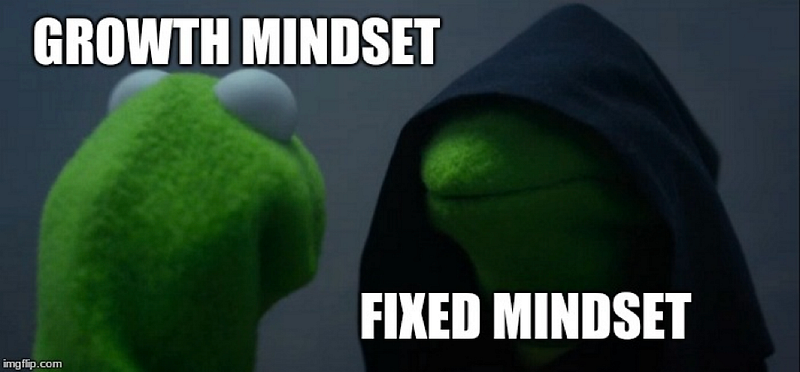
I believe that you can be only successful in agile if you have a growth mindset and for me a degree shows that you are self-motivated enough to learn and to grow on your own, you are able to finish things even when you are not particularly interested or happy about it, you can manage your time and you can accept the fact that sometimes what you need to do may not benefit you, only others. I need to know that you won’t give up at the first difficulty you face, because you will be part of a team, people will rely you and you will rely on them. You need to show that you are mature enough to deal with life. A degree also shows me that you have learned how to learn, so you don’t need someone to sit behind you the whole day, a degree shows me that you have the basic knowledge to do your job. You know the tools and you know how to use them, you share a common understanding with your future colleagues, you have the foundation we can build on together.
Don’t get me wrong, a degree is not everything and does not guarantee anything, but you have to understand that knowledge doesn’t substitute intelligence and intelligence doesn’t substitute knowledge. I need both. Your degree is only as valuable as you are. If you don’t come from the best schools or best place, I don’t mind because you can be still smart and hard working. I also have no issues with people coming from other fields, I knew people who had a degree in mathematics, physics, economy, biology and they all ended up being good programmers with a very unique and valuable mindset. I liked these people very much because they were extremely motivated to work in IT and they worked a lot to get there.
It’s also not an instant no-go, but if I see gaps in you CV, especially in your studies, if I see that you finished the 3 year program in 6 years, you can expect some uncomfortable questions. Maybe you can explain it, maybe you had an accident, a surgery, a personal tragedy or something you are not responsible for, you can have a valid reason why you broke your studies or employment, this is life and we can’t punish you for being unlucky. If this is not the situation, if you had the time, the resources and the opportunity but you struggled because you had problems with your focus and motivation, I will need a very good reason to hire you.
See the opportunity to learn in everything
Learning doesn’t stop when you graduate and get hired, it’s only the beginning. You need to learn and learn and learn. Continuous learning is so important ant that even SAFe considers it a cornerstone, see “Continuous Learning Culture”. From my side continuous learning has two basic aspects, one is the improvement of your skills and knowledge in the fields of your interest as a professional, the other is the improvement of you as a person.
From the professional perspective you are a good candidate if you read books, community forums, you know the latest stuff, you show interest in trainings and certificates not just because of the paper but also in order to learn, you have an agenda or plan to be more, to do more, you can tell me where you expect to be in 5 or 10 years. Of course nobody can predict the future and most likely you won’t do what you expected to do 4–5 years before, that’s not the point, the point is to show that you are self-driven and self-motivated, to grow, to be better.
The personal perspective is a bit more difficult because the world is not going into the right direction in these days. I’m not particularly happy about the ego-centric culture we start to develop, where I’m always right and I deserve everything right now and I’ll crush everybody who’s in my way. I’m not particularly happy about today’s cancel culture, where everybody gets offended about the slightest uncomfortable event, critique or opposing opinion. I’m not particularly happy that instead of arguments, discussions and reasoning, instead of using common sense, people take everything personal and attack automatically. You can’t have a happy and successful personal and professional life without practicing common sense. It doesn’t matter when you were born (I’m a millennial by the way), what your religion, gender, ethnicity or other background is, grown up people need to know when to take it and when not. In fact, the higher you get in a company’s hierarchy the more it becomes a luxury to get offended, because you will be exposed to more and more people who are depending on your decisions, success and failure.
If you want to work with people, especially as Business Analyst, as a Product Owner or some sort of Manager, you need to be able to deal with conflicts, you need to be able to receive critique and you need to be able to accept failure. When you or your work is being criticized, you need to be able to hear it, reflect to it and draw the necessary conclusions. Accepting negative feedbacks, critiques, to be able to hear what you don’t want to hear are perfect opportunities for you to be a better person and a better professional. You don’t need to agree with everything, but you need to be open to learn.
You also need to know how to argue. I can tell you that this is where most of my candidates fail the interview. The goal of an argument is to approach a problem through the eyes of others, from a different perspective. An argument is an intense form of information exchange, you have a certain subject and you share with others how you see it. You have a great opportunity to learn more about the subject by learning the viewpoint of others. Once again, you don’t need to agree with anything you hear, but that doesn’t mean that what others say is entirely wrong and useless and more importantly their disagreement doesn’t mean that they want to attack you as a person. If it gets personal, it’s not an argument anymore. Even if you disagree with someone, they might reveal issues or solutions you did not consider, things which could cost a lot if they remain uncovered.
The purpose of an argument is not to win. I’ve used to do some situational exercises with the candidates like “A developer constantly ignores your specification and tells others that he doesn’t see any value in your work and in your role. What do you do?”. Sooner or later everybody finds himself in a situation like this and there are no good answers. The goal of this exercise is to see how you behave under stress and pressure, and to be honest many candidates fail at this point. They simply go too far, they are unable to let it go, and they start to do everything to win the argument, go personal, start to threaten or even to lie and they don’t even realize it, only after they said it out. It might seem unfair to torture someone like this on an interview, if someone is a junior then it’s perfectly fine to freeze like a deer on the highway at night, but if you apply for a senior position and you lose your mind, that’s a no-go. Who wants to win at all cost is not open to learn and to cooperate. Just imagine a Business Analyst arguing with a customer that he knows it better. Imagine a Project Manager who just can’t accept that the devs are right. You need to know when does it worth to win and when it is time to retreat.
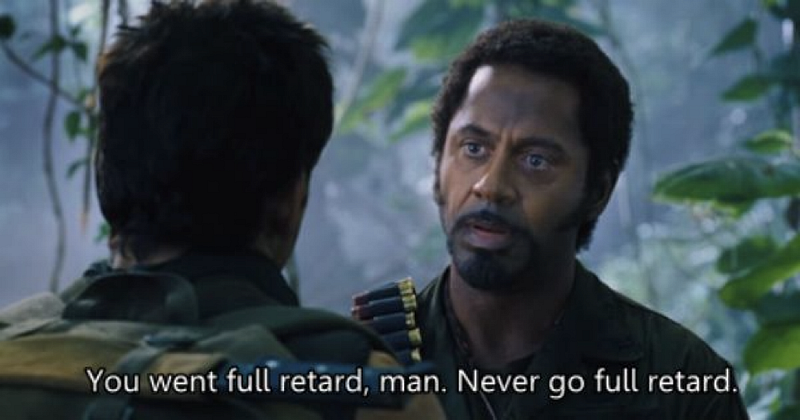
Last but not least if you are a good candidate then you know how to accept failure. No matter what you do, success is never guaranteed, especially not in the IT industry. Failure is not only common but expected, for example Agile highly welcomes failing early and fast, that’s the whole point of having short iterations. You need be able to deal with your mistakes and learn from them. I’ve seen many cases where people just tried to pretend that nothing have happened, or they just went full retard and started to blame everybody, including the road traffic, the government, a particular ethnic group and even the neighbor’s cat, they blamed everybody and everything they could, but never themselves.
Humans naturally protect their egos and shift responsibility, it’s a self-protecting mechanism, we are all hard-wired to do that. I’m doing that as well, I can get pissed off very much but then I calm down and I recognize the behavioral pattern and I try to cope with it, then learn from it. Critique, disagreement and failure are all threatening our self-esteem, confidence, our personal integrity, our place in the hierarchy. We can say that our existence as a whole is being threatened, and we naturally react to this threat by fighting, freezing or fleeing. You cannot oppress these animal instincts, but you have the possibility to recognize them and react to them properly, to analyze the threats and weaknesses and turn them into strengths and opportunities.
Support, collaborate and cooperate
In the age of Agile the era of heroes, lone-rangers and cowboys has ended. Agile is about distributing work, ownership and responsibility, agile is about self-organized, autonomous teams and collaborative work. Agile is about helping and supporting each other. As I wrote in “This is Agile’s answer to old-school leadership”, the time of god-kings, the time of teacher-student relationships has ended. However I highly value people who are high-achievers, personally motivated to grow and learn, able to lose and able to learn from their mistakes, it has no use if they can’t function as a team member, if they don’t put anything into the common bucket, only take from it.
What do I mean by functioning as a team member? A functioning team member maintains a degree of situational awareness. Just like by driving, where you might talk to your passengers and listen to the radio, in the mean time you drive the car, check the traffic and the pedestrians around you, you constantly check the lights and the signs. You are not just simply pushing the pedals and steering the steering wheel, you are aware of environment around you. I expect this from a team player too, you are aware of the deadlines, the tasks, your colleagues and their work. If someone gets stuck or needs help, you recognize it and you offer your help. If you have difficulties you don’t just sit on it, you either try to resolve it or ask for help. You are proactively seeking to support others and you are proactively seeking for support as well. You are not only participating on meetings hoping for a giant meteor to end the suffering, but you are active member of the discussions. I get it a lot that I should not have high expectations because most IT people are silent, not very social and can’t play in teams, but I’m pretty sure that those who say this have never seen these dudes when they were playing World of Warcraft and League of Legends. They exactly know how to collaborate and work as a team towards a common goal, so this can’t be an excuse. The only difference is that when you want to make engineers collaborate, you have to set clear goals and expectations.
Another significant part of being a functioning team member is respect towards others and towards yourself, I would rather say that I expect a degree of emotional intelligence, a certain degree of self-awareness from everybody. A big part of it is how someone deals with conflicts, arguments and critiques, but another big part is being aware about how you dress, how you feel, how you behave and what you say. I want to see that you have clear goals and plans, that you are motivated, and this motivation should be also reflected in how you look and how you engage with others. The two absolutes are being completely ignorant, not dressing up to the environment, not maintaining eye contact, only talking when you are asked and only answering something just to give an answer, never saying no, never having an opinion, if we do this it’s OK, if we do the opposite, that’s OK too. In a team, especially in an agile team that’s not gonna work, this is not agility, not even being introvert, this is total passivity. Ignorance is not agility. The other absolute is someone who is aggressively or passive-aggressively pushing his presence and will on others, this person tries to obtain complete control over others, wants to own the moment. This person can be verbally abusive, have out-of-context and inappropriate jokes or behavior, may be physically aggressive for e.g. bending over you, blocking your way while talking, grabbing you, touching you in any inappropriate form. This person is ready to walk through you if he feels justified to do so, and only interested in the team’s success because of his own success, when things go bad he shifts responsibility, becomes aggressively defensive or just disappears. If you can place yourself between these two absolutes, you might be a good candidate.
Hiring someone is not rocket science but also not an easy task and I don’t think that it’s a good practice to follow templates, checklists and those stupid cognitive tests. To hire the right candidate the interviews must be conducted by people with the right mindset and these people should have the flexibility to rely on their own experience and gut feelings. As I said before getting a job is like going on a date, there are lots of books about it, there are high hopes and expectations but at the end what will matter is the chemistry. If there’s no chemistry then there is nothing to talk about. I hope what I shared in this article will help you to find the right company.
If you enjoyed reading this article, please support me with a few claps and please follow me. Thank you!