
3 Touching Lessons I Learned From Locals In Poor Countries
They changed my mind forever and may change yours, too.
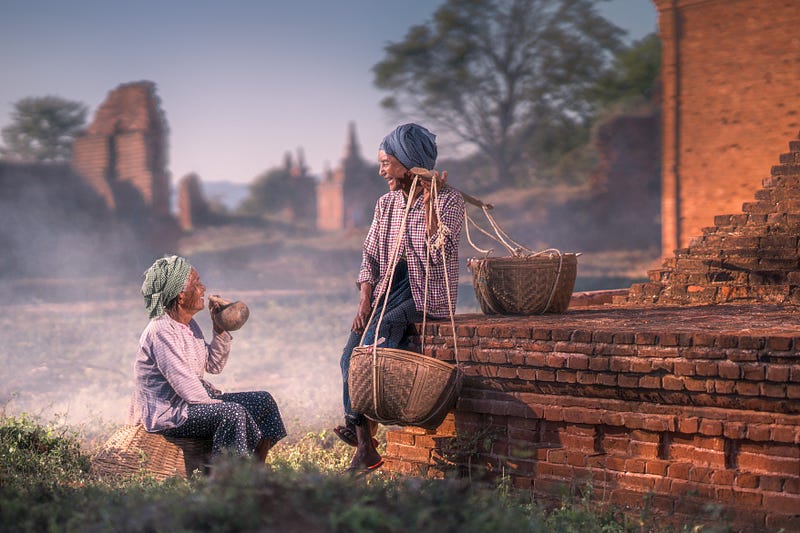
“Walk with the rich, walk with the poor. Learn from everybody, that’s what life is for.”
— Eric Bibb
Speaking to people who have similar interests, backgrounds, and values like you is great, but it’s even more enriching to surround yourself with those who don’t.
In the last years during my travels and living abroad, I had one main intent: to talk with locals and learn from locals.
Looking back to 28 years of age, the most valuable lessons I’ve learned in life were not from those who were “like me”, but from those who were different.
It wasn’t from those who already have everything and still crave more, like the CEO next door.
It was from those who didn’t have a lot but still seemed endlessly happy and valued every little piece they had.
I was lucky enough to receive nuggets of wisdom from locals in poor countries that touched me so deeply that they bring me to tears to this day.
Sometimes only a few words can change the way you think and by sharing these touching stories, I hope they change the way you see the world, too.
1. “Be Kind, Even To Those Who Are Not To You.”
I know the phrase “Be kind” is being thrown around like confetti, but let me tell you a story about true kindness.
In 2017, I was boarding an Air Asia plane to go back to Bangkok from the Philippines.
The moment I entered, I could feel how cold it was.
I’m certain I am not the only person to ever freeze in an airplane but this time the grumpy Austrian in me could not hold herself back and so I loudly said:
“It’s f*@king cold.”
Not even hesitating one second, the flight attendant that just greeted me turned around, smilingly, and said: “But I can give you a hug”.
My jaw dropped and the next moment she actually warmly hugged me — and that gesture simply made me smile too.
Out of all possible reactions to my complaint, this was the last one I expected.
What this woman did here was clear: I wanted to spread a gift of anger and this woman simply chose not to accept my gift. Instead, she chose to be kind and give compassion to me.
She could have chosen to adjust to my level of frustration which would have resulted in two angry people. But she chose to spread love which resulted in two happy people.
“Whenever you share love with others, you’ll notice the peace that comes to you and to them.” — Mother Theresa
So what is real kindness, then?
I’ve learned that real kindness means even if others share an unpleasant emotion with you, you choose not to let that emotion overtake you.
Even if it might be very tempting, you are strong enough and have sufficient self-control to react with the only emotion that unites us all: love.
What you can take away from this:
The next time someone wants to spread hatred, anger, or frustration with you— you can choose not to accept it.
Remember, it’s like a present someone wants to give to you, but you don’t have to accept every present that is offered to you. If you accept this attitude and react in the same way, you will also be angry at the end of the day.
Is that really worth it?
Go through life being kind, even to your strongest enemy — may it be a co-worker you don’t like or your dad’s new girlfriend — if you spread love, it will multiply.
You can choose between going with their anger and the result will be two angry people. Or you can choose to spread happiness and the result will be two happy people.
The choice is up to you.
2. “There Is No Free Lunch In This World.”
Justin was the typical long-haired, hipster surfer teacher in Bali.
Originally from the Mentawai islands, he was forced to work on a more touristic island because he had no prospects there.
One evening he took me to a local food place to have dinner together.
At one point, he shared one of his father’s wisdom with me: “You know, my father always told me: Justin, there is no free lunch in this world.”, he said.
Sharing what his family taught him meant so much to me because he came from a place that I could have never imagined growing up in.
When we finished dinner, he suddenly wanted to pay for it. I told him there was no way he can pay for me, but he insisted stubbornly.
At that point, I was seriously close to crying. How can a person that has so little and doesn’t even know me well want to invite me for dinner?
“Privilege is invisible to those who have it.” — Michael Kimmel
The reason this made me specifically sad was because of the quote he had just shared with me previously.
Justin was not privileged. He had to work hard, every single day of the week to be able to afford something so natural to me — something as simple as a daily meal.
I know there are various interpretations of this quote, but my meaning of it in this context was clear: Nothing in this world is for free. We have to work hard for the things we want and need in life.
For some, this might be a family vacation — for others, this might be a meal.
What you can take away from this:
It is impossible to get something in life that is valuable to us without having to pay for it in some way.
Nothing in this world should be taken for granted and everything we desire, we have to work hard to some degree.
In the Western World, we sometimes have forgotten that we still — first and foremost — work for our basic needs such as food supply, shelter, and safety.
We have forgotten about it because we are in such a privileged place that we think of hard work as a means to fame, self-realization, our first Rolex, or our next car.
Maybe we were born into a well-off family and already inherited a solid financial base.
It’s easy to take things for granted when we are surrounded by those who are “like us” and have everything.
Once you get out of your bubble, you will see that there are people who need to work for their next meal instead of their next Rolex.
So talk to people who are not as privileged as you — listen to their stories and don’t ever take your next lunch for granted again.
3. “Don’t Be Sad About What’s Gone, Be Grateful For What You Had.”
During my voluntary work in Jamaica back in 2016, I visited the breathtaking Blue Mountains.
I was lucky enough to be spending the weekend with our local taxi driver’s family in a small village, inhabiting maybe 200 people.
When we arrived at his family’s house, they told us about the recent passing of a woman in the village. They said that her “funeral party” will take place that night and if we were down to go.
“Funeral party?!”, I thought to myself “Well, that sounds interesting.”
Being as curious as I have always been, I agreed on going there.
So around 10 p.m., we hit the road and drove to an outside community area in the village.
When we arrived there, I couldn't believe what I saw:
All 200 villagers came together at the main square to celebrate this lady’s life — young and old. There was a framed portrait of her in the front, but unlike I knew it, the 200 villagers were not standing or sitting in silence behind this picture.
In fact, the music was playing so loud that you couldn’t even have a chat with any of them.
What these people did seemed odd, yet, it was mesmerizing to look at: they were dancing. Like crazy. And they were smiling. As if they celebrated their graduation or wedding. But it was a funeral.
And they didn’t stop until it was 3 a.m. in the morning.
It didn’t take long for me to join the massive dance party only to get lost in the incredible vibe of this village community.
“We all die. The goal isn’t to live forever, the goal is to create something that will.” — Chuck Palahniuk
On the drive home, I remember thinking to myself how refreshingly different this funeral had been compared to funerals in the country I grew up in, where everyone is dressed completely in black, silent, and basically crying the whole ceremony.
I admit that the thought of a “funeral party” seemed odd at first because I thought to myself: Well, how can you celebrate if someone dies?!
But here’s the point: They were not celebrating death, they were celebrating life.
Reflecting upon it now, I realized that these people made a priority of what some cultures in the West have missed so far: in their “goodbye ceremony”, they were not crying about what they have lost, but they were thankful for what they had.
And by that, they were honoring and not dishonoring the person’s life. They were grateful for what this person created that will last forever and not for what was lost forever.
What you can take away from this:
Grief and crying are part of our lives and necessary to heal from a loss.
But why should we walk through life being constantly sad when we could be grateful for what we have learned from that deceased person?
Is there someone you have (recently) lost?
Write down a list of quotes or statements this person said to you or others that inspired you throughout your lifetime.
Write down the best and most fun memories you share with them — you know the ones that make you smile when you lay in your bed with your eyes closed and think of them.
Don’t focus on what you have lost, but think of what you can take away that will stay with you forever.
If it was your funeral, would you want your loved ones to stand there with hanging heads and cry all day or would you rather have them celebrate what you have left that will stay with them forever?
Bottom Line
Receiving wisdom is a gift and sometimes you learn most from those who are the complete opposite of you.
Visiting other countries and truly getting involved with locals is a great way of being taught some precious lessons. The next time you’ll be able to travel post-pandemic, make sure to talk to the people who live and grew up there.
These three lessons touched my heart and soul during my experiences with locals in poor countries:
- Be Kind, Even To Those Who Are Not To You.
- There Is No Free Lunch In This World.
- Don’t Be Sad About What’s Gone, Be Grateful For What You Had.
There is a lot we can learn from those who have less and they might have something to say that can change the way you see the world forever.
Listen to them, listen to their stories, and make sure to share them.


