
3 Things You Should Know about Concussion Symptoms and Recovery
When a bump on the head isn’t just a bump on the head

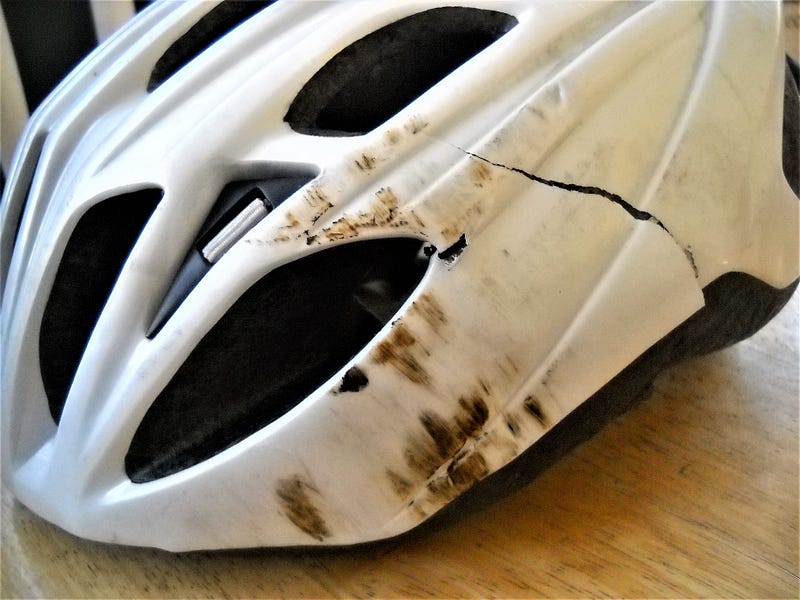
I’ve had two concussions that I know of. Both occurred as an adult, while riding my bike (wearing a helmet, before you ask).
The first time, my rear bike tire slipped on some leaves as I was turning onto the sidewalk, and I went down hard on my right side. My head bounced, gently, on the pavement. I had very mild symptoms and was fine about a month later.
The second time, the car impact threw me about twenty feet. I was unconscious before I hit the ground. I didn’t notice any major symptoms until six days later. And over six years later, I still haven’t fully recovered.
Now that I’ve established my credentials as a Legitimate Concussion Expert, here are three things I’ve learned about concussion recovery.
1. You may not start to experience, or notice, concussion symptoms until several days later.
With my first concussion, the next day I was talking to my sister and had trouble finding the words I was looking for. At one point I just stopped in the middle of a sentence.
I called my health insurance’s nurse line and they told me to go to the ER. Fortunately, I was fine, but I did experience mild headaches for about a month. Also fortunately, I didn’t have any word-finding difficulties again.
After my second, more serious concussion, I was somewhat more tired than usual for several days. I didn’t think much of it though — being hit by a car is stressful! Plus, I was physically injured, not able to walk normally. I did just enough work to wrap up a couple projects, and it didn’t feel like too much.
The big symptoms came later.
2. Concussion and brain injury recovery isn’t linear, and the best practices for recovery aren’t always clear. When in doubt, rest.

Trying to find out what to expect from my recovery was challenging. My discharge papers from the hospital just urged me to rest and look out for other symptoms.
I didn’t have much capacity for online research, but most of what I found seemed to focus on sports-related injuries in children and teens.
I’ve had more success finding resources recently, but I’m not sure if this is because I’m mentally more present these days, or because there are actually more resources for brain injury patients!
You may hear anecdotally about a “concussion protocol” that says you should lie in a dark room and not listen to music or watch television or do much of anything for several days after a concussion. I recently read that the Mayo Clinic does not recommend this type of treatment. They do recommend not overdoing things.
Basically, this means: Stop whatever you’re doing if you don’t feel well or your symptoms increase. Rest when you need to, how you need to, whenever possible.
Rest speeds your recovery, but it also makes you just feel better in the short term, and will increase your capacity for more activity later.
I find it very difficult to lie still or do nothing for long. I definitely rested in the early days after my second concussion, but I was restless. I was dealing with a lot of difficult emotional processing and a huge change in my life. It was hard to just sit, to not take in information, to acknowledge my condition and not try to avoid it. I’m not gonna say I did a super great job, to be honest.
And it’s still hard now. As I write this, I need to take a break from the screen, and I still have to sternly talk myself into that rest.
3. You may not recognize the symptoms you’re experiencing until someone points them out to you.
According to the CDC, and in my own experience:
After a mild TBI or concussion:
A person may not recognize or admit that they are having problems
A person may not understand how the symptoms they are experiencing affect their daily activities
Problems may be overlooked by the person with the mild TBI or concussion, family members, or healthcare providers
Early on after my second concussion, I was so busy trying to function that I didn’t even notice many of my symptoms until somebody asked me if I was having them.

For example, it was six days later, after my first visit to the doctor after my injury, and after my first conversation with the lawyer I later hired, that I felt my first major cognitive symptoms. Those interactions made me so tired I couldn’t do much but lie on the couch for several hours. I couldn’t focus my eyes and my brain felt foggy.
But if my lawyer hadn’t mentioned, in our call that very day, that concussion symptoms can appear later, I don’t know how long it would have taken me to understand what was happening to me afterward.
Another example: About a week later, I saw my occupational therapist, who was helping me with my injured arm and wrist. She asked if I was sensitive to light, as she knew many people with concussions were. I didn’t think so, but she turned out the overhead light.
I realized pretty quickly that the light had been making me tired. Soon afterward, I started wearing sunglasses everywhere and got a couple of caps to shield my eyes from overhead light.
This CDC chart shows many of the most common concussion symptoms, including headaches, nausea, dizziness, light sensitivity, fatigue, memory issues, feeling foggy or sleepy, and trouble sleeping. If you notice these symptoms in yourself, or other people notice them in you, it’s time to see a doctor.
Have you had a concussion/mTBI? How was recovery for you? Are you dealing with brain injury symptoms now? Tell us about it!
Thanks for reading. Please follow, comment, and share! Support me and get access to all the articles on here by subscribing to Medium using my referral link:
https://medium.com/@erica.leigh/membership


