
UNPACKING IMPLICIT BIAS
3 Things White People Keep Getting Wrong About Bias
It’s not as cut and dry as you may think

First things first. Racism is a one-directional social phenomenon that diminishes the quality of life for Black people and people of color while uplifting white people, maintaining the system of white supremacy. And while we’ve had substantial conversations about racism over the past few years, we hardly hear about the underlying conditions.
Think of racism as a Russian doll with prejudice, discrimination, and bias as smaller dolls neatly tucked inside. When we only talk about what we see on the surface, racism (the outcome), we risk leaving out “why” racism exists and “how” people exhibit racism within their inner circles. While discrimination and prejudice are important, they stem from an important social phenomenon — bias.
In 1998, Dr. Mahzarin Banaji from Harvard University and their colleagues created the theory of implicit bias. There are two main types of bias: implicit and explicit. You may be asking yourself, why does it matter? Let me break it down.
Explicit bias can be best identified as personal racism in layman’s terms because it characterizes intentional discriminatory behavior. For example, if someone says, “I hate Black people,” they exhibit explicit bias. However, we know that every white person would not willingly say or admit discriminatory perspectives. People often hide their true feelings about a topic to find social acceptance, especially when it’s controversial. That’s human nature.
So, if they don’t admit it, how do we know many white people are, in fact, racist? Simple, we can test for their implicit bias. Unlike explicit bias, the person wielding it often has no idea. Staring at the Russian doll from the outside, they see racism and don’t understand how their covert prejudicial ideas impact Black people.
But the truth is, implicit bias is exceedingly dangerous. For example, unconscious bias can lead a white person to deny racism while simultaneously exhibiting discriminatory behavior.
Systemic racism in healthcare, the criminal justice apparatus, and the education system stem from systematic discriminatory practices. However, these inequities are maintained by white people exhibiting either explicit or implicit bias. In other words, through the abuse of white privilege, racism persists.
When we talk about unpacking racism, we should consider the differences between implicit and explicit bias. Someone who openly admits to holding racist beliefs will most likely continue to exhibit discriminatory behaviors. While some people spend their time reforming racists, I find that studying implicit bias is much more enjoyable.
Tackling implicit bias is our greatest hope to make ground because you cannot easily convince someone to “stop hating” Black people. However, we may have much better luck making people aware of their implicit bias and encouraging them to face these discriminatory beliefs head-on.
Many white people believe in some key myths about bias that make countering racism an uphill battle. But, it doesn’t have to be this way. Let’s unpack this.
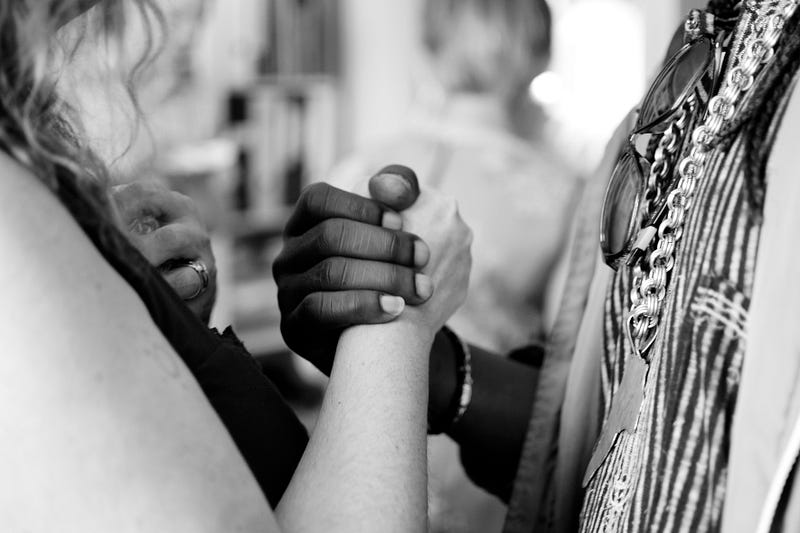
Bias can be implicit or explicit.
While many people think that all bias is implicit, some are explicit and intentional (i.e., racism). When people only think of bias as one-dimensional, they fail to realize how some bias can be mitigated through training and guidance. While science still has far to go to develop effective, long-term remedies for those exhibiting bias, we should acknowledge that some mediations already exist.
This distinction is important because anti-discriminatory training is much more effective for mitigating implicit bias as opposed to explicit bias. As a result, companies may save money by focusing on those who want to treat other employees equally while disciplining or firing employees who demonstrate explicit bias, thus becoming a liability.
Bias is not always intentional.
One of the reasons many white people detest conversations about bias is that they assume all bias is intentional. They believe that if they never try to discriminate against others, they are innocent of doing so. The fact is, bias is not always intentional. Implicit bias refers to bias that someone exhibits without knowing.
Doctors who prescribe less pain medicine to Black patients often exhibit implicit bias, and so are police officers who continue to disproportionately stop, harass, and abuse Black people. While they may think of themselves as upstanding citizens who care about their community, their actions continue to betray the common good. This dynamic is worth exploring.
Here’s the bottom line. All bias is not intentional. While explicit bias refers to those blatant instances of discrimination, much more harm is caused by white people in positions of power who unknowingly use implicit bias as a weapon. Motives matter here because fixing the problem requires a clear-headed understanding of bias as a social phenomenon.
Black people’s bias is not equal to white people’s bias.
To understand racism is to throw away the false equivalency and unpack the Russian doll one at a time. On its surface, we can see that racism is not transferrable. While capable of bias, prejudice, and discrimination, Black people are not capable of racism because racism requires a system of power and enforcement that does not exist. Therefore, black people could not be racist.
Naturally, due to the theory of in-group favoritism, people are much more likely to support people who look like and behave like them. However, it’s important to acknowledge that the bias white people show towards Black people is disproportionate. We can’t reasonably compare ant hills to mountains.
Despite Black people having a preference for other Black people, their in-group favoritism does not depreciate their treatment of white people on a societal level. Numerous research studies indicate white people show a level of implicit and explicit bias that is incomparable with Black people’s bias.
✔︎Black newborn babies are 3x more likely to die while in the care of white doctors. This stat is not reversible.
✔︎Over the course of his life, 1 out of every 1000 Black men will die from police brutality. This stat is not reversible.
✔︎White people “struggle to tell real from fake smiles on Black faces.” This stat is not reversible.
While it’s clear that every one of us has a bias, all bias is not created equal.
Where do we go from here?
Unpacking implicit bias is a crucial step in diminishing the harmful impacts of racism within our global community. However, I would argue there is not enough attention on the subject. The Russian doll of racism is an easy target, but we should take some time to unpack these concepts a bit more. Within the academic literature, I see hope for a more informed and less-discriminatory world.
Want to write for “Unpacking Implicit Bias,” a special project highlighting facts and common myths about this social phenomenon? Fill out the Typeform below.


