
3 Things Homeschoolers Won’t Ever Tell You about Homeschooling (But You Should Know)
The dirty little secrets…
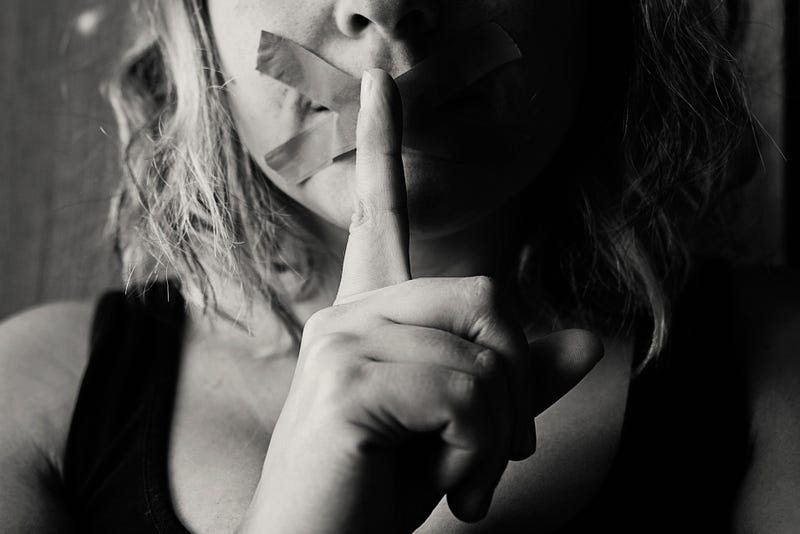
It’s time to get real about homeschooling.
In previous posts here on Medium, I hyped up homeschooling — some would say to the max.
Don’t get me wrong. I love homeschooling for many, many reasons as I discussed at length in other posts.
I transformed our home into a homeschool with my three children for 12 amazing years that flew by. I tell stories about those special times in my articles.
But I wasn’t alone. I knew many homeschooling families who were doing the same thing at their homes. Most of them did a stand up job. To prove it, some have adult children who went on to higher education and earned professional degrees. Today, they’re in happy marriages leading successful careers.
Homeschooling can and does work. Its proven track record testifies to this.
Given the global pandemic we’re living through, I think homeschooling is the safest route to take this upcoming school year with the threat of Covid-19 staring us right in the face.
Homeschooling for a year or two until — hopefully — the pandemic is under control won’t kill you.
Covid-19 might.
But I’ll be totally honest with you here. Homeschooling is not a bed of roses (unless you include the thorns).
Homeschooling is not a perfect, 100% foolproof educational alternative. In this article, I’ll fill you in on what could be described by some naysayers and critics as the pitfalls of homeschooling. My intention is to make you aware of them so you won’t have any regrets later. You’ll know exactly what you’re getting yourself into.
And so without further ado, here’s the dirt on homeschooling.
(Note: Names changed to protect people.)
1. It’s a Free-for-All.
By its very nature, homeschooling gives the finger to the feds who proselytize a Common Core.
In other words, there is no national standard on what a homeschooling curriculum must look like.
If you suspect that parents (and kids) have seized on this fact and do whatever they want at home while calling it education, you’re right. There are three main groups of homeschoolers which I’ll describe now.
A. Unschoolers
There are those at the extreme left known as Unschoolers. Their strategy is to let their kids completely direct whatever happens (or doesn’t happen) at home, calling it education.
I knew of someone, a Ph.D. in chemistry, earning a solid salary + great benefits & pension in government, who told me once that he had been unschooled. I’ll call him Peter.
His childhood consisted mostly of playing guitar and working on motorcycles. No joke. He even showed me photos.
Peter was very bright, although it wasn’t clear whether this was because he was naturally smart or because of the unschooling (as hard as that may be to fathom). Or both. He had a tough time in college, having to get up to speed quickly in reading, writing and math. But, he plowed through. Peter eventually earned the highest degree possible in his field.
The moral of this story: Unschooling outcomes can be exemplary. But maybe not.
Personally, if you were to corner me and force an answer to “What’s the best way to school at home during a pandemic?” I’d come pretty close to choosing unschooling as the preferred way. Allowing creativity — not literacy — to guide the way has a lot going for it as I discussed in a previous article.
Unschooling — with a little bit of structure — may keep your kids somewhat happy in a quarantine. It may be the best option if you’ve got a lot on your plate right now, including:
- working (in or away from home)
- running a household
- raising more than one child
- being a single parent
- caring for a sick or elderly relative
- trying to survive on a tight budget
- dealing with pre-existing health conditions.
So that includes just about every family today. You’d all do well to follow the unschooling model of schooling at home during the pandemic.
Most definitely, unschooling will allow you to avoid putting kids into a curriculum box. They may flourish by their own designs. The result? Non-conforming free thinkers and doers. But maybe restless or confused drifters.
B. Religious Homeschoolers
Christian. Muslim. Orthodox Jew. You name it. There’s a homeschool community out there for you if aligning your family’s religious beliefs with schooling is what you’re comfortable with.
There are entire curricula out there with the chosen religion’s imprint on it. You’ll probably have several choices, too, in each one.
And online support won’t be lacking at all.
Personally, I looked into a Christian homeschooling group in my area one year. There were a few people I knew involved in it from a Girl Scout troop that my daughter belonged to at the time, so we spent a day with them at their open house.
Everyone was pleasant and welcoming. My sons enjoyed the social aspects of the classes. But my daughter stayed in the van. She didn’t like “the vibe” from the group, as she said.
I didn’t force her to participate either.
What turned me off from joining was the Declaration of Faith that I would be required to sign before making a commitment. (It wasn’t cheap to join, either.) I couldn’t support all of it, so I respectfully bowed out.
Incidentally, one of the lifeguards at the pool I swim at had been attending that homeschooling group since kindergarten. It met twice a week for classes, functioning like a typical school on those days.
The other days were spent at home doing work assigned from the classes.
I’ll never forget some of the discussions we’d have on the pool deck. For example, her senior paper was a justification for the death penalty. (I played devil’s advocate.)
She went on to Jerry Falwell’s Liberty University with a ROTC scholarship. Last time I spoke with her, she said that her future looked bright in a military career. She was unhappy with the felt coercion by the government to choose a major that she’d be locked into. But, she acquiesced. The benefits of free college and a great pension beckoned.
Moral of this story: If you’re looking to ground your child in your religious belief system, following this type of homeschooling is the best option.
C. Happy Medium Homeschoolers
Then there are the majority of homeschoolers who fall in the Happy Medium between the Unschoolers and the Religious Homeschoolers. (I was in this group.)
A lot of the options available to you if you fall in the Happy Medium completely depend on where you live. States differ. Counties differ. Do your research. Note: Unschoolers and religious homeschoolers are, in theory, bound by the same rules.
In other words, although everyone has the opportunity to purchase all sorts of homeschool curricula, states and counties may have specific guidelines for instruction that you must follow. At the very least, they require that you cover certain subjects and pitch your lessons to meet grade-appropriate learning goals.
During your (usually) semi-annual or annual review, you must show multiple work samples in each major subject area at your child’s grade level.
Some states, like Pennsylvania, run homeschooling evaluations very differently. They require that your children sit for a standardized exam in some grades. In most states this is optional.
But here’s the rub:
You can circumvent government (state or county) homeschooling reviews entirely in most states by enrolling in a “non-public school.”
There are many groups registered with your overseer county department of education that you can join. There is a fee for joining that can be hundreds of dollar a year per family. (By contrast, county review is free.)
I know that all religious homeschoolers have their own non-public schools, usually at their places of worship.
On the other hand, some non-public schools have extremely liberal policies and practices. I’d go as far as to say: “Anything goes.”
Look at it this way: If your annual review consists of a casual chat at a playground meetup or in a museum’s cafe, (this is a fact), there’s not gonna be much rigor to that evaluation. (This was what I experienced when I belonged to a certain non-public school in my area.)
Often these groups operate on a peer review system. This means your best friend, a mom like you possibly with a college degree and no teaching experience, could be evaluating your kid’s academic achievements that school year.
You can see how this system — if it were effective during the elementary school years but there aren’t any guarantees — could lack legitimacy at the high school level.
For example, how could your BFF, who barely got a passing grade in college math, competently evaluate your child’s work in 11th grade calculus?
Homeschoolers who can afford it hire private tutors or enroll their kids in community college classes. Many places now have extensive programs explicity for homeschoolers. This can get expensive especially if you have several children, although at some places it’s free.
These are some of the major questions to consider as you decide whether and how to school at home:
- The type of homeschooler you’ll be
- Your homeschooling reviewer.
2. Mom Under the Microscope
The most stressful part of homeschooling for me during the years when I was reviewed by my county department of education was feeling like my teaching ability was under scrutiny, not my children’s academic achievements.
Or, the county wanted to see evidence of how I assessed my child’s work and how I did so.
I remember the first time this happened when my children were quite young, because I was caught unaware and unprepared.
After staying up all night preparing my children’s portfolios, I’d given them a last look to make sure all the requirements of three samples per subject (which my county required) were present showing name and date.
But to tell this story, I need to digress into my philosophy on evaluating written work.
My strategy for correction was not like that in public schools. I did not use a red pen and mark “X” on everything that was wrong. I never put a score at the top, either. I didn’t want my kids to think that education was based on points like in a game.
I did not correct every single error, no matter how big or small, all the time. For sentences, paragraphs or essays, I zeroed in on areas that we had been working on at the time such as subject-verb agreement, active v. passive voice, relative clauses, prepositional phrases, etc. I used a green or purple pen to circle only these mistakes. I wrote the correction next to or above their writing.
I didn’t make up this method. I learned about it in graduate school along with other styles of evaluation in a graduate-level course on assessment methods. For me, it made the most sense.
Because my kids did a lot of beautiful and creative work, I’d include in their portfolios more than the required three samples in each subject area. I was proud of them and wanted to show it. (This would be my downfall as I discovered later.)
On the day of the meeting, my reviewer chose one sample and inspected it in great detail. It seemed like she’d just picked a random sample. She made very few comments on my child’s work or effort. Didn’t seem impressed with the creativity or even academic ability of my children.
What she would focus on were my corrections — or lack thereof — especially on writing samples. “Oh, you missed this. It needs an apostrophe.” Or “Forgot the comma here. I noticed you missed it on the other sample as well.”
She obviously was not of the school of thought that promoted correcting only certain mistakes, not all, in a sentence, paragraph or essay. The theory is that to increase student’s focused perception of errors and promote self-correction in the future, (and not make them feel bad about their work riddled with a multitude of highlighted mistakes), correct only certain errors on specific topics in writing that you’ve announced beforehand will be checked on a given assessment on that writing topic.
When I tried to defend myself and explain my rationale, I got a blank stare and silence. I got the distinct feeling that my method wasn’t acceptable, even though I had been a former certified teacher and held a Master’s degree in education.
Take home message: Homeschool reviews scrutinize parents. The point is to demonstrate your ability to teach and assess learning. To get through them successfully:
- Triple check all work samples, looking for your oversights, not your child’s.
- Make all corrections, major and minor. (Even if you do this after you’ve moved on in your homeschool to studying other things and your children never see it.)
- Write additional constructive comments on every work sample that you present. Adding a sticker or a couple of emojis help.
- Take the bare minimum of samples to reduce the chance of the reviewer faulting your abilities.
To be fair, a lot depends on your reviewer. In my county, there were a few known to be “easy” on parents and more child-focused. They were retired teachers and principals who acted very grandmotherly or grandfatherly (i.e., warm and loving). But it was difficult to get scheduled with them. Tip: Get to know other homeschoolers in your county and get recommendations on reviewers. Unfortunately, especially in the beginning, you may not have a choice and just be automatically assigned.
3. Hidden from Plain View
Worth repeating: During the Covid-19 global pandemic, you’re absolutely right to choose homeschooling for your family. Staying home is the best way to curb viral transmission.
Homeschooling is safer by far compared to in-person schooling right now.
But there are plenty other reasons parents choose to homeschool.
Some parents homeschool because they have something to “hide.”
Homeschooling can be used to hide the dysfunction or abuse within a family that would normally be flagged by the system and reported if the child were in school. It could also hide mental or physical illness or disability.
There are 3 major reasons why families choose homeschooling when they wish to “hide.” You may ultimately think homeschooling is the better option for these folks. But I beg to differ.
Parents choose Homeschooling in Hiding because they’re looking for:
- Relief from the demands of school scrutiny of their parenting and/or of their child.
- Protection from their kid’s bullies.
- A way to avoid having to seek out professional help for their child and/or their family.
You can probably guess that parents who practice Homeschooling in Hiding take advantage of a lenient non-public homeschool review.
Here are some of the major reasons parents choose to do Homeschooling in Hiding:
A. Disability
Sometimes, if your child doesn’t look or act “normal,” you want to protect her from jeers and taunts.
You know how cruel kids can be sometimes.
It’s hard to step up and speak out about it to school administrators and staff who are so overloaded already, dealing with all sorts of issues.
You may be feeling overwhelmed yourself. Staying home with your child may seem to be the best option.
No more pain. No more embarrassment.
Please don’t get me wrong. There are plenty of parents who legitimately homeschool their special needs children. Especially when school systems cannot meet their children’s real needs.
I’m not talking about these parents here. To the contrary, I salute them. I don’t know if I could do what you do, every day.
I’m referring to parents who keep their disabled kids home because it’s too challenging for them to deal with IEP meetings, inclusive settings, and possibly discrimination. It’s easier to keep them at home.
But while at home, they’re not assisting their child to learn. The child may, in fact, languish there.
This is most tragic in cases where the “disability” is not too severe. (I understand that’s a tricky word to define and characterize.)
In cases where school system services exist, like speech therapy, services for the blind and hearing impaired, or even specialized learning for kids with intellectual deficiencies, you should feel really motivated to enroll your child for these services, if for nothing else.
Outside of school, these services are expensive and likely out of reach for many families.
In my experience, parochial schools especially, and, sometimes, private schools, cannot afford qualified professionals for just one or very few students. I know several Catholics who put their “normal” children in Catholic schools, but enrolled their special needs kids in public school for the services.
They choose public schools that must provide these services by law, whereas parochial schools aren’t required to.
But still, some parents feel it’s not worth it to enroll their child in public school. So they hide at home under the facade of “homeschooling” when in reality nothing of the sort is happening.
B. Behavioral Disorders/Mental Illness
Often, but not always, behavioral issues and mental illness accompany each other.
I’m referring to ADHD, anxiety, depression, bipolar disorder, etc.
Kids may experience these ailments by acting out in class and causing a disturbance.
After repeated incidents of detentions or suspensions, when you’re at a loss to know what to do or whom to turn to, you decide to Homeschool in Hiding.
It’s so much easier (at least you may wish).
In reality, it’s often extremely difficult to educate a child like this.
A Friend’s Son, Paul
My homeschooler friend, Karen, kept her struggling son, Paul, at home through high school.
I knew something was wrong when in 8th grade, Paul was reading at about a 5th grade level. Karen admitted this to me privately.
When Karen thought Paul would fail his upcoming review at the county review, she quickly switched to a non-public school at her place of worship where her friend “passed” Paul to the next grade.
This went on for several years. Karen was homeschool hiding Paul.
When Paul turned 16, things took a turn for the worse.
Things came to a head when Karen discovered Paul sleepy every morning, unable to concentrate on educational activities.
She realized he had been staying up most of every night up in bed on social media until the wee hours of the morning.
After a number of times when Paul, upset by the phone restrictions, lashed out and threatened suicide, Karen admitted him to an outpatient program in the county hospital for disturbed teens.
Later, Karen admitted Paul to a psychiatric hospital for an extended stay.
Back at home, things got worse. At 17, Paul turned to vaping, drugs and alcohol. He stopped doing homeschooling work even though he was in his senior year and almost done. Under pressure from his parents to homeschool or go to a public school, Paul moved out.
Karen, being honest with herself, would not “graduate” Paul for not completing one course. To this day, at 20, Paul does not have a high school diploma.
What makes this story such a tragedy is that Karen is an occupational therapist specializing in children’s learning disorders.
Kylie
I remember meeting a woman, Heather, at the local grocery store. She was thinking about homeschooling her 5-year-old daughter, Kylie.
I noticed in the store that Heather had to meet Kylie’s demands for candy or a small toy or she’d throw a tantrum.
Surprisingly, Heather confided in me that she was terrified of “being discovered” if she sent Kylie to school.
A recovering drug user and alcoholic, she got pregnant through a one-night stand while drunk.
Kylie, born with fetal alcohol syndrome, had a host of behavioral and learning issues.
During our conversations, I offered a bunch of ideas on how to homeschool. I directed Heather to local resources to help Kylie.
Heather was afraid to look up the local resources. She was also terrified by the possibility that the school system would force Kylie to take ADHD meds to prevent unruly outbursts in class.
So she resorted to worksheets at home. Being a high school dropout herself, she didn’t know any better.
She just made sure she had plenty of novel bribes to get Kylie to do something school-related every day.
She didn’t realize that bribes lose their effectiveness over time as children get older or become sick of doing worksheets all the time.
Heather never gave me her address or phone number although I had run into her a few times at the store and suggested exchanging contact info. I even invited her over to my house to look at the homeschooling resources that I was willing to lend or give her. She never took me up on the offer. So, there was no way I could report her to county officials.
Fearful of getting to know me better, I guess, maybe suspicious I’d call her out to the authorities, she kept a low profile.
I never saw her again.
The moral of both Paul’s and Kylie’s stories is that homeschool in hiding can be to the long-term detriment of your child.
Seek help when you need it. If you’re not sure if you do, please ask a trusted, knowledgeable friend or reach out to your child’s pediatrician. Don’t hide a mental disorder and/or behavioral issue under the pretense of homeschooling.
C. Willfully Low Academic Achievement
Different kids of the same age have different cognitive abilities. I get that. You do, too.
But what if your children are intentionally slacking off and just not applying themselves in public school? And the reason is playing video games instead of doing homework?
Another friend, Sharon, learned from her son’s school that he was in danger of failing. Dan was heavy into gaming.
Sharon couldn’t understand why Dan’s friends also spent loads of time on gaming but did well in class, too.
To “protect,” (her word choice), Dan from failing, she took him out of school and began homeschooling.
Unfortunately, Sharon was too afraid of Dan, who was threatening suicide, to punish him in the hopes of forcing him to homeschool.
No surprise that Dan cracked a book for only a few minutes a day in between gaming sessions. He produced no work samples that were at his grade level.
Sharon covered for him in non-public school reviews, even completing most of the work herself and putting Dan’s name on it.
For two years this went on. Sharon stayed under the county’s radar. Dan continued non-stop gaming.
Eventually she “graduated” Dan who is currently serving in the military. Sharon’s non-public school let Dan pass without scrutiny.
Conclusions: If you keep your child at home because your child is below grade-level standards for their age, and you’re scared of the consequences, you’re not acting in their best interests. Private tutors to supplement your homeschooling in hiding may provide the missing link to their success if you can’t. But if not, regular school may be the best solution. A teacher backed up by a school principal represents an outside authority figure that your child may need and listen to. Mental health care may also be required.
Authentic Homeschooling Is Best During the Pandemic
In the midst of a global pandemic, out of control in many states right now just weeks before the First Day of School, parents would be wise to educate their kids at home this year.
To protect their own family as well as those of classmates, and for the safety of teachers and staff.
I suggested in an earlier post why homeschooling is the best option during Covid-19. Modified distance learning directed by a public school is a possibility. Pandemic pods are not safe.
In another, I described how to set up your homeschool right now for success all year long.
Schooling at home can be a wonderful experience for both you and your children. If you still have doubts, reach out. I’ll be happy to chat and answer any questions or concerns you may still have.
Here’s to your pandemic homeschool! Best wishes to you and your kids. See you on the other side. :)


