
3 Things Entrepreneurs Should Know About Startups That I Discovered While Playing the New Zelda
Even if you don’t care about video games, you can still learn a lot by understanding their similarities with startups.
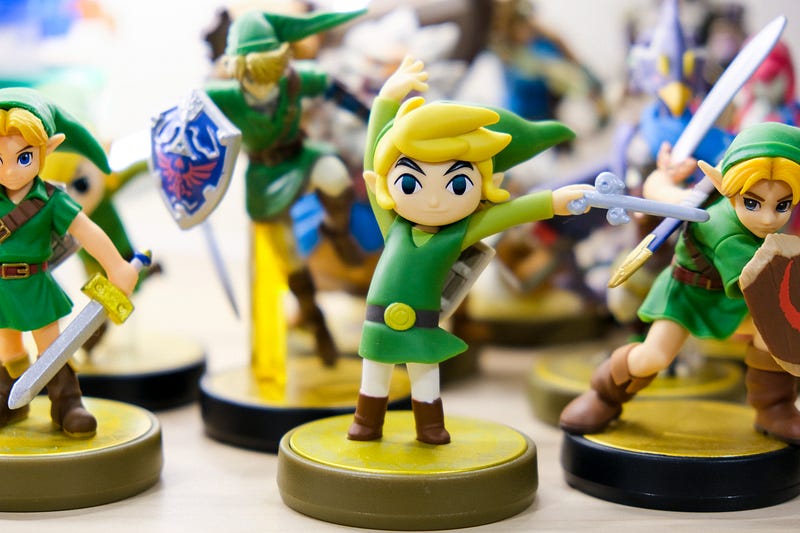
Video games have come a long way since I was a kid playing Mario alongside my older brother on our original Nintendo. Back then [cue mental image of a curmudgeonly old man waving his cane], video games didn’t require critical thinking skills. You just turned on Mario, ran toward the right side of the screen, and occasionally jumped over a few enemies until you rescued the princess.
Those were simpler times in the gaming world compared with modern games. And, no, you don’t have to play video games — or even care about video games — to appreciate why the distinction matters.
To explain what I mean, I should mention that I’ve spent the past few weeks playing the new Zelda:Tears of the Kingdom game. It’s what the video game industry calls an “open world” game because it allows players to go anywhere within the game’s expansive virtual environment and do whatever they want within the limits of the game’s sophisticated “physics” engine. Sure, you can follow a loose plotline to rescue the princess, but you can also completely ignore the plot, explore to your heart’s content, and experiment with nearly anything and everything. Feel like climbing a mountain? Go for it! Wanna collect bugs and cook them into a mushy stew? Absolutely! Interested in using a field of wild horses for archery practice? Whatever floats your boat!
The point is, this paradigm of doing anything you feel like in a modern video game is wildly different from how video games used to function when players had to strictly follow a game’s pre-plotted course.
This distinction is a helpful metaphor for understanding the difference between how entrepreneurs think building a startup is going to work versus how building a startup actually works.
When you build a startup, you won’t get to follow some well-structured path that’s been clearly organized and laid out in front of you. You don’t just face a few challenging enemies along the way, reach the castle, defeat the big boss, rescue the princess, and take your winnings. Instead, you’re dropped into a vast, open world sprinkled with a few rules, some powerful weapons, and lots of entertaining distractions. The bad guys are there, too, as is the princess, but the path you take is entirely up to you. The sooner you learn to understand and appreciate this distinction, the sooner you’ll be prepared for the adventure of building startups.
To help explain why, here are three lessons about building startups I experienced while playing the new Zelda: Tears of the Kingdom:
Lesson #1: You control directionality
In traditional video games, the player does whatever the game developers want them to do. Sure, there might be an occasional fork in the road scenario that allows players to choose different paths, but the various paths are still pre-designed.
This type of structure mimics school and most jobs people take after school. Yes, school and work provide options, but the options are limited, and, ultimately, people follow whatever paths have been neatly laid out before them.
That’s not the case in an open world video game or in startups. As the player/founder, you decide where you’re going and what you’re going to do next. There’s no time limits pushing you along, and there’s no fixed path you have to walk.
The flexibility is both good and bad. It’s good because exploring can be fun. But it’s bad because… well… exploring can be fun. So fun, in fact, that it can distract you from the main purpose of what you’re trying to accomplish.
In a video game, not accomplishing the game’s goal isn’t a big deal. After all, it’s not like the big evil monster you were supposed to face at the end is going to escape and destroy the planet.
Unfortunately, in startups, if you don’t fight your way to the end (whatever the end may be), you’re going to lose, and there are real consequences to losing. This means you, the founder are responsible for motivating yourself. Sometimes that’ll mean pulling yourself away from the things you enjoy doing to focus on the things that bore you, seem too hard, or that you can’t quite figure out.
Lesson #2: The NPCs exist to give you hints and clues
In gaming, NPC stands for “nonplayer character.” These are the generic-ish, computer-controlled people and creatures in games that help nudge players toward the desired outcome by giving hints, clues, tools, and quests.
The joke among gamers is that NPCs are mindless drones created simply for the purpose of guiding a game’s protagonist. What most people don’t realize is that the startup world has the same thing. They’re the venture capitalists, lawyers, accountants, customers, clients, and employees founders meet along the way.
To be clear, by referring to people as NPCs in the startup world, I don’t mean they’re brainless characters with no thoughts, feelings, emotions, or beliefs of their own. I just mean if you’re a founder building a startup, the non-founders you encounter function as interchangeable objects nudging you along on your journey.
Each venture capitalist you meet is a sort of carbon copy of himself hinting at how to improve your startup if you want to reach the next level. Each potential customer you meet is a mini-boss you have to defeat. Each lawyer is a shopkeeper trying to sell a trinket. Each employee is a collaborator who occasionally engages in the background, but mostly never quite seems to do enough to make a real difference, And so on.
Seeing people in this way is helpful for the purposes of building a company. Mind you, I’m not suggesting you shouldn’t care about the people you meet during your startup adventure. I’m just reminding you that most of the people you’ll encounter as a startup founder will, for your purposes, be on your journey to help guide you toward the next stage in your quest.
Lesson #3: You have to build a foundation
One of the biggest and most important similarities between a game like Zelda and building startups is that neither starts with the hero having everything necessary to win the game. Instead, the game itself is the experience.
When playing Zelda, you find weapons, acquire knowledge, collect skills, and build your health so you’re strong enough, powerful enough, and smart enough to fight the ultimate battle.
Startups work the same way. As a founder, you won’t launch your startup with everything you need to win. Building startups is a process of discovery, knowledge building, and skills acquisition. Along the way, you’re likely to meet major obstacles. Some of those obstacles are going to be easy. Some are going to slow you down for a while. And some of the obstacles you’ll face are going to frustrate you so much that you’ll want to quit the game.
Just remember, the game is winnable. So long as you’re willing to keep trying different strategies, you’ll ultimately find the right resources to get to the end. In fact, the biggest question isn’t: “Can you win the game?” The biggest question is: “Are you willing to devote the time?”
And, honestly, that’s probably my biggest takeaway from playing the new Zelda game these past few weeks. It’s an incredible piece of software with opportunities to explore for hours. The limiting factor isn’t the game itself. The limiting factor is my resolve to keep playing, learning, and improving.
The same is true for startups. Anyone can win the startup game, but you have to do so by putting in the time and effort to figure out your own path to victory.