
3 Semi-Important Decisions You Need To Make About Your Note-Taking System
How to actually get value from your notes

Look, I don’t have an incredible note-taking course or a system with a ton of YouTube videos. There are way too many people already doing that.
What I do have is a master’s degree in English and the need to take a ton of notes for everything from meetings to blog posts for a team of writers to work on them.
Before hitting the 3 important decisions for your note-taking, here are 2 reminders:
• There is no perfect note-taking system, only the one that works for you.
• Stay consistent. Having a consistent style and place will help you be organized and help you remember where your notes actually are…
With that in mind, let’s examine some key things to consider about note-taking:
1. Decide if you like paper and pen or digital
This may seem like a no-brainer, but they really are a different way of doing things.
At this stage of my life, I generally prefer paper and pen, specifically with my legal pad.
Then I like to have a fresh page for each day, make the day’s to-do list on there, take any meeting notes, and then jot down any ideas for myself — which include personal tasks as well as future work projects.
That said, I do use digital notes when I can’t get to my legal pad or if I need to copy and paste something quickly. Usually, I just turn to Apple Notes because it’s quick
2. Decide where your notes will go
Even though I take notes on paper, I usually rewrite and move them to somewhere else. If it’s personal, usually that’s Notion.
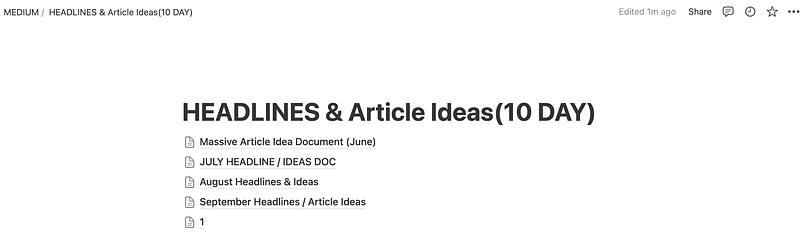
For work, I’ll add them to a recap on a Tettra page, start a new process doc, or add them to a Trello card (I use Tettra for storing meeting notes, goals, and processes and Trello for more task-oriented projects).
Even though it seems like a waste initially, rewriting my notes is extremely important.
Moving notes from paper to digital forces me to re-read my notes. I think about what’s valuable and what needs to be kept.
3. Decide what you’ll do with your notes
Ok, we saved the best for last. This is actually the whole point of this post. It’s the most important decision you will make.
What will you do with your notes? What’s next for them? Why did you take notes?
Reasons could include:
- It was an important meeting
- It was an important call
- It was a thought-provoking book, video, or podcast
- It was a good speech or lecture
- It was a good course
All of those are good things, but now what?
How will you put your notes in action?
To determine this, fill in this phrase…
“These notes will help me…”
What will these notes help you do?
For meeting notes, it could be something as simple as:
“These meeting notes will help me understand what to do this week”
or
“…what next month’s priorities are.”
For a course, it may be more action-oriented, such as:
“These meeting notes will help me take action on designing a new website.”
For a lecture, it could be:
“These notes will help inspire me when I’m frustrated by my lack of progress.”
I understand it’s hard to think about the exact purpose when you have an urge to take a note about something, but diving deep into the core impulse — “why do I think this is important?” — will give you more value when taking notes, and keep you from taking notes just because everyone else is.
You’re out of school now (maybe); you don’t have to do that.
I share about writing, culture, and creativity. Get my newsletter every Saturday.


