
3 Qualities You Need, To Be An Amazing Listener 🤩
What I learned from reading “Listen, The art of effective communication” by Dale Carnegie and Associates.

Communication is hard. Especially for me. I am an engineer. My mind is painfully logical! I see the world in extremes, adjust to the present and compensate for the errors. Words have always evaded me. It is hard to find the right ones and to create meaningful sentences.
A few years back I decided I want to improve on communication. I want to be understood, I want my messages to be fully transmitted, I want people to listen to me. So I started looking around on how to do it.
Found out that small sentences help. Also got the courage to stop, even if mid-sentence, to find a good word. Found out that eye contact is important. Also, my body has a story of its own to tell.
Everything went perfectly until my wife pointed out that, to be heard, I would, first, need to listen.
And listen I shall.
… is what I said very flamboyant. But, as it seemed listening is not that easy.
So I stumbled upon “Listen, The art of effective communication” by Dale Carnegie and Associates.
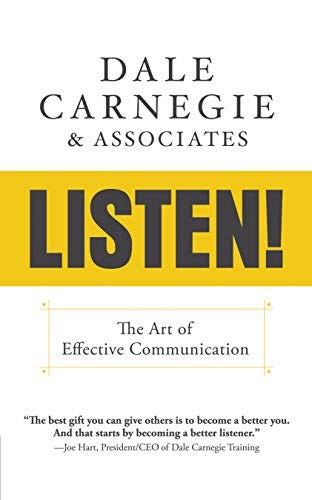
The book is very interestingly written. It has a lot of information about the emitter of a message, the recipient of the message, and the communication channel. It practically tells you how to talk, how to listen, and what can be in the way.
Everyone has frames from which they talk, or through which they listen. Everyone has their own way of listening and talking. In short, everyone is different and unique. This is what makes people and living awesome!
So here are the qualities:
Know thy self!

Everyone has feelings, moods, and wounds, and these affect the way we listen to a message. These feelings and experiences create a frame that will filter the message we receive, changing it.
I know I have a very big “justice wound” ( I will talk about this in a future article😉 ). I want what happens around me to be fair and just. This has a very big impact on how I receive information. If someone close would say something like
“It is so hard for me to catch the buss to go to work”
I would respond with something like:
“Maybe I can get you with my car when I go to work”
Or something similar. That is because I feel that it is not fair that my friend has a hard time doing something that is easy for me. So I would offer to help. Sounds very nice and cute on my side, right? 😎
Well, as a matter of fact, it kinda isn’t.
My friend did not want a ride. That was not the message he wanted to pass to me. But my frame, influenced by my wound, changed the message. Now my friend wanted to relieve a burden, maybe even get praised that what she or he did was awesome. But now she has to convince me that she does not need my help, in a way that I would not feel offended or rejected.
I made things worse for her.
So, know thy self! Know your frames and understand them. Understand that when you get a message you might have understood it wrongly.
Ask questions. Make sure you understood correctly. Say stuff like
Let me make sure I got that. You need to …
So you are saying that …
What you feel is …
And be ready for a negative answer. Be ready to accept that you did not understand well.
I saw a lot of discussion going from here to something like :
But you said this: ... . What else do you want me to understand.
Not understanding is ok. It makes us humans. It does not say anything about ourselves.
Be patient

No! Not that kind of patient 🤓!
The kind that listens carefully, with the purpose of understanding what the other person is saying.
People listen for different purposes.
Some people listen to find out ways to counter what you are saying. Their purpose is to build weapons so they can hit you back.
Others listen absently. They just nod and, maybe, fidget, look at the time. They are not, really, listening. But they don’t have the courage to tell you this. They don’t want to make you feel bad, or they don’t want to upset you.
Others listen so that they find a moment to intervene. Either to offer advice or to just hop in and grab the attention. They don’t want to understand and listen, they what to be listened to.
Be patient with the other person. Wait for her or him to say what they want to say. Ask questions if you did not understand, and be patient while they find the words to say it again.
Also, be patient with them, when they get frustrated. It is normal to be frustrated when you feel you are not understood. Say stuff like :
“It’s ok! I am here to listen.”
“Try again and explain it to me. I have time.”
“Your message/feelings/ideas are important to me. I want to understand you. “
Show love and support.
Patience helps with another, very important, aspect. Getting to know the other persons' way of communicating. Like I said before, Everyone communicates differently, everyone has their own unique way of expressing themselves.
Be patient with yourself until you understand the way the other person communicates. Until you find out what are her or his frames and filters. Once you understand that you can see the message behind the words.
Be understanding

You see, not everyone reads this article or Carnegie's book. Few people know themselves. Even fewer know the impact self-knowledge has on the way we listen or on the way we speak. So they will tell their story with emotions and words and phrases that are not related to what they want to transmit.
And that is ok! It is ok to not know what you want to transmit! It is ok to figure out what you want while talking! It is even ok to need more than just a talk to figure out what you want!
It is important for the listener to understand this and give the speaker the time they need to express themselves, and to understand themselves. 😊
I placed being understanding last because it is hard to do. It is easier once you got over the knowledge of thy self 😇. And even easier after learning to be patient with yourself and others.
Self-knowledge and patients lead to understanding. Understanding of others and of yourself.
Once you understand others you feel their pain, you know what to do or say, you see their path and you don’t judge them for taking it.
I will leave you with a quote from Uncle Iroh
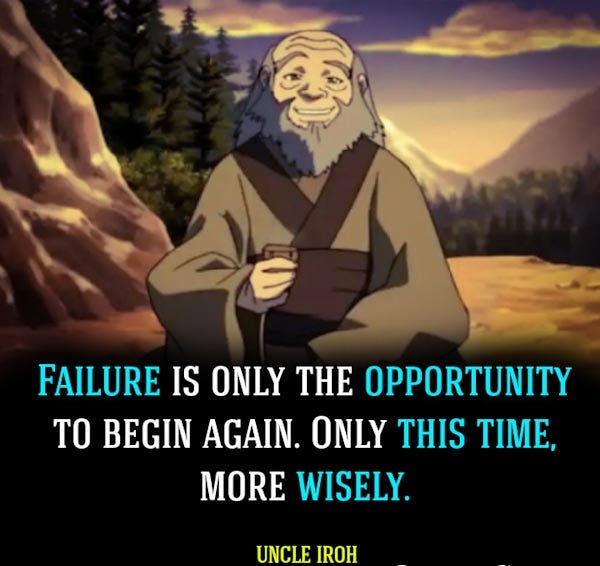
Be gentle with yourself. If you fail, even at listening, learn and try again. You will be wiser.
If you enjoyed this article you might be interested to read about how being bored helps improve your creativity
If you liked this article and it helped you in any way, then I would love it if you would buy me a coffee ❤️☕️.
Or, if you want unlimited access to all Medium content, feel free to use my affiliate link. It’s 5$/month, and I would receive half of that.