
3 Probability Paradoxes: Challenging Our Understanding of Chance

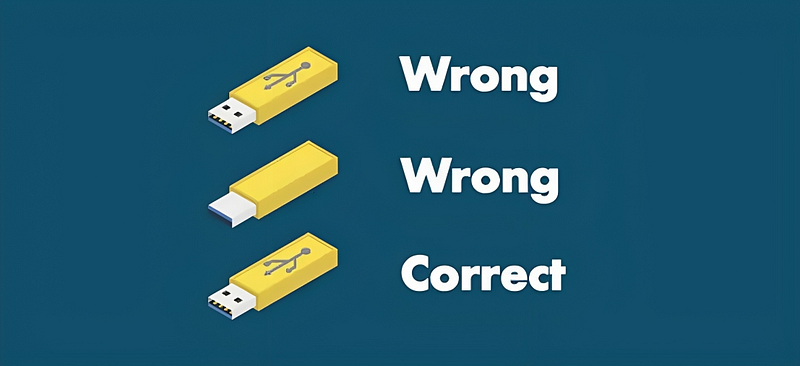
In the world of mathematics, you’d expect that the chances of a child correctly matching their shoes to the right feet, or the possibility of correctly inserting a USB into a computer port, would stand at a clean 50 percent. This is based on the simple premise that there are two possible outcomes — right or wrong. However, reality paints a completely different picture, as these rates are closer to zero. Experience tells us that children tend to put the wrong shoe on the wrong foot almost every single time. Similarly, when it comes to plugging a USB into a computer, it often takes us three or four attempts to get it right. It’s a paradox that defies our basic understanding of probability, challenging the notion of chance and randomness.
While studying for my probability exam at the university library, I stumbled upon a book titled ‘Probability: An Introduction’ by Professor David Santos. The introduction took a surprising turn when it read, “To my rib, Jillie, whom I love almost surely.” The sentence showcased the profound yet humorous side of the professor who had dedicated a lifetime to mathematical probabilities. It was both amusing and thought-provoking that Santos, a man who was so adept at calculating probabilities, expressed his love with the term “almost surely,” implying that even in matters of the heart, there could not be a 100% guarantee.
In the realm of mathematics, probability is conceptualized as a function that assigns an event (or non-event) to a real number within the range of 0 and 1. This number, or probability, indicates the likelihood of said event occurring.
Interestingly, the roots of probability theory can be traced back to Blaise Pascal, a renowned French mathematician. The inception of this theory took place some 400 years ago when a gambler posed a question to Pascal: what must be done to obtain the desired outcome when rolling dice? Pascal’s answer to this query is widely considered to be the birth of probability theory, sparking a new field of mathematical study that explores chance, likelihood, and predictability.
Since the establishment of probability theory, it has found its way into a myriad of fields, underpinning critical predictions and decisions. Physicists, for instance, rely on probability calculations to predict a range of outcomes under varying conditions, whether estimating the decay of a radioactive atom or determining the path of a particle in quantum mechanics.
The field of genetics also leverages probability to predict the likelihood of various genetic outcomes. Geneticists use it to determine the sex of an unborn child or to calculate the chance of a child inheriting particular traits such as blue eyes. This statistical tool has made it possible to predict and understand the patterns of inheritance in organisms, aiding in the study of genetic diseases.
Even the realm of finance is not untouched by probability theory. Insurance companies, in particular, heavily rely on it for their business model. They utilize probability to assess risk and determine the likelihood of certain events occurring, such as accidents, illnesses, or property damage. This statistical data then informs their premium calculations, enabling them to charge higher premiums for higher-risk individuals, thus ensuring their profitability. Probability theory, in essence, has transformed from a gambler’s query into a universal tool for predicting the uncertain.
While we regularly rely on our innate sense of probability for daily decision-making, it’s important to note that our intuitive understanding often contradicts mathematical reality. That is, we may consider an event’s likelihood to be 50%, but a mathematical analysis might reveal the probability to be as low as 12%. Even faced with these mathematical truths, we might still struggle to accept them, resulting in what appears to be a paradox.
Below, I have compiled some probability problems where our intuition and mathematics clash.
The Elevator Paradox

The Elevator Paradox is an intriguing circumstance first observed by physicist George Gamow. While working on the second floor of a seven-story building, he frequently visited his friend residing on the sixth floor.
Gamow noticed an odd pattern during these visits. Whenever he waited for an elevator to ascend to the sixth floor from the second, the first elevator to pass his floor was invariably heading downwards. Similarly, when he summoned an elevator from the sixth floor to descend to the second, the first elevator to arrive was ascending. This seemed counterintuitive as one would expect an elevator arriving at the sixth floor to descend and vice versa.
Intuitively, it might seem that regardless of the floor we are on, there should be a 50% chance that an elevator passing our floor is headed in our desired direction. However, Gamow’s observation challenges this assumption, indicating that, in fact, this is not the case.
The mathematical explanation behind this paradox is fairly straightforward. When you are waiting for an elevator on a lower floor, it is more likely that most of the building’s elevators are positioned above your current floor. Consequently, the first elevator to arrive is likely to be heading downwards. Conversely, if you’re waiting for an elevator on an upper floor to descend, the majority of the elevators are probably located below your floor. Therefore, it’s quite natural that the first elevator to arrive is heading upwards.
This simple yet fascinating observation, known as the Elevator Paradox, serves as yet another example of our intuitive understanding of probability falling short of the mathematical reality.
The Birthday Paradox
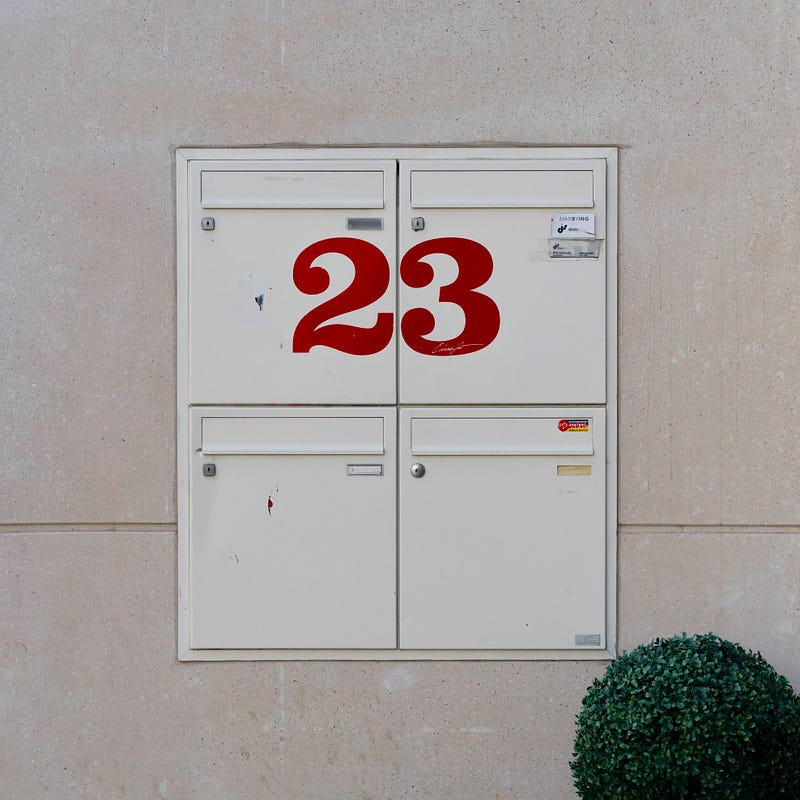
The Birthday Paradox is another classic example where intuition and probability diverge. Suppose you find yourself at a birthday party for 23 people. You might ask yourself, what are the odds that two people at the party share a birthday? Intuitively, one might assume this probability to be quite small. However, in reality, the likelihood is approximately 50%. This might seem counterintuitive, but let’s delve into the mathematics to clarify.
Consider two individuals at the party. The probability that these two do not share a birthday is 364 out of 365, as there are 364 days that the second person’s birthday could fall on that wouldn’t coincide with the first person’s birthday. Now, introduce a third person. The chances that this third person has a birthday different from the first two is 363 out of 365. For a fourth person, this probability becomes 362 out of 365, and so on.
Following this pattern, the overall probability that all 23 people have unique birthdays becomes the product of these probabilities, approximating 1/2. Thus, the likelihood that at least two individuals share a birthday (i.e., the complement of all birthdays being unique) is 1–0.5 = 0.5 or 50%.
Interestingly, as the number of people increases, this probability rises. For a group of 30, the likelihood jumps to 70%; for 50 people, the probability climbs drastically to 97%. This intriguing paradox effectively demonstrates how our intuitive understanding of probability can sometimes lead us astray.
The Three Children Paradox
Let’s consider a family with three children and analyze the probability that all these children will be of the same gender. Intuitively, one might think that since the first two children are bound to be of the same gender, the odds of the third child being the same gender should be 1/2.
However, a closer examination of the probability reveals a different story. If we represent girls by ‘G’ and boys by ‘B,’ there are eight possible combinations: BBB, BBG, BGB, GBB, BGG, GBG, GGB, and GGG. Out of these combinations, only BBB and GGG consist of all boys or all girls, respectively, meaning the actual probability of all three children being the same gender is 2/8 or 1/4, not 1/2, as initially assumed.
Now, let’s expand this scenario to a family with four children. Which scenario is more probable — having three children of one gender and the fourth of the other or having two boys and two girls? At first guess, many people would assume that the more balanced split of two boys and two girls is more probable. But by listing out all the possible combinations, we find that there are six cases where there are two boys and two girls and eight cases where there is a three-to-one gender split. This means the probability is actually 1/2 that there is a higher likelihood of having three children of one gender and a fourth child of the other gender. This interesting paradox serves as yet another example of how our intuitive understanding of probability can sometimes fall short of mathematical reality.
Note 1: Beyond Euclid! is my weekly newsletter that brings you only high-quality math and science stuff to ensure you are having a good week. Please do yourself a favor by subscribing to Beyond Euclid and enjoy it! And if you can be a member and support my work, that would be awesome! Thank you!

Note 2: I get commissions for purchases made through links in this post.


