
3 Powerful Systems for Making 9 Types of Decisions
A comprehensive and practical guide to decision-making for different situations
Habit gurus tell us to optimize the little things.
Entrepreneurs encourage us to be bold and make big decisions like starting a business.
Good habits are great, but we will only get somewhere if we make good decisions.
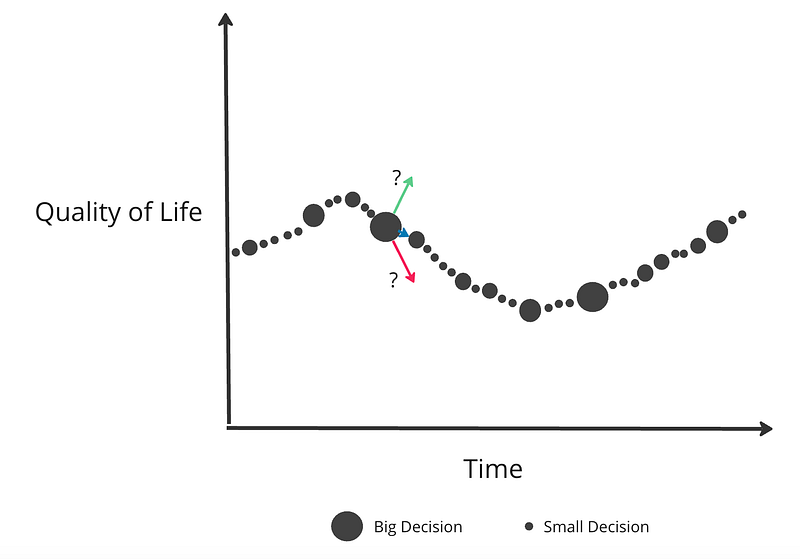
Life is only a concatenation of choices. You decide 35.000 times a day.
Your habits cover over 90% of those. The rest are conscious, more impactful decisions.
As an overthinker, making decisions stresses me out.
I found refuge in systems. I fell down the rabbit hole of decision-making methods. From life-changing choices to forming good habits, I've found ways to optimize. It's made me a calm and confident decision-maker.
I have identified 9 types of decisions and 3 frameworks to make them. They're applicable in any field, from business to health and relationships.
Here is how.
9 Types of Decisions
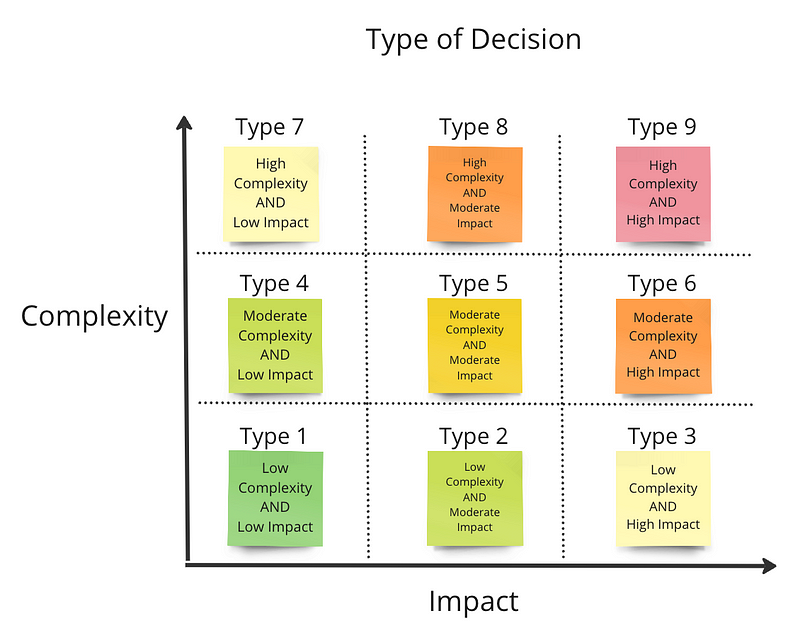
I categorized all decisions along 2 dimensions:
- Complexity
- Impact on my life
Complex decisions involve other people, lots of variables, interdependencies, and uncertainties.
Impact on life depends on what's important to you. For example, what should I eat for dinner today?
For most people, this would be a low-impact question. But if you're a professional athlete, the food choice may have severe consequences.
If you're unsure, ask yourself: what would be the consequence of not solving this question?
Examples
The following are some stereotypical questions to give you an idea. Keep in mind that complexity and especially impact depend on you.
Type 1 — Low complexity and low impact decisions:
- Which toilet paper should I buy?
Type 2 — Low complexity and moderate impact:
- What should we do this weekend?
- Should I buy this online course?
Type 3 — Low complexity and high impact:
- How can I quit smoking?
- Who should I hire?
Type 4 — Moderate complexity and low impact:
- Which book should I read?
- What present to give to my aunt?
Type 5 — Moderate complexity and moderate impact:
- Where should we do our family vacation?
- How much money can I invest, and which savings plan should I choose?
Type 6 — Moderate complexity and high impact:
- Which city should we move to?
- Which school should our children go to?
Type 7 — High complexity and low impact:
- Which type of kitchen gadgets should I buy?
- Which email automation tool should I use?
Type 8 — High complexity and moderate impact:
- Which job should I take?
- Which social media platform should I choose for my business?
Type 9 — High complexity and high impact:
- Should I start or sell my own business?
- Should we expand our business to a different country?
- Who should I marry?
3 Groups of Frameworks for Decision Making
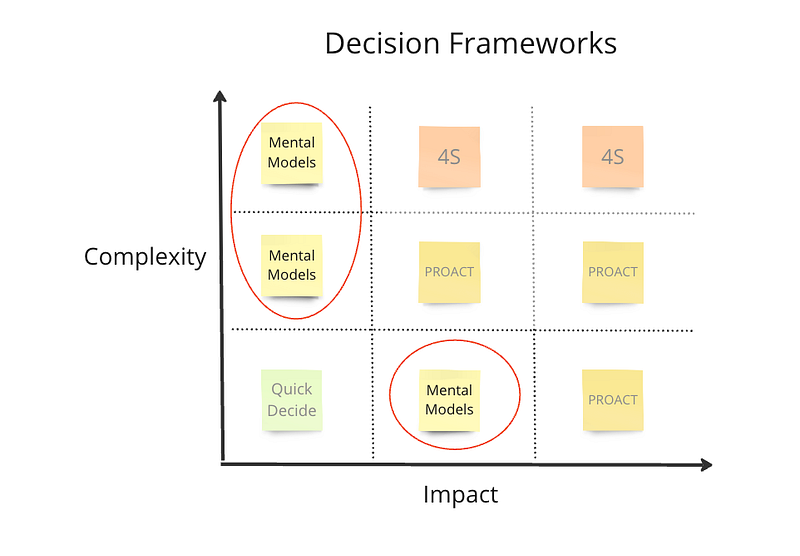
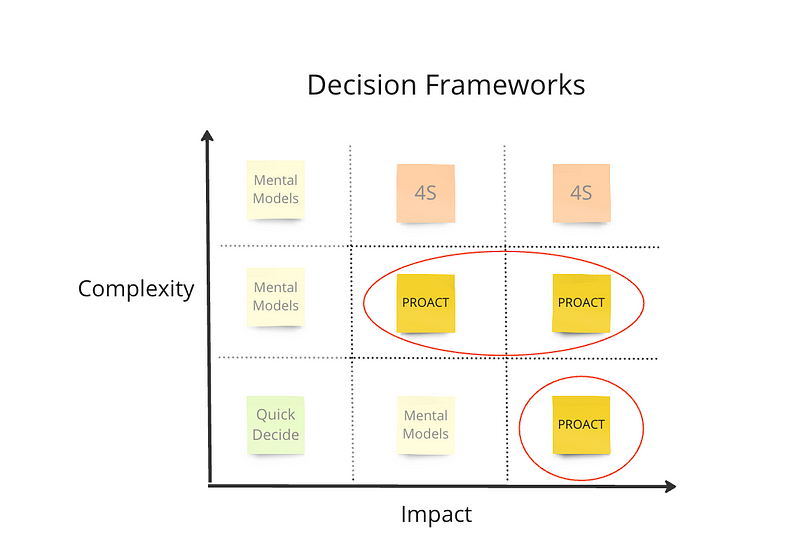
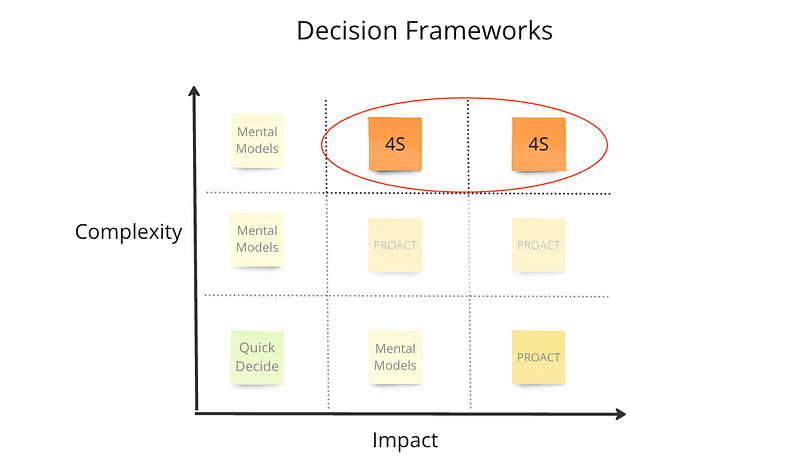
Depending on the complexity and impact of the choice, there are 3 types of frameworks that I love to use.
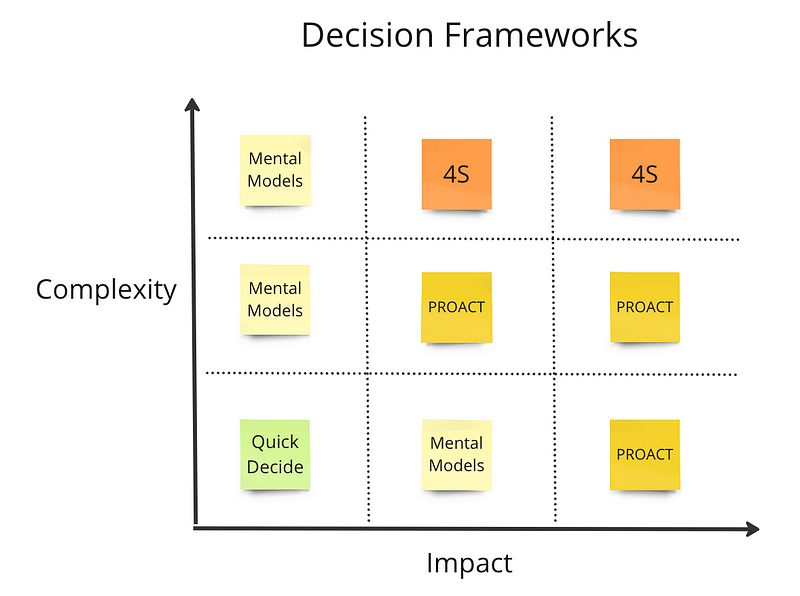
I first figure out its complexity and effect whenever I face a decision.
For simple, low-impact decisions, I convince myself to just decide.
For everything else, I use:
- Mental models: easy to apply but not very comprehensive
- The PROACT system: a straightforward process which requires more time and thought
- The 4S framework: a very comprehensive approach requiring more effort than the other systems
3 Simple but Powerful Mental Models
I use mental models for low to moderate-impact and moderate-to-high-complexity decisions.
There are many mental models out there. My favorite ones for making decisions are the following 3:
- The Yes/No Rule
- The Rubber Band Model
- The Gift Model
They're simple to apply yet effective.
The Yes/No Rule
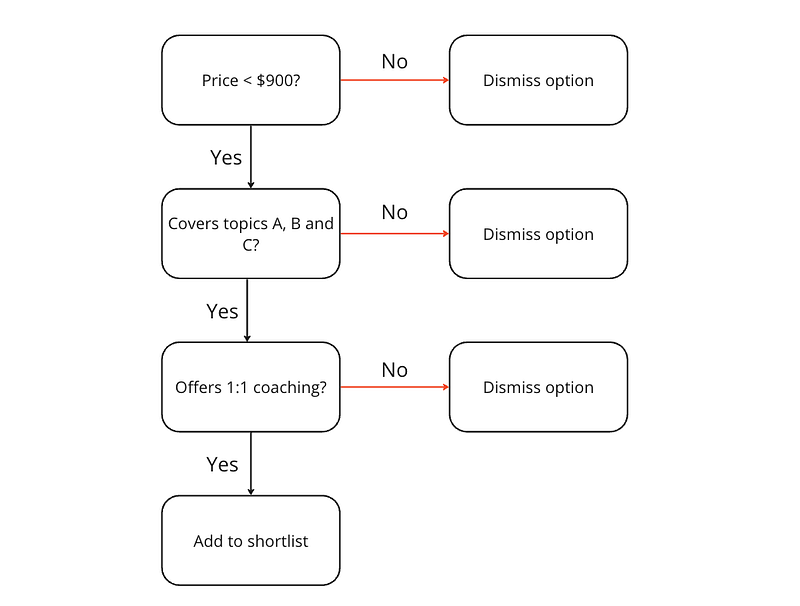
This one is great for faster decision-making when I have a set of fixed criteria.
For example, should I buy this online course?
I compared each course against my pre-defined criteria: price, topics, and coaching. As soon as I hit a 'No,' I get rid of the offer.
The Rubber Band Model
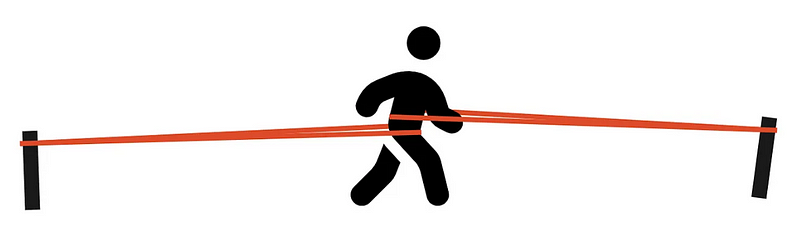
I apply this when I have 2 equally good options: One option is to make a change, and the other is to stay with things as they are.
I reframe the decision as a question: What's holding me, and what's pulling me?
Both directions are favorable. They reflect a situation with 2 attractive alternatives. Which one has the stronger pull on me?
The Gift Model
I use this one specifically when buying a present for someone, and I'm unsure what to get.
I mentally draw a diagram with 2 axes:
- How expensive is the gift?
- How valued is it?
Here, I compare my options.
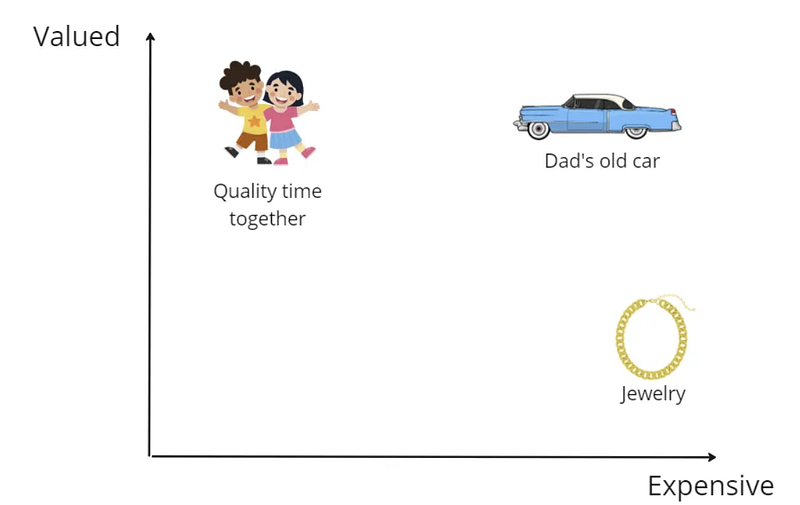
For example, expensive jewelry is pricey, but they might value it less than quality time together.
The PROACT System to Make Smart Choices Fast
I use the PROACT system described in Smart Choices for more impactful, moderately complex decisions.
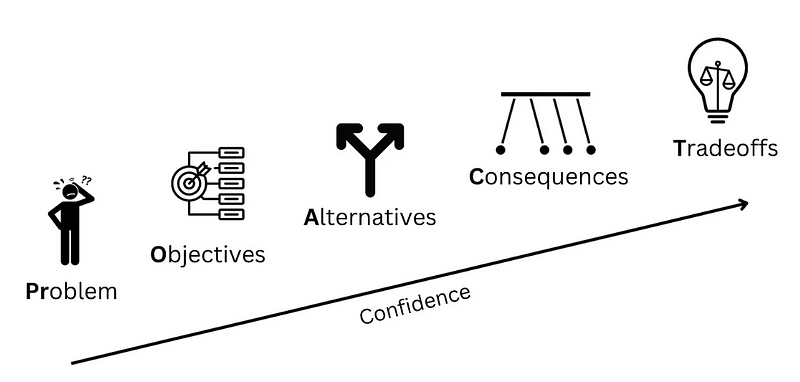
It gives me a step-by-step process based on my current knowledge to make the best decision.
- Specify the decision problem: What exactly do I have to decide?
- Define the objectives: What do I want to achieve with this decision?
- Find all possible alternatives: What options do I have to achieve my goals?
- Determine the consequences: What will happen if I choose an alternative?
- Make tradeoffs: Which compromise makes the most sense?
For example: Where should we move?
First, I ask myself: What's the scope of my decision? Moving within the city? Move to a different city? Is moving the answer to our problem at all?
Secondly, I define the goals I want to achieve by moving:
- Have enough room for a small family
- Have a good neighborhood
- Proximity to good schools
- Proximity to an international airport
- Short commute to work
- Good climate
- Safe area
- Suburb of a larger city
Then, I list all the alternatives I can think of: towns and suburbs that I find interesting.
Next, I think of the consequences of each alternative. For each option, I imagine what the future would be like. And, for the best ones, I assess the options against the objectives. For this, I use a consequence table.
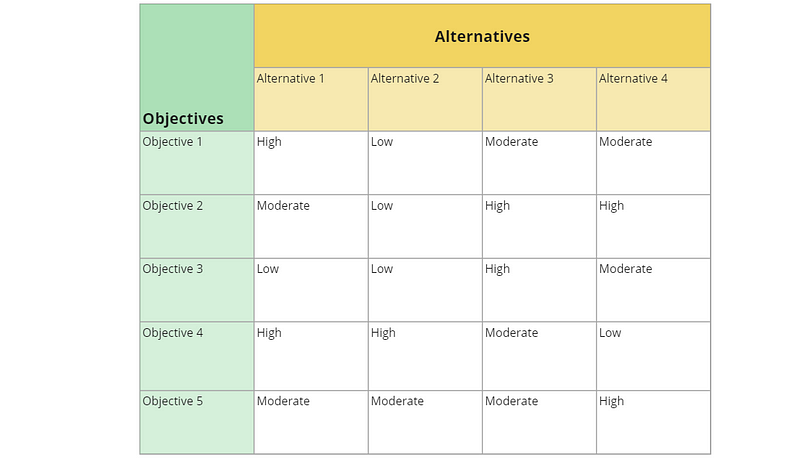
I indicate how each alternative influences every goal: High, Moderate, and Low. Based on that, I cut out the worst options.
Finally, for the remaining alternatives, I make tradeoffs. For example, if Town 1 has a better climate but Town 2 has a better infrastructure, I ask: what's more important, the infrastructure or the climate?
I attribute a value for importance from 1 to 5 (most important) to the objective. I also give the alternatives a rating of 1 to 10 (perfect). Then, I multiply the importance with the rating.
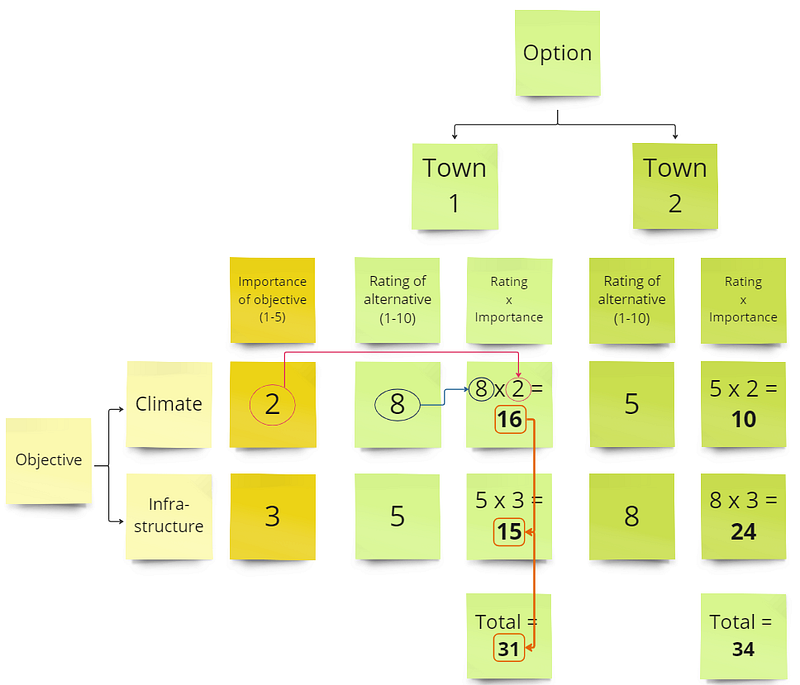
For example, the climate has an importance of 2, while I value infrastructure with 3.
I rate Town 1 an 8 for climate but only 5 for infrastructure.
I rate Town 2 a 5 for climate but 8 for infrastructure.
This way, the sum of the weighted ratings across all options for Town 1 is 31. For Town 2, it's 34, making it the winner.
The 4S Framework to Solve Problems Like Top Strategy Consultants
I use the 4S framework for making complex and high-impact decisions. It's the most rigorous of the mentioned systems. For example, strategy consultants use it to crack big business challenges.
It's an iterative process with 3 alternative paths and 4 phases. The possible paths are:
- Hypothesis-driven
- Issue-driven
- Design thinking
And the 4 phases are called State, Structure, Solve, and Set in Motion.
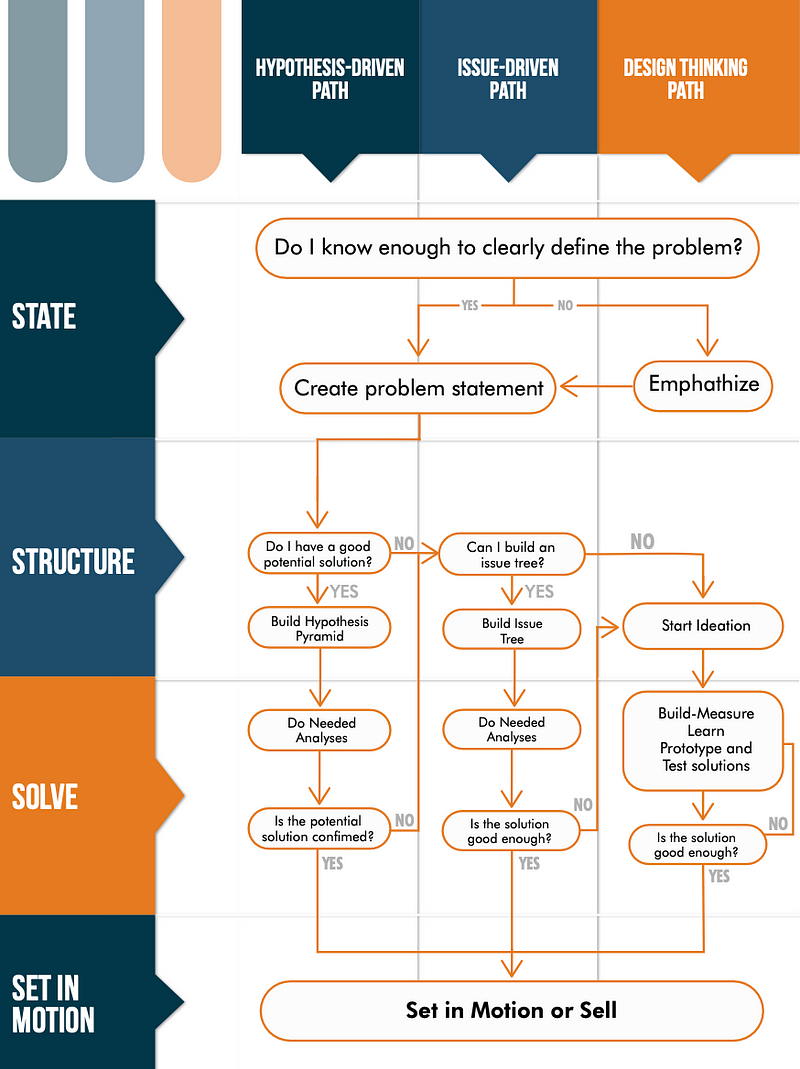
I start by defining the problem clearly. If that's not possible, I employ Design Thinking. I use empathizing tools like empathy maps or user journey mapping.
With a defined problem, I assess if a candidate solution exists. If so, I use a hypothesis pyramid for validation. That's the Hypothesis-Driven approach.
If I can't think of a good potential solution, I check if sufficient information is available to create an issue tree. Here, I dissect the problem into minor queries. Answering these questions leads me to the solution — this is the Issue-Driven approach.
In cases where neither approach is feasible, I return to the Design Thinking approach. Here, I apply methods like brainstorming, brainwriting, and mind mapping. I start a build-measure-learn cycle to test potential solutions.
Example hypothesis pyramid
Let me illustrate this with an example: I want to grow my coaching business.
Scenario 1: I already have a potential solution in mind. For example:
I should grow my business by expanding to online coaching.
This is my candidate solution. I build a hypothesis pyramid to confirm or reject the decision. I break the hypothesis down into sub-hypotheses. For my decision to be correct, all sub-hypotheses have to be true.
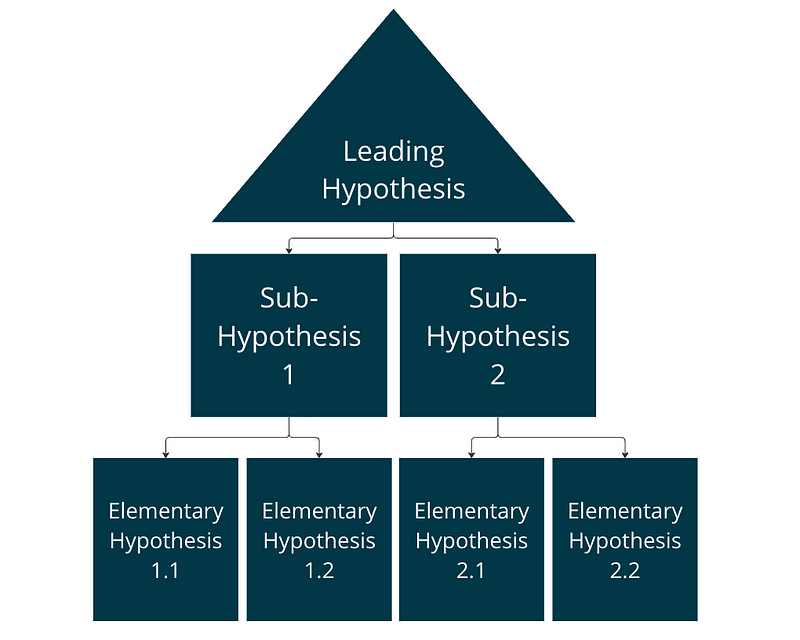
For example:
Sub-Hypothesis 1: There is sufficient and unsaturated demand for Online coaching.
Sub-Hypothesis 2: The existing coaches would be willing to coach online.
I can now go ahead and confirm or disconfirm these hypotheses. If needed, I can break them down further into elementary hypotheses.
Example issue tree
Let's imagine a second scenario using the same example. Yet this time I don't have a good candidate solution.
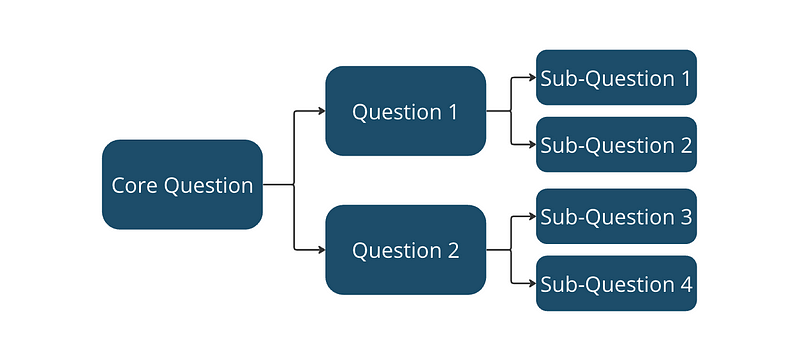
My decision would be more open: How can I grow my coaching business's profit?
I break it down into more minor, manageable questions.
Question 1: How can we increase revenue?
Sub-Question 1.1: How can we charge more for each coaching?
Sub-Question 1.2: How can we do more coaching?
Question 2: How can we decrease cost?
Sub-Question 2.1: How can we pay less for rent?
Sub-Question 2.2: How can we pay less for marketing?
Sub-Question 2.3: Where else could we save money?
Armed with these questions, I am ready to delve into the analysis and address each. I do this in 3 steps:
- Finding the best sources of information
- Researching
- Synthesizing my research results into an answer
I explain in detail how to analyze and solve the problem here.
After answering these questions, the best choice will be evident based on hard facts.
Key Takeaways
Your life is composed of decisions. Each one comes with consequences. Mastering the art of decision-making is mastering life.
By assessing their complexity and impact, determine which decisions deserve how much effort.
For minor decisions, experiment with mental models such as:
- The Rubber Band Model
- The Yes/No Rule
- The Gift Model
For moderately complex and moderate to high-impact questions, try the PROACT system.
For highly complex and high-impact decisions, work with the 4S framework. Apply hypotheses, issue trees, or design thinking.
Good problem solvers combine these frameworks.
Be proactive. Keep in mind that not deciding is always the worst decision. Determine when you need to make the decision and commit to it.
I will take this decision by (date) after (needed action), or else I risk (or lose) (risk or potential loss).
Nothing is more difficult, and therefore more precious, than to be able to decide. — Napoleon Bonaparte
Which decision have you been avoiding?
For decision-making insights, case studies, and coaching, join our community at Lead & Succeed!


