avatarHammad A. Khalid

Free AI web copilot to create summaries, insights and extended knowledge, download it at here

2422

Abstract

, a work on the science of vision. It would go on to influence Johannes Kepler and Roger Bacon, among others.</p><p id="ea3f">Perhaps what Ibn al-Haytham was most well-known for, however, was his work on the scientific method. According to the majority of historians, Ibn al-Haytham is known as the <a href="https://www.ncbi.nlm.nih.gov/pmc/articles/PMC6074172/#:~:text=Ibn%20al%2DHaytham's%20scientific%20method,the%20need%20for%20independent%20verification.">pioneer of the modern scientific method</a>. His experiments were meticulously well-controlled, and he emphasized the importance of independently verifying his experimental results.</p><h2 id="3942">II. Ibn al-Nafis: 1213 — 1288</h2><figure id="de7b"><img src="https://cdn-images-1.readmedium.com/v2/resize:fit:800/1*QYp-C8UzGJRwi1Y-oRxazA.jpeg"><figcaption>Statue of Ibn al-Nafis, courtesy of <a href="http://By Unknown author - Arabic book on ibn al Nafis Takrouri M.S. M &amp; Khalaf M 2003, CC BY-SA 3.0, https://commons.wikimedia.org/w/index.php?curid=4759221">Wikimedia Commons</a></figcaption></figure><p id="09f0"><a href="http://www.lateralmag.com/articles/issue-24/forgotten-discovery-of-circulation">Western [medical] history often glosses over Muslim scientists</a> and their contributions to societal advancement in general. Ibn al-Nafis was no exception; this Arab anatomist and physician discovered our pulmonary circulation centuries before William Harvey did at Cambridge.</p><p id="2b0c">As were many other influential Arab Muslims of the time, ibn al-Nafis was a <a href="https://www.ncbi.nlm.nih.gov/pmc/artiiscles/PMC2612469/">polymath</a>, and as such he also wrote extensively in subjects outside of medicine, such as astronomy, sociology, theology, philosophy, and law. Interestingly, he also wrote an Arabic science fiction novel about a child raised on a deserted island who eventually comes into contact with the outside world.</p><h2 id="3944">III. Ibn Sina (Avicenna): 980–1037</h2><blockquote id="bb58"><p>“The more brilliant the lightning, the quicker it disappears.” -<a href="https://quotes.thefamouspeople.com/avicenna-4127.php">Ibn Sina</a></p></blockquote><figure id="9489"><img src="https://cdn-images-1.readmedium.com/v2/resize:fit:800/1*DlJziLPadbwCVWxjFz9bbg.jpeg"><figcaption>Ibn Sina taking a patient’s pulse (Image courtesy of <a href="https://commons.wikimedia.org/wiki/File:Doctor_taking_woman%27s_pulse._Avicenna%2

Options

7s_Canon_manuscript_Wellcome_L0073712.jpg">Wikimedia Commons</a>)</figcaption></figure><p id="154e">If you’ve never heard of Ibn Sina/Avicenna, he was one of the greatest physicians in [Islamic] history and undeniably one of the greatest scholars and philosophers ever (fun fact: he even has a <a href="https://dbpedia.org/page/Avicenna_(crater)">lunar crater</a> named after him).</p><p id="27f7">Before I talk about Ibn Sina, I want to explain the above painting. The painting depicts a legend regarding Ibn Sina and an ailing prince. According to the legend, Ibn Sina kept his hand on the prince’s wrist and monitored his radial pulse as he asked him a series of questions. The questions mainly consisted of basic geographical knowledge, asking the prince to name all of the neighborhoods in the city.</p><p id="e657">Upon reaching a certain neighborhood, Ibn Sina noted the prince’s heart rate would skip, or “<a href="https://hekint.org/2017/01/28/avicenna-the-prince-of-physicians/">flutter</a>”. Ibn Sina then kept asking the prince increasingly specific questions, ending in the names of the residents of a certain house on a particular street. Upon feeling the prince’s heart flutter yet again at the mention of a girl’s name, he diagnosed the prince as being love-sick and prescribed marriage to the girl in question as the remedy.</p><p id="2336">Known as “the prince of physicians” among Europeans, he is most well-known for his contributions to modern medicine. His <i>Canon of Medicine</i> is widely regarded as one of the most comprehensive medical volumes in the world, having been translated <a href="https://www.pbs.org/empires/islam/innomedicine.html">87 times</a> and used in medical education until the nineteenth century. He was Persian, lived during the <a href="https://www.khanacademy.org/humanities/world-history/medieval-times/cross-cultural-diffusion-of-knowledge/a/the-golden-age-of-islam">Islamic Golden Age</a>, and was arguably the <a href="https://www.ncbi.nlm.nih.gov/pmc/articles/PMC2612469/">most preeminent Muslim thinker from the era.</a></p><p id="7d52">Learned something new? Leave a comment and clap! I’m thinking about doing another article in a series on history. <a href="http://hammadakhalid.medium.com/">Follow</a> me for more! I’m a medical student from Atlanta, Georgia interested in medicine, health disparities, and more. I love connecting with peers.</p></article></body>

History

3 Muslim Polymaths Who Changed The World

Who you probably haven’t heard of

Sharjah Mosque via Shutterstock.com

If you’ve ever taken a high school world history course in America (or anywhere in the West, for that matter), you’ve probably never heard of these Muslim historical greats. Many of these men were the first to theorize and publish works on an extensive array of topics ranging from anatomy to optics to philosophy to mathematics.

Did you know that calculus and algebra were invented by Muslims? If not, you probably didn’t learn about these other influential Muslims below in school either. It’s okay, neither did I.

I. Ibn al-Haytham (Alhazen): 965 — 1040

“Thus the duty of the man who investigates the writings of scientists, if learning the truth is his goal, is to make himself an enemy of all that he reads, and, applying his mind to the core and margins of of its content, attack it from every side.” — Ibn al-Haytham, Aporias against Ptolemy
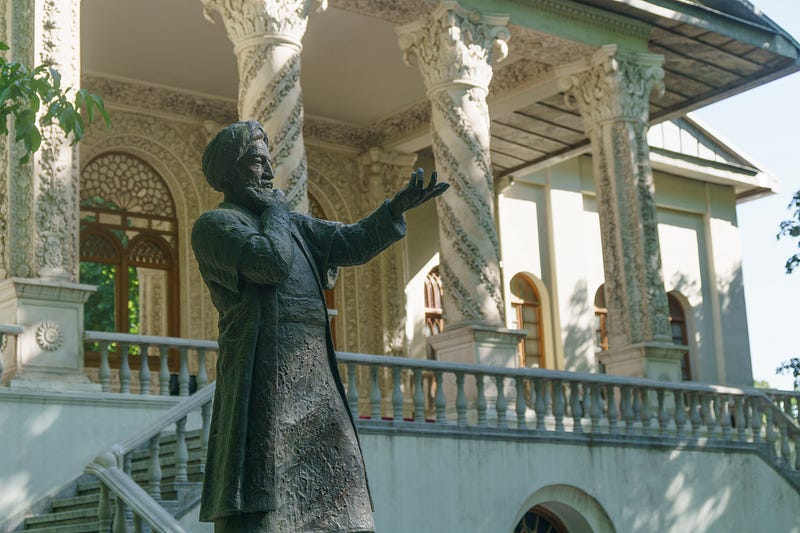
Statue of Ibn al-Haytham in Tehran, Iran (Image courtesy of Shutterstock)

Known as the “father of modern optics” and experimental psychology, this polymath was a prolific writer as well. In addition to a foundational work explaining how vision works from an integrative perspective, he also published works on a variety of other subjects, including physics, psychology, and meteorology.

His magnum opus was Optics, a work on the science of vision. It would go on to influence Johannes Kepler and Roger Bacon, among others.

Perhaps what Ibn al-Haytham was most well-known for, however, was his work on the scientific method. According to the majority of historians, Ibn al-Haytham is known as the pioneer of the modern scientific method. His experiments were meticulously well-controlled, and he emphasized the importance of independently verifying his experimental results.

II. Ibn al-Nafis: 1213 — 1288
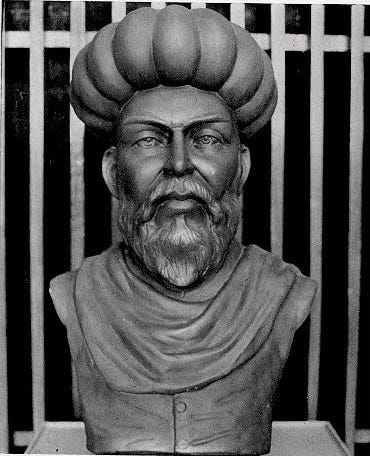
Statue of Ibn al-Nafis, courtesy of Wikimedia Commons

Western [medical] history often glosses over Muslim scientists and their contributions to societal advancement in general. Ibn al-Nafis was no exception; this Arab anatomist and physician discovered our pulmonary circulation centuries before William Harvey did at Cambridge.

As were many other influential Arab Muslims of the time, ibn al-Nafis was a polymath, and as such he also wrote extensively in subjects outside of medicine, such as astronomy, sociology, theology, philosophy, and law. Interestingly, he also wrote an Arabic science fiction novel about a child raised on a deserted island who eventually comes into contact with the outside world.

III. Ibn Sina (Avicenna): 980–1037

“The more brilliant the lightning, the quicker it disappears.” -Ibn Sina
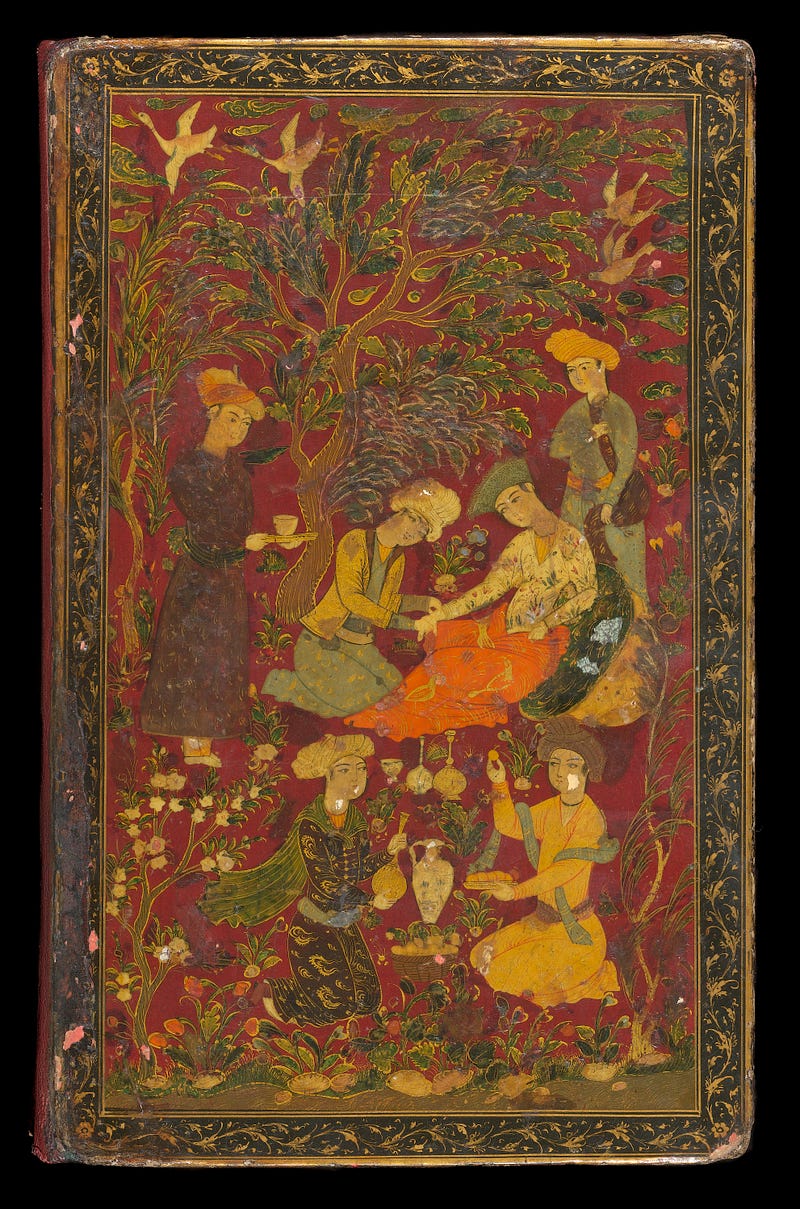
Ibn Sina taking a patient’s pulse (Image courtesy of Wikimedia Commons)

If you’ve never heard of Ibn Sina/Avicenna, he was one of the greatest physicians in [Islamic] history and undeniably one of the greatest scholars and philosophers ever (fun fact: he even has a lunar crater named after him).

Before I talk about Ibn Sina, I want to explain the above painting. The painting depicts a legend regarding Ibn Sina and an ailing prince. According to the legend, Ibn Sina kept his hand on the prince’s wrist and monitored his radial pulse as he asked him a series of questions. The questions mainly consisted of basic geographical knowledge, asking the prince to name all of the neighborhoods in the city.

Upon reaching a certain neighborhood, Ibn Sina noted the prince’s heart rate would skip, or “flutter”. Ibn Sina then kept asking the prince increasingly specific questions, ending in the names of the residents of a certain house on a particular street. Upon feeling the prince’s heart flutter yet again at the mention of a girl’s name, he diagnosed the prince as being love-sick and prescribed marriage to the girl in question as the remedy.

Known as “the prince of physicians” among Europeans, he is most well-known for his contributions to modern medicine. His Canon of Medicine is widely regarded as one of the most comprehensive medical volumes in the world, having been translated 87 times and used in medical education until the nineteenth century. He was Persian, lived during the Islamic Golden Age, and was arguably the most preeminent Muslim thinker from the era.

Learned something new? Leave a comment and clap! I’m thinking about doing another article in a series on history. Follow me for more! I’m a medical student from Atlanta, Georgia interested in medicine, health disparities, and more. I love connecting with peers.

History
Islam
Science
Medicine
Religion
Recommended from ReadMedium