
3 Life Lessons I Teach in Drivers Ed
Subliminal messaging for high schoolers
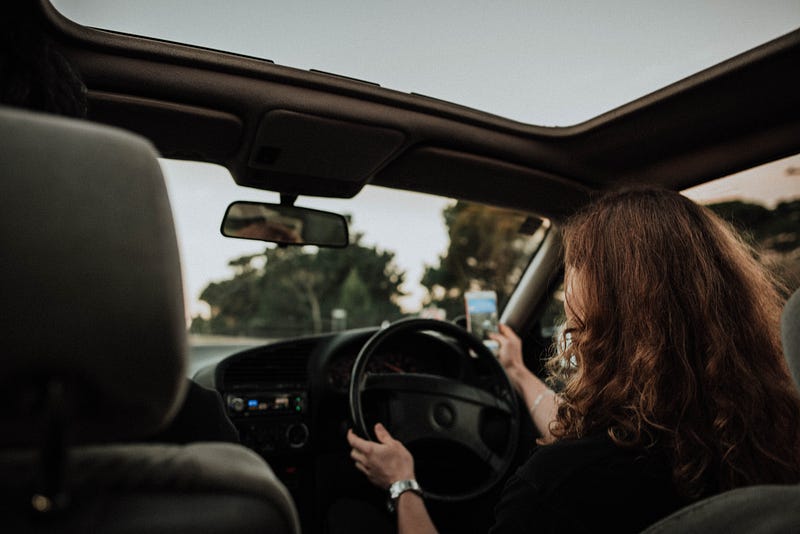
Driving instructors get the short end of the stick in regards to teacher respect. We are thought to be old, mean, boring, and not “real" teachers.
Well, I’m about to turn 25 years old, I start each class by saying “hello” to each of my students individually and asking them how their day was, and I work just as hard as my other teacher friends. My curriculum is just different than the public school system. I have to think on my feet, I have to adjust my lessons for each class, and I have students of all backgrounds (many of my students are from other countries and English is their second language).
I take pride in what I do. I love that I have the honor and privilege of being part of such a pivotal time in a kid’s life. Driving is a huge rite-of-passage in America and a privilege I don’t want any of my students to squander.
I can’t speak for every student, but I know I was heavily influenced by my teachers in high school. Whether for good or bad, teachers have a huge impact on growth for teenagers. I want to be a positive influence rather than someone boring that doesn’t actually teach them anything they can use.
But beyond knowing the laws and how to drive defensively, I want to be an effective educator and mentor to these guys. I have incorporated some subtle but important subliminal messages into my lessons and activities that I would want my future kids to learn.
1. Do not do anything you feel unsafe doing
My driving school gets calls a lot from people around town asking “what are you teaching these kids?!” All because we don’t always make right turns on red lights.
News flash for anyone who was unaware: You are not obligated to do a right on red!!!!
I know, shocker. I always push this idea to students that you do not have to do anything that you aren’t 100% cool with. If you look both ways and you’ve got trees blocking your view in one direction and a downhill slope the other direction, you probably aren’t going to feel safe going out into the intersection.
When I go in the car with students, I hold myself to the same standard. In the passenger seat, I need to be certain that I can also see everything necessary before allowing a student to make a right on red or do any maneuver.
Whether it’s driving or picking a college or anything in between, if your gut instinct is “don’t do it,” then don’t do it. We all have intuition and I want my students to trust theirs. Driving is a big risk and new drivers are more likely to be involved in fatal crashes than experienced drivers. If my students know to trust their instincts behind the wheel, my hope is that I can help minimize that risk.
2. Never let someone intimidate you when you know something is wrong
My generation was constantly being warned about drugs and alcohol and the peer pressure that we would endure in order to persuade us to take said drugs and alcohol. But peer pressure can come from a lot of different parts of life.
Take an unprotected left turn (a left at a lighted intersection on a solid green light rather than a green arrow) for instance. I regularly get beeped at when waiting my turn at a light like that. But here’s the thing: the jackass that’s honking at me doesn’t see everything that I can or cannot see.
I would say at least 90% of the time when someone honks at me, I’m simply waiting my turn somewhere. And seeing as I’m a small woman driving a teeny tiny car, it can be incredibly intimidating to be honked at repeatedly when just waiting for a safe gap in traffic.
You shouldn’t give in to that peer pressure to just “go" if it isn’t safe. Just like with the previous lesson, you have to trust yourself and trust your intuition. Often times students tell me stories about instances on the highway or in a city where they are honked at when getting ready to change lanes. It’s always the same story:
“I had my turn signal on and I was taking my time but people around me are just passing me or honking and it’s scary.”
Merging and lane changing are challenging, even for an experienced driver. If someone is taking their time to triple-check that they are making a safe move over, they should not be punished or shamed for that. Just like a kid shouldn’t be embarrassed about liking K-Pop or reading fanfiction, or taking ballet classes. Don’t give in to peer pressure in any regard and stay true to your instincts.
3. You are responsible for yourself — not everyone else

When we talk about driving on the highway, my tone often shifts. With other driving environments (city, residential, etc.) I push a narrative that we are all supposed to look out for each other. Safety is the first priority in driving. We need to keep ourselves safe as well as others. We should be on the defense looking out for pedestrians, bicycles, and kids.
Well, when it comes to expressways, I explain that at such high speeds and high stakes, we need to ensure our own safety first. We cannot be preoccupied with what every other car on the road is doing. It isn’t practical and it can be distracting.
I’m what most people would call a people pleaser. I don’t like saying no, I love helping people whenever I can, and I feel exponentially better about myself if I have made someone else’s life easier. It took me a very long time (like the better part of the last decade) to learn that sometimes I have to be on the lookout for me and only me.
I am my first priority. And my students should be their own first priority too. Not just on the road but on the day-to-day.
I don’t come right out and say that these are life lessons to my students. That would be too easy. If I tell a 16-year old that I’m going to give them advice, they automatically shut off their ears and ignore me.
Being 16, 17, 18 years old is rough. A lot of them come into the first day of driver's ed with an impression that I’m going to be old and stuffy, but I am not a whole lot older than them. My youngest students are 15. I remember what it was like to be in high school. I know how much it sucks to be a kid sometimes. If I can help ease that tension even the littlest bit, I’ve done my job.