
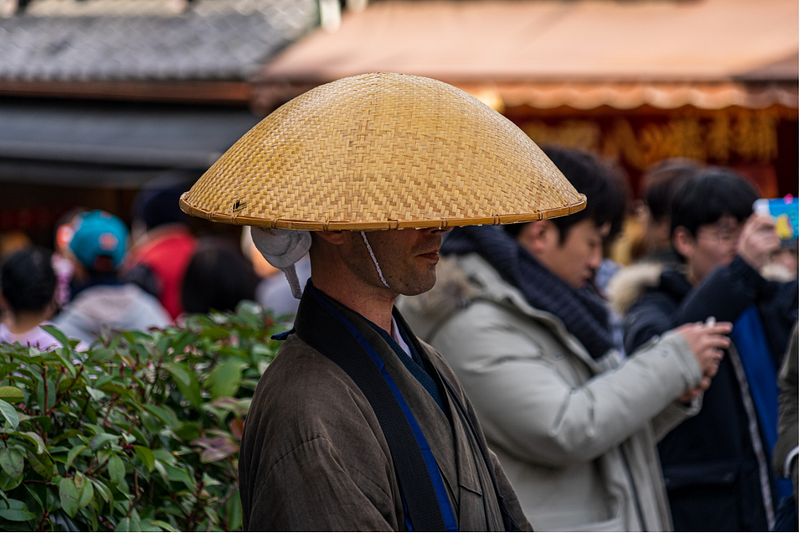
3 Japanese life-changers
After my visit to Japan last October, I started exploring its culture more and more.
Sure, I did it also before traveling there and during traveling but the Japanese culture is so rich that people can explore it for years.
In the beginning, the Japanese look like aliens, not physically speaking, but their manners, rhetoric, food, and general behavior was so different from any other culture that I had ever seen and it took me a while to digest.
I have traveled to a lot of countries and have seen a lot of cultures but Japan and the Japanese have some other value to life that I hadn’t come across before.
The Japanese have some Zen grasping of life; it’s like they understand something the rest of us don’t, and I think we can summarize it in these 3 Japanese concepts for life.
Ikigai:
Ikigai is a Japanese word whose meaning translates roughly to a reason for being, encompassing joy, a sense of purpose and meaning, and a feeling of well-being. The word derives from iki, meaning life and kai, and the realization of hopes and expectations.
Ikigai is seen as the merging of four primary elements:
What you love (your passion)
What the world needs (your mission)
What you are good at (your vocation)
What you can get paid for (your profession)
Discovering your own ikigai is to bring fulfillment, happiness and make you live longer
Why it’s important:
Ikigai refers to finding happiness and joy in the small, day-to-day activities, rather than reaching some final goal that promises bliss. It encompasses finding meaning in small things. In fact, a person’s ikigai gives them a reason for living even when they are unhappy or miserable at the moment
How do I practice it?
These keys are simple and easy to put into practice, and are based on experience:
1 Do what you do best.
2 Know how to say no.
3 Take care of your energy.
4 Practice continuous personal development.
5 Stop and decide to do something fulfilling.
6 Align your personal values with those of your company.
7. Simplify, don’t make things difficult

Kaizen :
Kaizen is a concept referring to business activities that continuously improve all functions and involve all employees from the CEO to the line workers. Kaizen is the Japanese word for “improvement”. Kaizen was first practiced in Japanese businesses after World War II, influenced in part by American business and quality-management teachers, and most notably as part of The Toyota Way. It has since spread throughout the world and has been applied to environments outside business and productivity.
The Japanese “improvement” or “change for the better”, is being used when approaching processes in manufacturing, production, engineering, management and to support other business procedures
The Toyota Production System is known for kaizen, where all line personnel is expected to stop their moving production line in case of any abnormality and, along with their supervisor, suggest an improvement to resolve the abnormality which may initiate a kaizen.
The cycle of kaizen activity can be defined as: “Plan → Do → Check → Act”.
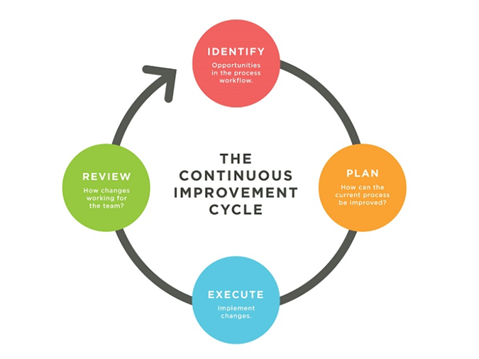
Another technique used is the 5 Whys, which is a form of root cause analysis in which the user asks a series of five “why” questions about a failure that has occurred, basing each subsequent question on the answer to the previous. There are normally a series of causes stemming from one root cause. The Five Whys can be used as a foundational tool in personal improvement, or to create wealth.
Here are some of the best practices of Kaizen:
1. Focus on the process, not the goal.
2. Engage your employees and colleagues in the decision-making process.
3. Go after the low-hanging fruit.
4. Do it better, make it better.
5. Eliminate waste in all forms.
SHOKUNIN:
The Japanese word shokunin is defined as ‘craftsman’ or ‘artisan,’ but such a literal description does not fully express the deeper meaning. The Japanese apprentice is taught that shokunin means not only having technical skills but also implies an attitude. The shokunin has a social obligation to work his/her best for the general welfare of the people.
“This obligation is both spiritual and material, in that no matter what it is, the shokunin’s responsibility is to fulfill the requirement.” — Tasio Orate
Shokunin is a way of life, a way of thinking, a personal characteristic that affects every interaction in the world. And it’s the way that we aspire to be.
The spirit of the shokunin is the pursuit of perfection. The pursuit is hard and the journey long, never-ending, in fact.
Try to find your own shokunin, use your inner powers of focus and concentration to unlock them for your business but also just for your life in general. True happiness and fulfillment can be achieved by unlocking one’s own potential.
What I love about those three is that they are very easy to understand and to implement into your life.
In my way of thinking you don’t need to adopt 100% from every one of them, but if you can find a reason for being, try to be in constant improvement (even improving every day in a very small subject creates big improvements ) and always be in the pursuit of perfection — you can be so much better and happier in your life.


