
3 Inspiring Books to Boost Your Sales Confidence
“Sales is not something you do to people, it’s something you do for people.”

Everyone is a salesperson.
Have you heard that before? Do you believe it?
We all need to persuade someone at some time.
Even a child will persuade their parent to buy something for them.
Do you feel confident as a salesperson?
When I started in sales, I didn’t feel confident and sometimes didn’t know what to say to close the sale. What did I do? I read books that helped me understand something very important about the sales profession.
In the words of Zig Ziglar: “Sales is not something you do to people, it’s something you do for people.”
Benefit the customer first and you will benefit in the long term.
By reading these books, I learned how to present my product with confidence and ask for the sale. I hope you enjoy the same results.
Zig Ziglar — Secrets of Closing the sale.
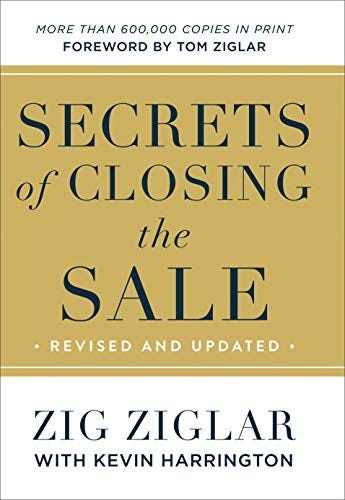
This is probably my favourite sales book.
Here are 2 powerful lessons from the book
Lesson 1 — Help people get what they want
One of the most valuable takeaways from this book, and there are many, is this quote:
“You can have everything in life you want if you will just help enough other people get what they want”
You need to think about that.
Everyone wants something. The business of selling is learning what each person wants and helping them to have it. Sometimes that requires persuasion and helping the prospect get over their resistance.
Do you want more money? Help more people get what they want.
Your reward will be more than money.
You’ll have a good feeling that you have made so many people happy.
Lesson 2 — The difference between Respond vs React
When things don’t go as planned, what is our attitude?
Zig uses a great story to illustrate his point about the difference between what it means to respond and to react to the situation.
“You get sick and go to the doctor. The doctor gives you a prescription and tells you to come in the next day so he can check on you. When you walk in the next day, the doctor takes one look, shakes his head, and says, ‘We’re going to have to change your prescription because your body is reacting to the drugs.’ Nobody is happy with the negative results.” — Zig Ziglar, Secrets of Closing the Sale.
To react is a negative result, but to respond is positive.
When we react we are out of control. Usually, our feelings take over. To respond means we acknowledge the issues and take action to deal with it.
Just like medication, we want to respond to any unexpected results.
Tom Hopkins — How to Master the Art of Selling
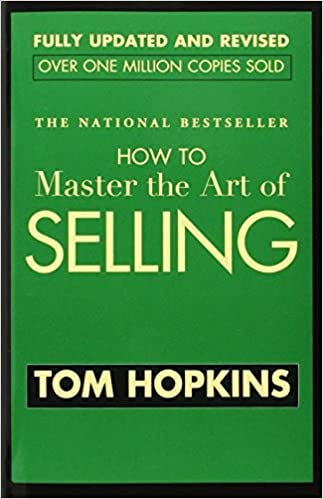
Tom Hopkins describes the business of selling as “the highest-paid hard work — and the lowest-paid easy work.”
Anyone can get a job in sales, but to be successful requires learning your craft and doing the work. There are skills to learn and practice. It is rewarding in more ways than just money.
“No one limits your growth but you. If you want to earn more, learn more.”
Lesson 1 — Questions
Tom reminds us that the one who asks the most questions controls the conversation. Questions are used to direct attention towards the benefits of owning your product.
The best way to discover and overcome objections is to use questions. When the customer answers in the affirmative it is one step closer to answering yes when you ask for the sale.
“If you say it, they can doubt you; if they say it, they must believe it to be true.”
Open questions cannot be answered with a yes or no. They require thought by the person you’re asking. Use them to discover their wants and needs.
Closed questions aim at getting a specific answer. They’re usually short and can be answered with a yes or no.
Tie-down questions at the end of a statement demand a yes answer. For example, if you’re selling a fuel-efficient car, you could say: “Fuel economy is very important today, isn’t it?”
Most people would say yes to that, and it leads towards a final “yes” when you ask them to buy.
Lesson 2 — Objections
“Objections are statements by potential clients that they want to know more.”
There are 2 kinds of objections, minor and major. Here’s the difference:
Minor objections are defence mechanisms. They want you to slow down. They’re afraid to commit at this point in the discussion. That’s an opportunity to explain more and help them feel confident in your recommendation.
You do not need to address all minor objections. Build trust and assure them with benefits, not features, of your product.
Major objections are concerns that your product does not suit them. With effective questions, you can eliminate this kind of objection, know what is best for them, and offer it. If your product does not suit them or they don’t have the money or credit, you may have to ask for a referral and move on.
A major objection could be a condition that does not allow them to own your product, or your product doesn’t fit their needs. If there are no such conditions and they don’t buy, it’s the salesperson’s fault. Own it. Learn from it. Do better next time.
When you “qualify” your prospect with good questions, you determine how to fill their needs with your product. Your presentation can overcome objections before they come up because you know their needs and concerns.
Joe Girard — How to Sell Anything to Anybody
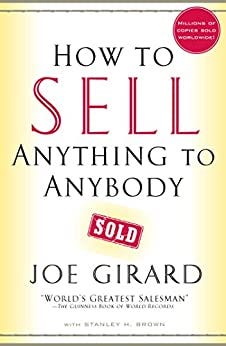
You may not have heard of Joe Girard unless you read the Guinness Book of World Records.
He’s listed as the World’s Greatest Car Salesperson, for several years. Joe is recognized as selling more cars per year than any other salesperson. We can learn a lot from him.
Lesson 1 — Girard’s Law of 250
Joe Girard sees the value of every prospect or customer, whether they buy or not, and he seeks (and receives) referrals consistently.
He learned this Law when he went to a Funeral home to pay his last respects to the dead mother of a friend. The funeral home had a policy of sending out cards with the name and picture of the departed.
Joe asked them, “how do you know how many cards to print?”
He learned that the average number that attends a funeral is 250. Also, the average number that attends a wedding is about the same.
Everyone knows an average of 250 people who might attend their wedding or funeral. How does this affect your business?
According to Joe,
“This means that if I see 50 people in a week, and only two of them are unhappy with the way I treat them, at the end of the year there will be about 5,000 people influenced by just those two a week.”
Of course, if they’re a happy customer, think of the excellent reputation you may have with those 5,000!
Treat every person as if they are 250.
Lesson 2 — Selling the Smell
There’s an old saying in sales. We need to “sell the sizzle”.
What does that mean? Basically, to use the senses to attract the buyer.
Do you remember the smell of a new car? Most people like that smell. It’s a feel-good smell.
According to Joe, it’s not just about the smell. It’s about the excitement of the experience. The thrill of having something new.
“Think of what excites you about a product, or used to when you first bought it. Then use that experience to sell the excitement, the thrill of owning your product.”
As salespeople, we want to create and amplify those feelings.
Emotions sell.
Logic satisfies the little voice that holds us back and allows us to enjoy our new purchase without guilt.
Summary
Confidence comes from knowing what you’re doing.
Books can inspire and motivate you by teaching you how to be effective and successful in the sales profession.
I hope you’ve enjoyed a few lessons that have helped me in these books. I highly recommend them.
You probably have your favourite books that you’ve learned from.
Feel free to comment and share your experience with applying the skills you’ve learned.
If you’re interested in these books, follow the links in the book image caption. They are affiliate links at no cost to you


