
3 Incredibly Important Subjects Most of Us Never Bother Learning
They can transform your finances, life success, and social interactions

Schools do a terrible job of equipping us for the real world — who cares about the capital of Georgia or the atomic number of chromium?
You would if you ended up becoming a cartographer or chemist.
But few of us do. Most of us work 9 to 5 desk jobs. And the things that almost everyone has in common?
Paying taxes, creating wealth, interacting socially, building meaningful relationships, and living happily — and our “education” system doesn’t even pass a mention of these.
“Education is what remains after one has forgotten everything he learned in school. It is a miracle that curiosity survives formal education. ”
— Albert Einstein
I want to share 3 subjects that we ought to have been taught in school but unfortunately weren’t.
(P.S: This article has affiliate links. If you purchase the books through these links, it will help me earn a tiny amount of money — at no extra cost to you. Thanks!)
Evolutionary Psychology
As Descartes said, “I think, therefore, I am,” we are literally our minds. So, by understanding our minds, we can master ourselves.
This is where evolutionary psychology comes in — an explanation of human behavior through the amalgamation of evolutionary biology, anthropology, and neuroscience.
Basically, it’s viewing things through Darwin’s “Survival of The Fittest” — we act the way we do because it helped our hunter-gatherer ancestors thrive.
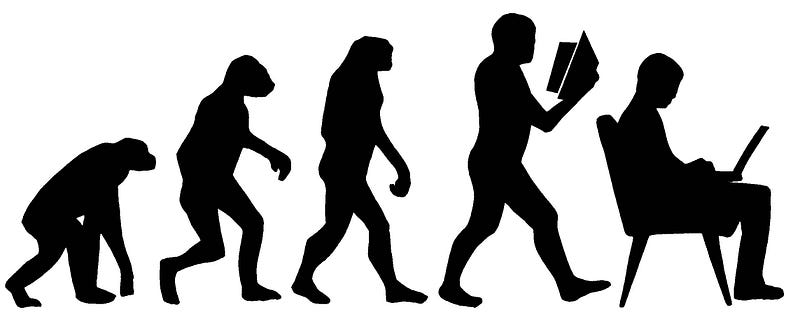
You’ll understand motivation, attraction, stereotypes, power plays, inter-gender dynamics, societal underpinnings, social contracts, and hierarchies at a deep level.
With a lot of “Aha!” moments and things ‘clicking’ into place, puzzling experiences, and people will start making sense.
The book Sapiens: A Brief History of Humankind is an excellent door to the world of evolutionary psychology. The Moral Animal is another highly acclaimed and recommended book.
If you’re a man, especially if you’re young, read The Rational Male as well — it will open your eyes to inter-gender dynamics.
As to video material, watch this brilliant introduction lecture by Dr. Diana Fleischman. Then, you can dive into this Harvard university course.
Monetary Theory
What is money according to you? Is it the modern green wads of notes with Benjamin Franklin staring at you? Or the jingling coins that used to populate medieval pockets?
It’s neither. And the actual answer will blow your mind.
Money is a concept — an idea we came up with to transfer real wealth.
A dollar is a dollar just because we all think it is. The actual note costs just 0.11 cents to print. As world governments print new cash, your existing money erodes in value.
This is what’s called inflation — why else do you think a gallon of milk that cost only 36 cents in 1913 costs a whopping $3.59 now?
The supply of money is the lever used by governments to regulate economic activity — the more money-printing, the higher spending, the busier economic activity, and the higher prices shoot.

This is just the surface of money theory and the more I learn, the more I realize how wrong most of us think about it. That’s exactly what is making the rich richer and the poor poorer.
The better you understand how something works, the more skilled you will be with it — money isn’t any different.
If you’re a complete beginner, start with the book Rich Dad Poor Dad. Then, move on to The Modern Money Theory by Randall Wray. Another popular and highly-acclaimed read is The Psychology Of Money by Morgan Housel.
As to video material, try this introduction lecture by Prof. Randall Wray, and hop on to this edX course.
Negotiation (And Persuasion)
The biggest misconception about negotiation is that it’s something limited to serious-looking blazered men closing million-dollar deals.
It’s part and parcel of our everyday lives — be it deciding a meetup time, purchasing something, or accepting a job offer, negotiation is at play.
Any exchange that involves 2 or more parties means negotiation.
As a result, mastering this fundamental skill becomes crucial. Persuasion, a term we often throw around, is again negotiation.
Not until I started “formally” learning negotiation did I realize how little I knew of it. It’s a vast, hard, and deep subject — and expertise in it is what defines world-class ambassadors, brokers, arbiters, sales agents, etc.

But this subject, unlike the other two, is highly practical—experience will teach you more than theory. So, learn the fundamentals and sharpen them in the real world.
As for learning, go directly to the course Successful Negotiation by Prof. George Siedel — not even halfway in, I’ve already learned tons.
If you want to read, check out the books Getting To Yes and Negotiation Genius — both have great reviews.


