avatarAnthony M. Davis

Free AI web copilot to create summaries, insights and extended knowledge, download it at here

4019

Abstract

tress. On average, a person should aim for 7 to 9 hours of sleep per night. When you lack sufficient sleep, your mind and body slow down, leaving you prone to accidents, diminished cognitive skills, depression and anxiety.</p><p id="d164">According to the <a href="https://www.cdc.gov/sleep/data_statistics.html"><b>Centers for Disease Control (CDC)</b></a>, people who get less than 7 hours of sleep per night, increase their risks of arthritis, depression, diabetes, heart or kidney disease, obesity or stroke.</p><p id="0653"><b><i>Many of these health issues don’t show up alone.</i></b></p><p id="6cc7">When addressing multiple health challenges concurrently, getting ahead of them can be problematic. Many studies show that getting sufficient sleep reduces your stress and can help to prevent additional health challenges.</p><p id="72c4"><b>If you struggle with getting to sleep, apply some things in this article:</b></p><ul><li>Meditation or the relaxation audio.</li><li>Download the Free “<a href="https://insighttimer.com/"><b>Insight Timer</b></a>” app for your smartphone. There’s an extensive collection of music or sleep audios available.</li><li>Create a sleep schedule and make a choice to follow it. When you establish sleep times, you create a healthy habit.</li><li>If your mind is still spinning with worrisome thoughts, or things you need to do, keep a notepad near your bed. Write your thoughts down and make a choice to address them tomorrow.</li><li>Limit snacks and meals before sleep. When you’re trying to sleep, your digestive system is active and that can disrupt your sleep patterns.</li><li>Put the phone or tablet down an hour before sleep. The blue light used by screens causes melatonin suppression. A study by the <a href="https://www.sciencedirect.com/science/article/abs/pii/S0003687012001159"><b>Lighting Research Center at the Rensselaer Polytechnic Institute</b></a> says melatonin suppression can increase the chances of diseases or cancer. The study shows that using the “Night Shift” option to use warmer light, has minimal effects in reducing melatonin suppression.</li><li>Begin adding exercise to your life. Your body moves better and your brain and organs operate with more efficiency when you actually <b>MOVE</b>. When you exercise your body, it becomes easier to rest.</li><li>Before engaging in a regular exercise program, it’s a good idea to check with your medical practitioner to get a baseline of where your body is now. That information can help your health practitioner to suggest helpful options for you.</li></ul><p id="b708">For your physical, emotional and cognitive health, make a self-commitment to allow yourself sufficient sleep. Even when stressed, if you incorporate more rest, your stress levels will start a reset mode that brings you better health and balance.</p><h2 id="da5a">Stay Hydrated</h2><p id="ecd9">Staying hydrated is necessary to ensure the quality of your overall health, and thus, prevent stress. Look at the table below and you’ll see that water is crucial to your brain, organs, muscles, blood, bones and teeth. You’ll also notice each of these areas of your body holds a significant percentage of water.</p><p id="3344">Every second of your life, awake or asleep, you consume water that cools, lubricates and helps regenerate every cell in your body. The longevity of living depends on cell regeneration. If you don’t ensure you maintain hydration, your body goes into a deficit mode, and that creates physical stress.</p><figure id="0c56"><img src="https://cdn-images-1.readmedium.com/v2/resize:fit:800/1*zSYB0MrwPffgNghuNVnA5g.jpeg"><figcaption><a href="https://www.medicalnewstoday.com/articles/what-percentage-of-the-human-body-is-water">Source: Medical News Today</a></figcaption></figure><p id="e0f7">There are many types of stresses from external elements where you may or may not have full control. Yet maintaining your internal physical functions is on you. As the table shows, your brain is 80–85% water. When you dehydr

Options

ate, you open the door to headaches or cognitive issues, impeding your ability to concentrate and make good decisions. This is just one example of the effects of dehydration.</p><p id="77c0">I could write pages of physical challenges but then, looking at the table, you can see for yourself the necessity of staying hydrated. Take any element listed and imagine a reduction of water by 50%. It’s easy to see where areas of discomfort could increase, or an organ working at less than optimal. Each of those increases stresses that you don’t need.</p><p id="d21e">There are many stress-relieving options available to help you take control of stressors. The three key areas noted in this article, each give you a handful of tools to fill your personal life tool box. These tools create healthy habits that over time become a defensive shield against negative contributors of stress.</p><h2 id="ea00">🔈 Relaxation and Confidence Audio</h2> <figure id="4d3a"> <div> <div> <img class="ratio" src="http://placehold.it/16x9"> <iframe class="" src="https://cdn.embedly.com/widgets/media.html?src=https%3A%2F%2Fw.soundcloud.com%2Fplayer%2F%3Furl%3Dhttps%253A%252F%252Fapi.soundcloud.com%252Ftracks%252F954117316%26show_artwork%3Dtrue&amp;display_name=SoundCloud&amp;url=https%3A%2F%2Fsoundcloud.com%2Fanthonymdavis%2Frelaxation-and-confidence-audio&amp;image=https%3A%2F%2Fi1.sndcdn.com%2Fartworks-RMeE9CrxCBo1jbMw-IyrouA-t500x500.jpg&amp;key=a19fcc184b9711e1b4764040d3dc5c07&amp;type=text%2Fhtml&amp;schema=soundcloud" allowfullscreen="" frameborder="0" height="166" width="800"> </div> </div> </figure></iframe></div></div></figure><h2 id="1d6a">More Popular Articles by Anthony M. Davis</h2><div id="3014" class="link-block"> <a href="https://readmedium.com/turn-off-the-noise-in-your-mind-43a6580d558b"> <div> <div> <h2>How to Turn Off the Hidden Noise in Your Mind</h2> <div><h3>5 ways to quickly enjoy a quiet mind.</h3></div> <div><p>medium.com</p></div> </div> <div> <div style="background-image: url(https://miro.readmedium.com/v2/resize:fit:320/1*LghaIyNPEc6M_GvfbAAEdg.jpeg)"></div> </div> </div> </a> </div><div id="a564" class="link-block"> <a href="https://readmedium.com/the-strong-messages-in-your-bucket-empower-your-life-64648cec5617"> <div> <div> <h2>The Strong Messages In Your Bucket Empower Your Life</h2> <div><h3>It’s your unconditional choices that will control it all</h3></div> <div><p>medium.com</p></div> </div> <div> <div style="background-image: url(https://miro.readmedium.com/v2/resize:fit:320/1*jGzXPFSSsMmQfLrAdcf-CA.jpeg)"></div> </div> </div> </a> </div><div id="ec2b" class="link-block"> <a href="https://readmedium.com/create-change-in-your-life-817fe5cbaa7a"> <div> <div> <h2>How to Create Change in Your Life</h2> <div><h3>It all begins with action steps you can start today.</h3></div> <div><p>medium.com</p></div> </div> <div> <div style="background-image: url(https://miro.readmedium.com/v2/resize:fit:320/1*IDsDDZHmTZVhs2nW8dwQRw.png)"></div> </div> </div> </a> </div><h1 id="3024">⭐️ About Anthony M. Davis</h1><p id="e1aa">Anthony M. Davis is a Leadership, Success & Stress Coach, Board Certified Therapist, Top-100 International Travel Photographer. As a Coach, he helps people just like you overcome obstacles & reach their goals. His free book, “<a href="https://anthonymdavis.com/"><i>Keys to Your Success</i></a>” is available now.</p></article></body>

3 Important Keys To Victory Against Stress

Here are the keys and a free hypnotic audio.
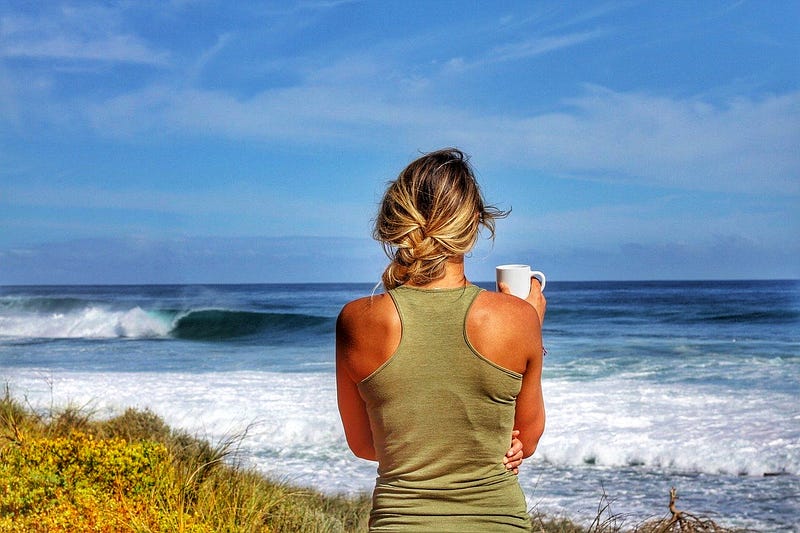
Image by Pexels from Pixabay

Sir Isaac Newton, when writing his Third Law of Motion, said:

“For every action, there is an equal and opposite reaction.”

Let’s apply that to stress. There are probably thousands of ways to stress yourself. Given Newton’s Third Law, for each of those stressors, that would imply there are equivalent actions as a counterbalance to de-stress.

Can I prove there’s a numerical ratio between stressing and de-stressing? No. Yet, in a world of billions of people, each biologically different, each has their own stressors, and measures that efficiently bring calm.

While we’re all biologically different, we also share enough similarities that certain measures effectively bring us all back to a state of homeostasis. Given that, rather than write a large compendium of stress, this article provides three useful areas of focus supporting your mind, body and emotions.

Relaxation Techniques

When you’re stressed, obviously what you need is the opposite of the uneasiness pulling at your mind, emotions and tightening your muscles and breathing. Stress unchecked can put a person in a spot where they might “Check out”. That’s not a good thing. I recently wrote an article about quieting the noise in your life.

Here are a few options that might help you relax:

  • Meditation/ Abdominal breathing
  • Listen to calming music
  • Take a quick nap.
  • Take part in a creative hobby. When you are using the creative side of your mind, you help to quiet the logical part that keeps spinning messages in your head.
  • Buy a puzzle. Like the creative hobby noted above, you’re using your creative parts of your mind, but also the logical side. Instead of focusing on the stressful parts of life, you’ll replace those with the shapes, colors and patterns of each piece.
  • Take a walk. Even 15-minutes away gives you a change of focus and scenery, and helps strengthen your body, blood pressure and oxygen flow.
  • Listen to my Relaxation and Confidence audio. It’s free and has helped hundreds of people. It’s available as a free download at my website HERE.

Or, at the bottom of this article, you can play it in the embedded audio player below. Just come back whenever you want to listen. Be sure to use earbuds or headphones.

Article Graphic by the Author

Get More Sleep

Sleep deprivation is a major contributor to stress. On average, a person should aim for 7 to 9 hours of sleep per night. When you lack sufficient sleep, your mind and body slow down, leaving you prone to accidents, diminished cognitive skills, depression and anxiety.

According to the Centers for Disease Control (CDC), people who get less than 7 hours of sleep per night, increase their risks of arthritis, depression, diabetes, heart or kidney disease, obesity or stroke.

Many of these health issues don’t show up alone.

When addressing multiple health challenges concurrently, getting ahead of them can be problematic. Many studies show that getting sufficient sleep reduces your stress and can help to prevent additional health challenges.

If you struggle with getting to sleep, apply some things in this article:

  • Meditation or the relaxation audio.
  • Download the Free “Insight Timer” app for your smartphone. There’s an extensive collection of music or sleep audios available.
  • Create a sleep schedule and make a choice to follow it. When you establish sleep times, you create a healthy habit.
  • If your mind is still spinning with worrisome thoughts, or things you need to do, keep a notepad near your bed. Write your thoughts down and make a choice to address them tomorrow.
  • Limit snacks and meals before sleep. When you’re trying to sleep, your digestive system is active and that can disrupt your sleep patterns.
  • Put the phone or tablet down an hour before sleep. The blue light used by screens causes melatonin suppression. A study by the Lighting Research Center at the Rensselaer Polytechnic Institute says melatonin suppression can increase the chances of diseases or cancer. The study shows that using the “Night Shift” option to use warmer light, has minimal effects in reducing melatonin suppression.
  • Begin adding exercise to your life. Your body moves better and your brain and organs operate with more efficiency when you actually MOVE. When you exercise your body, it becomes easier to rest.
  • Before engaging in a regular exercise program, it’s a good idea to check with your medical practitioner to get a baseline of where your body is now. That information can help your health practitioner to suggest helpful options for you.

For your physical, emotional and cognitive health, make a self-commitment to allow yourself sufficient sleep. Even when stressed, if you incorporate more rest, your stress levels will start a reset mode that brings you better health and balance.

Stay Hydrated

Staying hydrated is necessary to ensure the quality of your overall health, and thus, prevent stress. Look at the table below and you’ll see that water is crucial to your brain, organs, muscles, blood, bones and teeth. You’ll also notice each of these areas of your body holds a significant percentage of water.

Every second of your life, awake or asleep, you consume water that cools, lubricates and helps regenerate every cell in your body. The longevity of living depends on cell regeneration. If you don’t ensure you maintain hydration, your body goes into a deficit mode, and that creates physical stress.
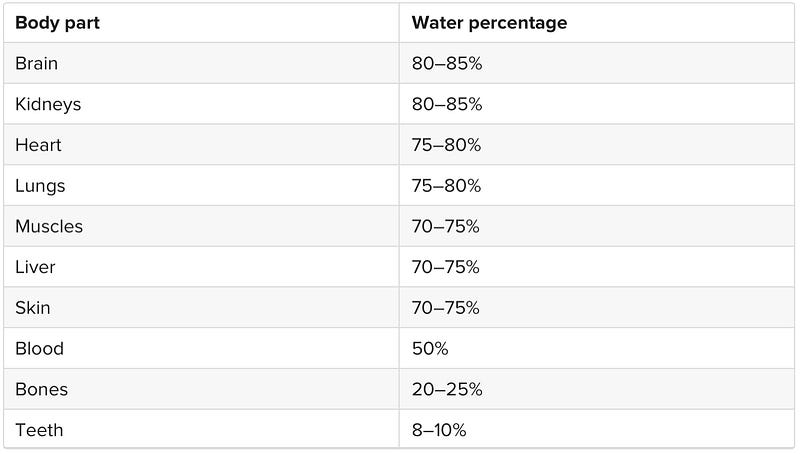
Source: Medical News Today

There are many types of stresses from external elements where you may or may not have full control. Yet maintaining your internal physical functions is on you. As the table shows, your brain is 80–85% water. When you dehydrate, you open the door to headaches or cognitive issues, impeding your ability to concentrate and make good decisions. This is just one example of the effects of dehydration.

I could write pages of physical challenges but then, looking at the table, you can see for yourself the necessity of staying hydrated. Take any element listed and imagine a reduction of water by 50%. It’s easy to see where areas of discomfort could increase, or an organ working at less than optimal. Each of those increases stresses that you don’t need.

There are many stress-relieving options available to help you take control of stressors. The three key areas noted in this article, each give you a handful of tools to fill your personal life tool box. These tools create healthy habits that over time become a defensive shield against negative contributors of stress.

🔈 Relaxation and Confidence Audio

More Popular Articles by Anthony M. Davis

⭐️ About Anthony M. Davis

Anthony M. Davis is a Leadership, Success & Stress Coach, Board Certified Therapist, Top-100 International Travel Photographer. As a Coach, he helps people just like you overcome obstacles & reach their goals. His free book, “Keys to Your Success” is available now.

Self
Health
Fitness
Mental Health
Self Improvement
Recommended from ReadMedium