avatarMerlijn Vekeman

Free AI web copilot to create summaries, insights and extended knowledge, download it at here

3909

Abstract

aught by med schools is providing CPR or cardiopulmonary resuscitation. When someone’s heart stops pumping blood to the body, it is vital to provide a good resuscitation procedure, including heart compressions.</p><p id="a07c">Heart compressions can be tiring though, because you have to pump five to six centimeters deep into the thorax while also maintaining a rhythm of 100 to 120 compressions per minute. The LUCAS Chest Compression System can provide heart compressions autonomously following extremely precise settings, without getting tired.</p> <figure id="9080"> <div> <div> <img class="ratio" src="http://placehold.it/16x9"> <iframe class="" src="https://cdn.embedly.com/widgets/media.html?src=https%3A%2F%2Fwww.youtube.com%2Fembed%2F_uTtGzmfpCk%3Ffeature%3Doembed&amp;display_name=YouTube&amp;url=https%3A%2F%2Fwww.youtube.com%2Fwatch%3Fv%3D_uTtGzmfpCk&amp;image=https%3A%2F%2Fi.ytimg.com%2Fvi%2F_uTtGzmfpCk%2Fhqdefault.jpg&amp;key=a19fcc184b9711e1b4764040d3dc5c07&amp;type=text%2Fhtml&amp;schema=youtube" allowfullscreen="" frameborder="0" height="480" width="854"> </div> </div> </figure></iframe></div></div></figure><p id="cbdf">In this video you can see how LUCAS takes over chest compressions, so the medical team can focus on other important tasks, such as administering medication through an IV, or checking vital functions.</p><p id="07ec">An added benefit to this machine is that it makes it easier to continue a perfect CPR protocol on the way to the hospital. You can imagine that providing quality chest compressions in a moving ambulance is not that easy, but for LUCAS it is.</p><p id="0a17">Lastly, LUCAS is known for its active compression and decompression mechanism. While doing CPR, a human can only provide active compression of the chest. There is no way to pull the chest back to its resting position. This is something LUCAS can do, by using a suction cup placed on the chest.</p><h1 id="54f6">Bridge-Enhanced ACL Repair (BEAR)</h1><p id="a228">An ACL injury is a tear or sprain of the Anterior Cruciate Ligament of the knee, one of its major ligaments. It is one of the most commonly injured ligaments in this joint. An injury like this often occurs when sudden stops or changes in direction are made, like in soccer and basketball. Patients may hear a pop in the knee, it may swell, become painful, and feel unstable.</p><figure id="d88e"><img src="https://cdn-images-1.readmedium.com/v2/resize:fit:800/0*2ENhbjREPfzLQUV8"><figcaption>Photo by <a href="https://unsplash.com/@skucinic9?utm_source=medium&amp;utm_medium=referral">Sven Kucinic</a> on <a href="https://unsplash.com?utm_source=medium&amp;utm_medium=referral">Unsplash</a></figcaption></figure><p id="a5c1">There is a range of treatment options possible. Depending on the severity of the injury, rest and rehabilitation may be an option. Surgical replacement of the torn ligament can also be performed. It is not possible to simply reconnect the two ends of the ACL, so the surgeon uses an autologous graft, which means that the ACL is replaced by tissue from the same patient, for example, the tendon of the hamstring or another structure in the knee.</p><p id="dbb2">Quick note: the surgery can be performed in an endoscopic way, for which I would like to refer to the first section of this article.</p><figure id="8c85"><img src="https://cdn-images-1.readmedium.com/v2/resize:fit:800/1*b8FPiOwr9cIwhaGMROymGA.jpeg"><figcaption>Endoscopic ACL Repair by <a href="http://drmanitarora.com/acl-reconstruction/">Dr. Manit Arora</a></figcaption></figure><p id="4ee9">While these options treat the problem well, there is a twenty percent chance of tearing the ACL again. Researchers are thus still looking for innovative treatment options.</p><p id="fbba">They hope to use the patient’s own biologicals, such as cell

Options

s, growth factors, and other substances, to promote better healing and decrease inflammation.</p><p id="e4eb">Bridge-Enhanced ACL Repair or BEAR involves placing a scaffold loaded with the patient’s own blood between the torn ligament ends prior to using suture to realign the ends of the ligament.</p><p id="7524">Some preclinical studies on animals have shown that animals that were treated using this BEAR technique showed less osteoarthritis than those receiving a normal reconstruction.</p><p id="8d79">There was also a study on humans and early results show a low risk of adverse reactions to the implant. Whether these results will hold up in the longer term requires further study.</p><p id="59d5">It is possible that techniques like this will be applied to a wider range of injuries in the future. Using a patient’s own biologicals can limit inflammation and promote structure repair. There are lots of other injury types practically waiting for a treatment like this.</p><p id="7032">A substantial group of the population comes into contact with the medical field daily. Some of them looking for preventive approaches, others in need of urgent treatment.</p><p id="bf0c">It is therefore of the uttermost importance to keep researching innovative techniques and technologies that will improve the lives of not only patients, but also healthcare workers in general.</p><p id="68c9">I like to believe that the innovations discussed in this article are only the beginning. There are many more to come, and I look forward to learning about them.</p><h1 id="c1dc">Resources</h1><p id="eef1"><a href="https://www.3hsurgery.com/blog/tag/laparoscopic-surgery-hospitals">https://www.3hsurgery.com/blog/tag/laparoscopic-surgery-hospitals</a></p><p id="ad73"><a href="https://www.intuitive.com/en-us/products-and-services/da-vinci/systems">https://www.intuitive.com/en-us/products-and-services/da-vinci/systems</a></p><p id="066e"><a href="https://www.observantonline.nl/Home/Artikelen/articleType/ArticleView/articleId/13604/De-operatierobot-zeer-gewild-en-omstreden">https://www.observantonline.nl/Home/Artikelen/articleType/ArticleView/articleId/13604/De-operatierobot-zeer-gewild-en-omstreden</a></p><p id="3212"><a href="https://www.lucas-cpr.com/">https://www.lucas-cpr.com/</a></p><p id="31b0"><a href="https://anesthesiology.pubs.asahq.org/article.aspx?articleid=1917812#:~:text=The%20LUCAS%E2%84%A2%20device%20does,when%20the%20chest%20is%20compressed.&amp;text=The%20ITD%20is%20placed%20in,chest%20during%20the%20decompression%20phase.">https://anesthesiology.pubs.asahq.org/article.aspx?articleid=1917812#:~:text=The%20LUCAS%E2%84%A2%20device%20does,when%20the%20chest%20is%20compressed.&amp;text=The%20ITD%20is%20placed%20in,chest%20during%20the%20decompression%20phase.</a></p><p id="1b1b"><a href="https://www.mdlinx.com/article/top-10-medical-innovations-for-2020/lfc-4934">https://www.mdlinx.com/article/top-10-medical-innovations-for-2020/lfc-4934</a></p><p id="95db"><a href="https://www.mayoclinic.org/diseases-conditions/acl-injury/symptoms-causes/syc-20350738#:~:text=An%20ACL%20injury%20is%20a,basketball%2C%20football%20and%20downhill%20skiing.">https://www.mayoclinic.org/diseases-conditions/acl-injury/symptoms-causes/syc-20350738#:~:text=An%20ACL%20injury%20is%20a,basketball%2C%20football%20and%20downhill%20skiing.</a></p><p id="5f16"><a href="http://www.drkharrazi.com/knee.php">http://www.drkharrazi.com/knee.php</a></p><p id="443d"><a href="https://www.researchgate.net/publication/318806371_Bridge-enhanced_ACL_Repair_Mid-term_Results_of_the_First-in-human_Study#:~:text=Bridge%2Denhanced%20ACL%20repair%20(BEAR,ends%20of%20the%20ligament%20(Fig.">https://www.researchgate.net/publication/318806371_Bridge-enhanced_ACL_Repair_Mid-term_Results_of_the_First-in-human_Study#:~:text=Bridge%2Denhanced%20ACL%20repair%20(BEAR,ends%20of%20the%20ligament%20(Fig.</a></p></article></body>

3 Futuristic Medical Innovations That You Have Never Heard Of

Medicine is full of technological advances, enabling healthcare workers to provide better treatments every day.
Photo by Michael Browning on Unsplash

We have all seen the amazing futuristic medical equipment displayed by Hollywood and tech-enthusiasts, but does this technology really exist? Will the medical field become a fully automated robotic structure in the future? Or is this simply not possible? Let’s discuss three modern medical innovations that will blow your mind.

DaVinci Surgical Robot

Many of us are probably familiar with the concept of endoscopic surgery. This procedure enables a surgeon to access an area in the body without having to make a large incision. A few small incisions suffice to provide room to insert so-called trocars. One of these carries a camera and a light, allowing a display to be the field-of-view for the surgeon.

This procedure is often used to access the abdomen, which the surgeon inflates with carbon dioxide to provide a workable space. It is then called a laparoscopic procedure.
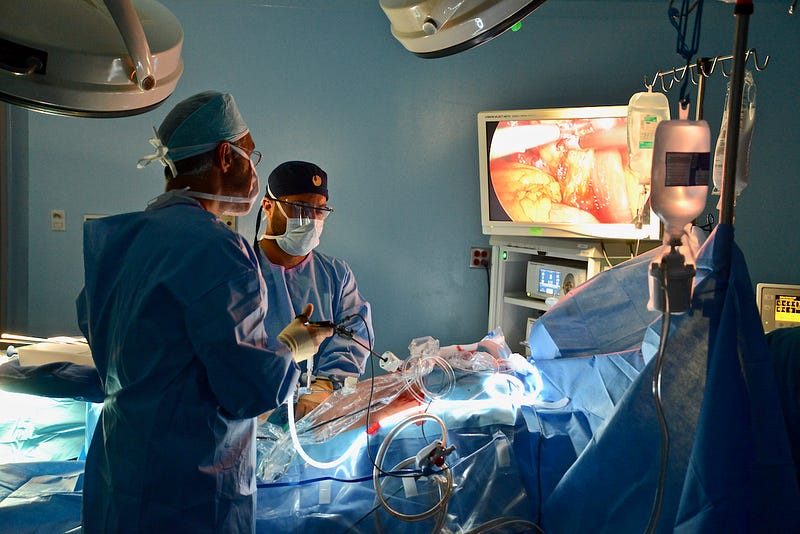
Laparoscopic Cholecystectomy by 3hsurgery.com

Over the past few years, more and more DaVinci Robots have popped up in hospitals. As you can see in this picture, the surgeon often needs to operate the trocars manually, but that could soon change with the introduction of this device.

First and foremost, the robot does not provide autonomic surgical movements. A better way to look at it is reflected in its name: Robotic-Assisted System. It is still operated by a surgeon, who is now sitting behind an operating machine, called a Surgeon Console.

Even though it may not yet be possible to let the machine do all the work, this system provides countless benefits to both patients and OR-personnel. For example, the surgeon can now initiate the movement of a big incision on the Surgeon Console, while the robot translates this incision into a ten-times smaller one for the patient. This is thus a big win for those performing complex and precise procedures.
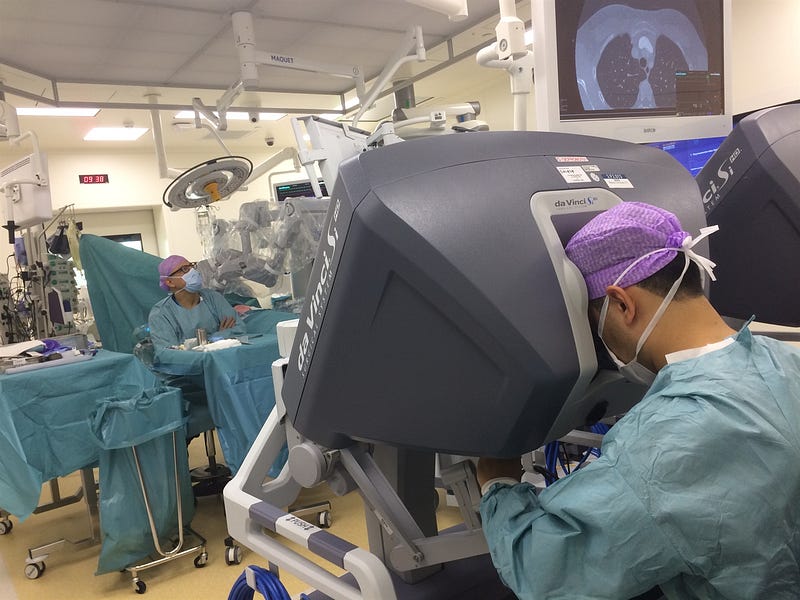
Use Of DaVinci Robot by observantonline.com

This approach begs the question: will it ever be possible for a robot to handle the full surgical procedure? The answer is complex, since surgery is more than only working inside a patient’s body.

One must not forget that a surgeon provides not only the surgery itself, but also information and support around it for the patient and his or her direct surroundings.

I don’t believe that a machine will be capable of fully understanding and interacting with the human psyche anytime soon, so I do not see full medical automation in the near future.

On top of this, there is also the problem of anatomical variations. A machine would have to be able to explore the human body by itself and make decisions based on what it sees.

Lucas Chest Compression System

One of the first medical skills taught by med schools is providing CPR or cardiopulmonary resuscitation. When someone’s heart stops pumping blood to the body, it is vital to provide a good resuscitation procedure, including heart compressions.

Heart compressions can be tiring though, because you have to pump five to six centimeters deep into the thorax while also maintaining a rhythm of 100 to 120 compressions per minute. The LUCAS Chest Compression System can provide heart compressions autonomously following extremely precise settings, without getting tired.

In this video you can see how LUCAS takes over chest compressions, so the medical team can focus on other important tasks, such as administering medication through an IV, or checking vital functions.

An added benefit to this machine is that it makes it easier to continue a perfect CPR protocol on the way to the hospital. You can imagine that providing quality chest compressions in a moving ambulance is not that easy, but for LUCAS it is.

Lastly, LUCAS is known for its active compression and decompression mechanism. While doing CPR, a human can only provide active compression of the chest. There is no way to pull the chest back to its resting position. This is something LUCAS can do, by using a suction cup placed on the chest.

Bridge-Enhanced ACL Repair (BEAR)

An ACL injury is a tear or sprain of the Anterior Cruciate Ligament of the knee, one of its major ligaments. It is one of the most commonly injured ligaments in this joint. An injury like this often occurs when sudden stops or changes in direction are made, like in soccer and basketball. Patients may hear a pop in the knee, it may swell, become painful, and feel unstable.

Photo by Sven Kucinic on Unsplash

There is a range of treatment options possible. Depending on the severity of the injury, rest and rehabilitation may be an option. Surgical replacement of the torn ligament can also be performed. It is not possible to simply reconnect the two ends of the ACL, so the surgeon uses an autologous graft, which means that the ACL is replaced by tissue from the same patient, for example, the tendon of the hamstring or another structure in the knee.

Quick note: the surgery can be performed in an endoscopic way, for which I would like to refer to the first section of this article.
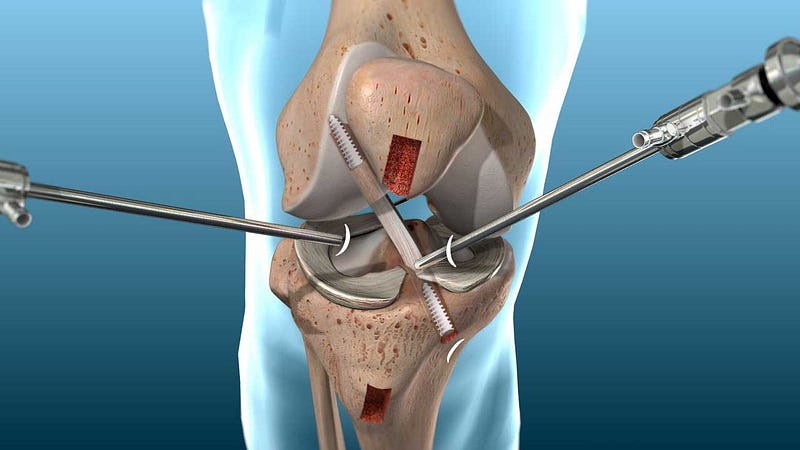
Endoscopic ACL Repair by Dr. Manit Arora

While these options treat the problem well, there is a twenty percent chance of tearing the ACL again. Researchers are thus still looking for innovative treatment options.

They hope to use the patient’s own biologicals, such as cells, growth factors, and other substances, to promote better healing and decrease inflammation.

Bridge-Enhanced ACL Repair or BEAR involves placing a scaffold loaded with the patient’s own blood between the torn ligament ends prior to using suture to realign the ends of the ligament.

Some preclinical studies on animals have shown that animals that were treated using this BEAR technique showed less osteoarthritis than those receiving a normal reconstruction.

There was also a study on humans and early results show a low risk of adverse reactions to the implant. Whether these results will hold up in the longer term requires further study.

It is possible that techniques like this will be applied to a wider range of injuries in the future. Using a patient’s own biologicals can limit inflammation and promote structure repair. There are lots of other injury types practically waiting for a treatment like this.

A substantial group of the population comes into contact with the medical field daily. Some of them looking for preventive approaches, others in need of urgent treatment.

It is therefore of the uttermost importance to keep researching innovative techniques and technologies that will improve the lives of not only patients, but also healthcare workers in general.

I like to believe that the innovations discussed in this article are only the beginning. There are many more to come, and I look forward to learning about them.

Resources

https://www.3hsurgery.com/blog/tag/laparoscopic-surgery-hospitals

https://www.intuitive.com/en-us/products-and-services/da-vinci/systems

https://www.observantonline.nl/Home/Artikelen/articleType/ArticleView/articleId/13604/De-operatierobot-zeer-gewild-en-omstreden

https://www.lucas-cpr.com/

https://anesthesiology.pubs.asahq.org/article.aspx?articleid=1917812#:~:text=The%20LUCAS%E2%84%A2%20device%20does,when%20the%20chest%20is%20compressed.&text=The%20ITD%20is%20placed%20in,chest%20during%20the%20decompression%20phase.

https://www.mdlinx.com/article/top-10-medical-innovations-for-2020/lfc-4934

https://www.mayoclinic.org/diseases-conditions/acl-injury/symptoms-causes/syc-20350738#:~:text=An%20ACL%20injury%20is%20a,basketball%2C%20football%20and%20downhill%20skiing.

http://www.drkharrazi.com/knee.php

https://www.researchgate.net/publication/318806371_Bridge-enhanced_ACL_Repair_Mid-term_Results_of_the_First-in-human_Study#:~:text=Bridge%2Denhanced%20ACL%20repair%20(BEAR,ends%20of%20the%20ligament%20(Fig.

Medicine
Technology
Innovationsfeatures
Modern
Health
Recommended from ReadMedium