
3 Fiction Tools to Make Your Nonfiction Articles Pop
Master sentence fragments, dialogue, and the cliffhanger
If you hit publish …
You’re thinking I know how relationships work, right? How about if we break that down?
If she doesn’t find an ending for this article in the next ten minutes, she may as well kiss her best client goodbye.
See what I did there? I put three of my favorite fiction techniques to work in a nonfiction article.
Everyone’s heard the old saw that the best way to grab a reader is to tell them a story. So, when you’re sitting down to write your next piece for your blog or content for a client, go for it.
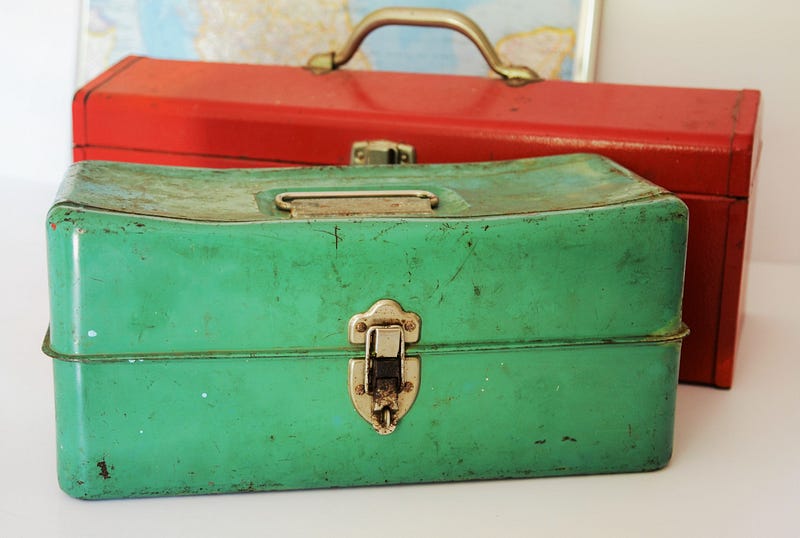
Pull out all the tools you’d use for your novel and use them to jack up your article. Fiction techniques can keep your readers turning pages the way they do in romantic suspense or space opera series.
If you don’t write fiction, let’s take my examples one at a time and see how they’d work in straight-up nonfiction.
Sentence Fragments
Every composition teacher worth their commas and en dashes will tell you to write in simple, declarative sentences. But sometimes you need to lure back the eyes of wandering readers tempted away by incoming texts. And nothing brings them to attention like a startling phrase that conveys meaning in a few well-chosen words.
Success is …A missed deadline!Success is what? Who can resist finding out the meaning of that tempting hook? Or, imagine the fears dredged up by the image of a missed deadline. Just mention the topic, and you’ll have your freelancers glued to the screen looking for tips to avoid tanking their business.
You don’t need a thousand words on the importance of keeping a scheduling calendar if you want to sell a productivity app or some other life hack. Just frame the reader’s worst nightmare or most potent desire in an eye-catching phrase. Say the benefits of a workout with “Bikini body!” and you’ll have them salivating until they reach your CTA.
Use a fragment as an eye-catching opening to your article, to prop up a sagging middle, or to sum up the important points in the takeaway.
Don’t overuse sentence fragments, though, or your writing will become disjointed and hard to follow. But a well-crafted phrase, devoid of subject or verb, can do more to hook your reader than any grammar book on your shelf.
Dialogue
“You want me to add characters in a discussion on the benefits of meditation? Are you trying to dumb down my efforts to lift up my readers and help them center their lives?” “No, I just want to help you get their attention so you can deliver a message that will stick.”Now, that didn’t hurt, did it?
Nonfiction writers can fall prey to the lure of the podium and wagging finger pose. Have you not felt it, the tendency to lecture your readers on the benefits of your favorite morning hack or approach to pitching an idea to a client?
It’s natural to get caught up in the beauty of our premise as we talk our way through our outline and eventual writing of a piece. We feel that adrenaline rush. We blast our arguments to our computer screen with passion and conviction. Then, all of a sudden, we’re wandering down that long, boring road that has us sounding like nobody’s favorite professor.
I’m not suggesting you take on the persona of a stand-up comedian when you write. But step back and consider that writing is often a conversation between the writer and reader.
So make it lifelike once in a while. Imagine, for a moment, your reader’s reaction to an important point you’ve just made. Then throw in a little back and forth.
I know what you’re thinking: “How can 15 minutes of watching my breath each morning change my life?”Hard to believe, I know. But let’s look at the science that backs up that claim.The more natural you make that exchange, the more engaged you’ll be with your reader. And a few lines of imagined dialogue can often save you a paragraph or two you might otherwise need to short-circuit what you know is going through the reader’s mind.
Use a quick chat to introduce fictional characters. “Let’s listen to Mary and Joe as they talk about their struggle to organize dinnertime before they ordered Fabulous Home Chef kits.”
Or just engage with your reader as I’ve demonstrated. However you use this technique, letting your reader step into your pages and engage with your material is a win for both of you.
Cliffhanger
I know what you’re thinking: How can you make a pitch for a web design gig sound like a thriller? And why would you want to?
Well, they work for Stephen King, so they can’t hurt is my thinking.
Typically, writers use cliffhangers to keep a reader turning the pages at the end of a chapter in a horror novel, or at the end of a romance or space opera series.
A cliffhanger poses a perilous situation for the hero or heroine that makes you come back for more … to find out what happened.
I like to use them at the beginning of an article to draw the reader into my premise. I’ll pose a situation and leave them hanging so they’ll have to read to the ending, or at least long enough to get hooked to find out how my story will help them.
The new template you’ve just installed on your client’s website has sent her images to another dimension in the universe. The help desk is closed for the weekend. Do you swear in six languages or quit your job before the meeting?Picture your audience of web designers nodding their heads at this relatable crisis.
Oh, you’re writing about a cooking demo?
You’re standing in front of 50 paying guests to watch you make a souffle. As you turn to put the chocolate delight in the oven, nobody told you it was convection. Will a souffle even rise in this bizarre contraption? Okay, by now, we know how to use convection ovens. But way back in the dark ages when that cooking teacher was actually me, I’d never seen one before. I used this predicament in a blog post to get my reader’s attention in a discussion about preparedness for cooking teachers.
Sure, I could have given them chapter and verse on the reasons why you want to test your equipment before you go public. But they got my point before I had to lecture them. I did that later in the piece just to make clear the cardinal rule: Assume nothing. Like, you’ll have a working stove when cooking in front of a crowd for the first time.
Not every reader of informational articles reads fiction. But that doesn’t mean they won’t be drawn in by the same techniques that make bestsellers out of novels.
When your writing has hit a wall or you’re trying to capture an audience for your articles, whether they’re how-tos, aspirational pieces, or personal essays, you need to use every trick at your disposal. Dipping into the novelist’s toolbox can often keep your readers with you from the first word to the end.


