
Three Environmental Lessons to Save Humanity
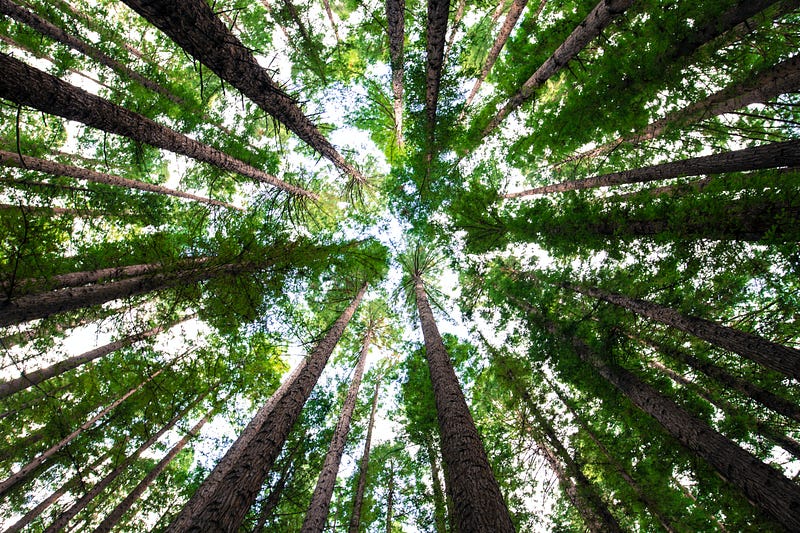
In a world hell-bent on ecological disaster, “The Overstory” by Richard Powers provides nothing less than an environmental ethic that could save humanity. The Pulitzer prize-winning novel weaves together eight stories into a single narrative that tugs as hard on your heartstrings as it pushes against the belief of eternal economic growth.
To save ourselves and the environment, Powers offers three lessons that shine a light on humanity’s predicament and reveal a path to redemption.
1. Irrational Desires Are Driving Humanity to Extinction
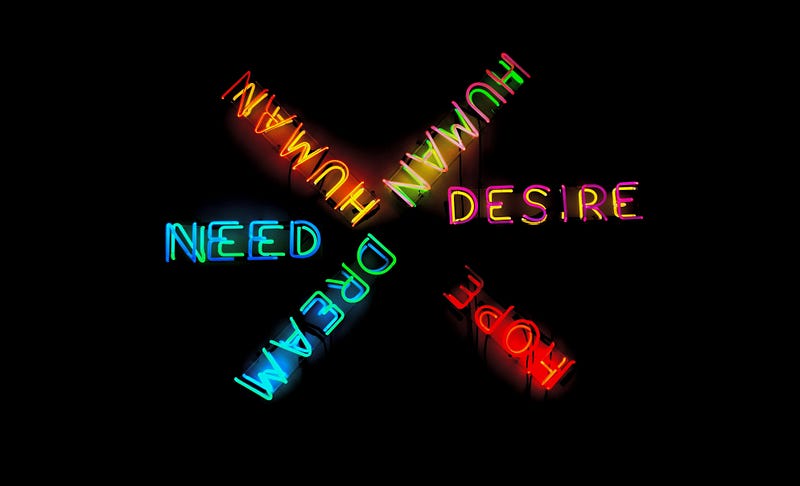
There’s more to life than getting everything you want. This is easy to understand at a personal level. Unfortunately, it’s proven difficult to adopt at scale.
“Human history was the story of increasingly disoriented hunger.” ~Richard Powers, “The Overstory”
When humanity was getting its start, we only wanted the basics. Food, water, shelter. Evolution gave humans an insatiable desire for more in order to satisfy these needs. This programming worked when food, water, and shelter were perceived to be scarce. However, this framework breaks down in our world of plenty — plenty for some, that is.
This desire drives us to constantly strive for more and more. Unfortunately, most humans aren’t rising up Buddhism’s prescribed path of enlightenment or Maslow’s hierarchy of needs. Instead, many people are choosing the shallow path of materialism — which research shows is linked with decreased well-being.
These unsatisfying desires are not only ill-advised for our personal development, they’re also devastating our planet.
As Richard Powers puts it, “We’re cashing in a billion years of planetary savings bonds and blowing it on assorted bling.”
Resource use is 76% higher than the Earth can handle. The Earth has lost 80% of its forest because of human development. Rainforests that are millions and millions of years old will be gone in the next 80 years if we keep things up. Humanity’s actions are pushing the world into its sixth major extinction — events traditionally reserved for massive changes in atmospheric conditions, volcanic activity, and meteorites.
What many don’t seem to understand is that these trends aren’t just troubling for the environment and other life on earth, they’re troubling for us.
The fate of humanity is inextricably tied to the fate of the environment. Everything we need and desire comes from the Earth and other organisms, one way or another.
To neglect them is to neglect ourselves.
The one bright spot of this situation is that it will be difficult for humanity to extinguish all life on Earth, no matter how egregious the actions. Some species, even if it’s the smallest of bacterial colonies, will survive and adapt. The only question is whether it will be the forms of life that can sustain us.
The answer is entirely in our hands.
2. We Need a New Story

“The best arguments in the world won’t change a person’s mind. The only thing that can do that is a good story.” ~Richard Powers, The Overstory
Stories drive humanity.
Mythology, religions, governments, capitalism, money. They’re all stories. You can’t touch capitalism any more than you can touch a religious deity.
This is not to say that all stories are bad. A common story is what has always bound humanity together.
However, we must not fall into the trap and “mistake agreement for truth.” An ineffective story, even one that brings us all on the same page, can still bring us down the wrong path.
The current story of eternal growth with little consideration for other species is doing exactly that.
The good news about humanity’s stories is that they can change quickly. The human genome does not bind us to a belief in eternal material growth any more than it encodes for Christianity.
As Yuval Noah Harari would say, “bees cannot reinvent their social system overnight in order to cope better. They cannot, for example, execute the queen and establish a republic.”
Humans, on the other hand, have the power to rethink our stories and replace them with ones that better suit us. Powers argues that this is exactly what needs to happen if we are to avoid environmental catastrophe.
What would this new story look like? Powers’ suggests one where humans recognize that their current place is not in the overstory, but the understory.
3. To Save Ourselves, We Need to Start Listening
“This is not our world with trees in it. It’s a world of trees, where humans have just arrived.” ~Richard Powers, The Overstory
To understand our current environmental predicament — and how we can get out of it — it’s helpful to follow Richard Power’s advice and understand our true place in the larger story.
If you were to divide the entire history of Earth into a single day, modern humans showed up one second before midnight.
Now I want you to imagine a different day—one in which you and your friends throw an all-day house party. There are a few hiccups across the day. But, on the whole, the party is a success.
Then, one second before midnight, someone you’ve never met in your entire life shows up. They trash the place, eat most of the food, throw poison in the punch, kill off a bunch of your friends, and crank up the thermostat. After fitting all of that destruction into a single second, they come up to you and claim that they should be running the party.
That’s humanity. That’s us.
If we are going to throw a party that works for everyone, we must start looking to other species that have been doing things right for millions and millions of years. Many of us are taught to respect our elders when we’re growing up, but we throw this wisdom out the window when we abide by an anthropocentric view of the universe.
Ninety-nine percent of all species that have ever existed are extinct. Every species on this planet is constantly walking a fine line between existence and extinction. Humans are no different. As Janine Benyus, founder of Biomimicry, says, “After 3.8 billion years of research and development, failures are fossils, and what surrounds us is the secret to survival.”
To throw out these sources of knowledge would be akin to taking the hardest open-book math test ever devised while refusing the help of millions of books that hold secrets from individuals who have failed and passed the test in every way imaginable.
To be fair to humans, lots of cultures have already figured this out. Many Native American tribes knew that they had much to learn from the species around them. They adopted other organisms’ strategies and wisdom to live in closer harmony with their environments. Western culture would do well to learn from them and the other organisms that hold the secrets of existence.
If we’re not able to collectively recognize these lessons and learn that we’re far from worthy of our self-proclaimed role in the Overstory, our story may soon be over.
“There is no knowing for a fact. The only dependable things are humility and looking.” ~Richard Powers, The Overstory