
3 Easy Tweaks You Can Do To Improve Your Workouts
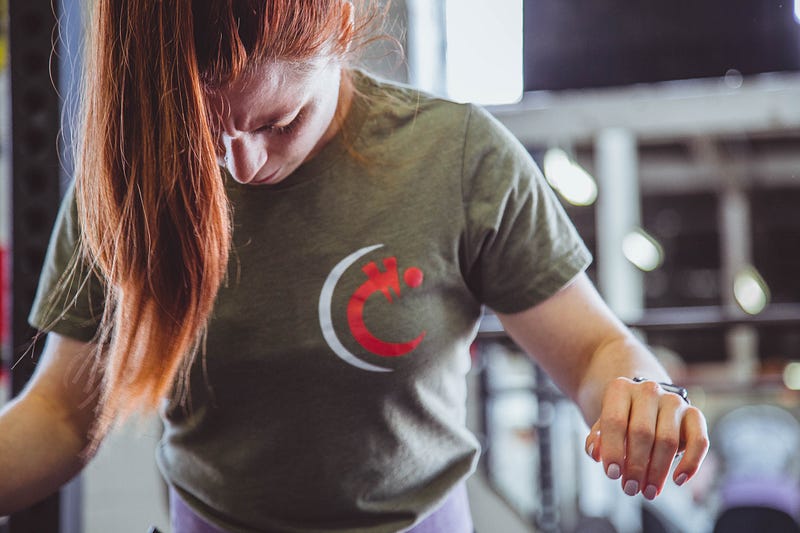
I press through the floor to bring myself into a plank position, hold, and then dip low into my push-up. My teeth grit and I can feel pink warmth creeping across my face. Arms shaking, core wiped, I sink down to surrender on the mat.
Dear god, why is this so hard this morning? This is not normally this hard.
I get progressively tenser throughout the workout, frustrated that it’s not panning out as I’d planned.
I know I’m not alone in this feeling. No matter how far along you are in your fitness journey, you will have good workouts, and you will have bad workouts. It’s part of the process, and it is inevitable.
That being said, a bad workout doesn’t need to remain a bad workout. There are many ways to turn them around and these tips can also be used to improve an already good workout. The best part: They’re little tweaks that are unbelievably easy to implement.
1. Smile
When a workout is heading downhill fast, the last thing you likely want to do is smile. But according to various research, smiling may just help you turn everything around. Sounds corny, I know, but hear me out.
Smiling activates the release of neuropeptides, which work to fight off stress. It also releases feel-good neurotransmitters like dopamine, serotonin, and endorphins to help lift your mood and relax your body. I don’t know about you, but when I feel good, I exercise more efficiently than when I’m upset.
One study was conducted with runners in particular, and it demonstrated that runners who smiled performed better than those who frowned. That’s why Eliud Kipchoge, the fastest marathoner ever, periodically smiles during races —he hopes it will ease him toward the finish line.
There’s one small catch: the smile needs to be natural in order to be effective, since natural smiles use more muscles in the face than fake ones. With that in mind, it’s helpful to save the smiling for when you really need it and use it in a 30-second burst so that you can tap into your inner Eliud and conquer your workout.
2. Breathe
This one sounds simple, but is often overlooked. Breathing while working out is about more than just inhaling and exhaling — it’s about when and how you inhale and exhale, and how you use the breath to power the movement.
The more activity you do, the more oxygen your muscles need to perform the movement. As Marta Montenegro, M.S., C.S.C.S., adjunct professor of exercise science at Florida International University in Miami, tells SELF, “the more efficiently you can deliver oxygen to your muscles, the more efficiently you can work.”
To breathe more efficiently, you need to use your diaphragm, which is located just below the lungs. If you’re a singer, you’re probably well-acquainted with this method since it enables you to take in much deeper breaths than what you’re able to get using only your lungs. It also helps you activate your core more efficiently as you control the breath.
You can practice breathing from the diaphragm by inhaling without letting your shoulders creep up toward your ears and by letting your belly grow outward with the inhale. On the exhale, let your stomach slowly collapse. Practice this in the mirror — you may think you’re not letting your shoulders inch up, but you’d be surprised.
Additionally, you can use your breath as fuel through each rep by exhaling during the hardest part of the exercise (the concentric phase) and inhaling as you come back to the starting point (the eccentric phase). For instance, if you’re executing a push-up, you’d exhale as you push yourself into the plank position and inhale as you bring yourself back down. If you’re doing a bicep curl, you’d exhale as you bring the dumbbells up and inhale as you lower them back down. This breath work allows your core to remain stable through the movement and powers the exercise.
3. Do your least favorite exercise first, then do your favorite
This one is like forcing yourself to eat dinner before you get to dessert. If you eat dessert first, you may feel too full and won’t want to eat dinner, even though it’s good for you. The same goes for your workout routine: If you save your least favorite exercise for the end of your workout, you’re more likely to come up with an excuse to avoid it.
Flip the script by completing your least favorite exercise first and then rewarding yourself with your favorite exercise. According to the Premack Principle, a less desired behavior can be reinforced by the opportunity to engage in a more desired behavior. This means that, over time, you might actually learn to like the formerly hated exercise because you’ve used positive reinforcement to associate that exercise with a reward.
At the end of the day, you’re still doing the same exercises that you would have done before. However, by restructuring your workout to end with your favorite exercises, you’ll likely be much more efficient and happy with your routine in the long run.
Leave your favorite tips to improve your workout in the comments! And I’ll be picking myself off my mat to try more push-ups.

You just read another post from In Fitness And In Health: a health and fitness community dedicated to sharing knowledge, lessons, and suggestions to living happier, healthier lives.
If you’d like to join our newsletter and receive more stories like this one, tap here.