
3 Mindfulness Techniques to Deal With Anxiety
“Mindfulness isn’t difficult; we just need to remember to do it.” ~ Sharon Salzberg
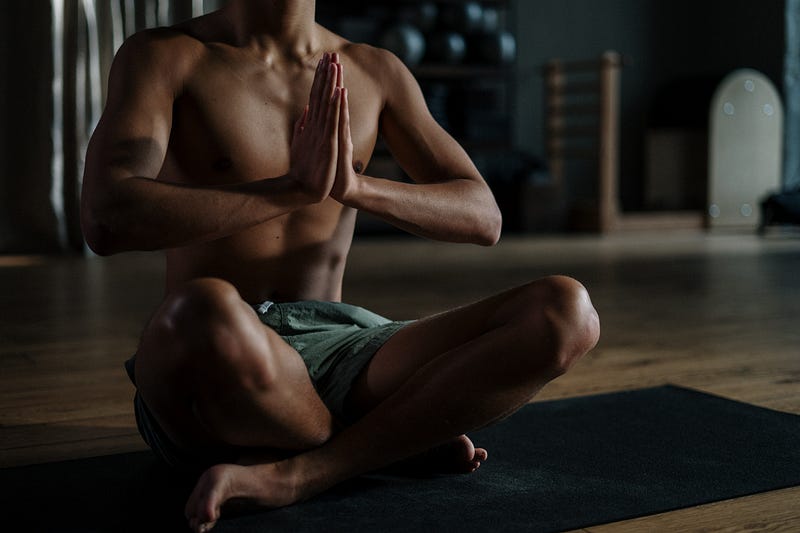
Mindfulness has become quite popular these days, and so have our mental problems. Anxiety and stress have become such common emotions that we feel nervous and flustered most of the time.
In fact, according to ADAA, the Anxiety and Depression Association Of America, over 18% of the population (i.e., 40 million adults approximately) are suffering from anxiety disorders, making it the most common mental illness in the U.S.
Moreover, a recent study in the Journal of Affective Disorders states that 72% of the people with anxiety recovers (for at least one year through medications and cognitive behavioral therapy).
These statistics prove that anxiety disorders are highly treatable.
However, it also proves that mindfulness is the last option (or perhaps it isn’t an option) to choose when dealing with mental health.
One of my best friends had been suffering from an anxiety disorder, through whom I became aware of this illness and its probable solutions. Also, reading a lot about anxiety disorders in online journals and scientific research conducted across the globe, I gained a lot of knowledge about ways and methods to alleviate it.
Interestingly, mindfulness was one of them. But, before switching our focus to learn mindfulness techniques, let’s understand the anxiety disorder first.
What Are Anxiety Disorders
Maybe it’s the present pandemic situation or the racial injustices prevalent nowadays. Perhaps it’s the type of our work culture or the burden of our dreams. Whatever the reason we name, we all can be on the same page that the anxiety is becoming more of a grave issue than ever before.
In simple words, we can explain anxiety disorder as:
An unwanted or an unreasonable fear giving birth to tensed and worried feelings, hampering daily activities can be termed as an anxiety disorder.
American Psychiatric Association defines anxiety as a prediction of a future concern or fear and is more related to muscle tension and our responsive behavior to avoid it.
So, from a psychiatric’s perspective, anxiety has been categorized as a mental or physical reaction to a perceived threat. Most of us term it as a fight or a flight response. It can occur in many forms of fear like panic attacks, social anxiety attacks, obsessive-compulsive disorder, post-traumatic stress, or generalized anxiety disorders.
Moreover, we can also categorize other physical symptoms like headaches, shortness of breath, insomnia, indigestion, increased heart rate, or faintness in vision under the anxiety disorder umbrella.
Why Mindfulness
We can answer this question by explaining three factors why medical science fails in treating anxiety disorders.
1. Time Factor:
There are various treatments like cognitive behavioral therapy and psychological therapy, but they take quite some time to heal. And there is also a high risk of anxiety relapse too.
According to AAFP, The American Academy of Family Physicians, one-third of the patients with anxiety disorders suffers a relapse when anti-depressant treatment stops.
2. Financial Factor:
Money is also another factor due to which people zip their mouths about their illnesses. It can cost a fortune if one doesn’t have any employment or government insurances.
A research study at The National Center for Biotechnology Information(NCBI) states that the mean estimated total medical cost for individuals diagnosed with any anxiety disorder is approximately $6,475, depending upon the severity.
Now that’s expensive.
3. Dependency Factor:
Though medications and medical science are possible treatments, dependency on anything always makes one more susceptible to it when treatment stops.
Hence learning mindfulness can prove to be a better tool without any side effects and can be used anytime, anywhere, and without anyone’s help.
I love how William James, an American philosopher, and psychologist explains the concept of mindfulness:
“The great thing, then, in all education, is to make our nervous system our ally instead of our enemy.”
So, let’s empower ourselves through the knowledge of mindfulness.
Technique №1: Take Long Deep Breathes
According to Harvard Health Publishing, long deep breaths have proved to be successfully dealing with stress and anxiety issues.
Thich Nhat Hanh, a Vietnamese Buddhist monk, and spiritual teacher, explain the importance of long breathing as:
“Feelings come and go like clouds in a windy sky. Conscious breathing is my anchor.”
So, there are many ways to perform this exercise and benefit from it. Below I have mentioned three types of breathing exercises that have helped my friend deal with anxiety, and you can do it too without any medical intervention. However, it never hurts to consult your local physician.
I. Lengthen your exhaling:
- Instead of taking a deep breath, try a thorough exhale at first. Then pull all the air out of your lungs and then let the lungs inhale normally.
- Slowly and gradually, increase the exhaling than inhaling. (i.e., Inhaling for 3 seconds and exhaling for five)
- Repeat the procedure for five to six minutes daily.
II. Breathing through the abdomen:
- Sit in a relaxed position.
- Breathe in through the nose and notice the stomach rise. Then hold on for four to five seconds and then exhale through your mouth, pursing the lips.
- You can practice this technique four to five times a day for up to ten minutes.
III. Equal breathing:
- You can perform this exercise while sitting or in the lying position.
- Shut your eyes to bring the focus to your breathing.
- Slowly inhale through the nose on the count of 1–2–3–4.
- Exhale with the same four seconds count.
Technique №2: Perform Yoga Poses and Asanas to Improve Strength and Flexibility of the Body
According to a study published in 2009 in the Harvard Medical School Health Publishing Letter, various yoga poses have been useful in releasing the tension built up in the muscles.
Later on, in 2015, another research was published in the same Harvard Medical School Health Publishing Letter, discussing the mental benefits of yoga in addition to the physical one.
From the researches mentioned above, we can conclude that performing yoga poses decreases the physiological arouses like reducing the heart rate by aiding in respiration. This effect, in turn, lowers the blood pressure too. By increasing the heart rate variability (an indicator of a body’s ability to accommodate stress), yoga poses have helped treat anxiety.
Hence, it’s a win-win situation for an individual.
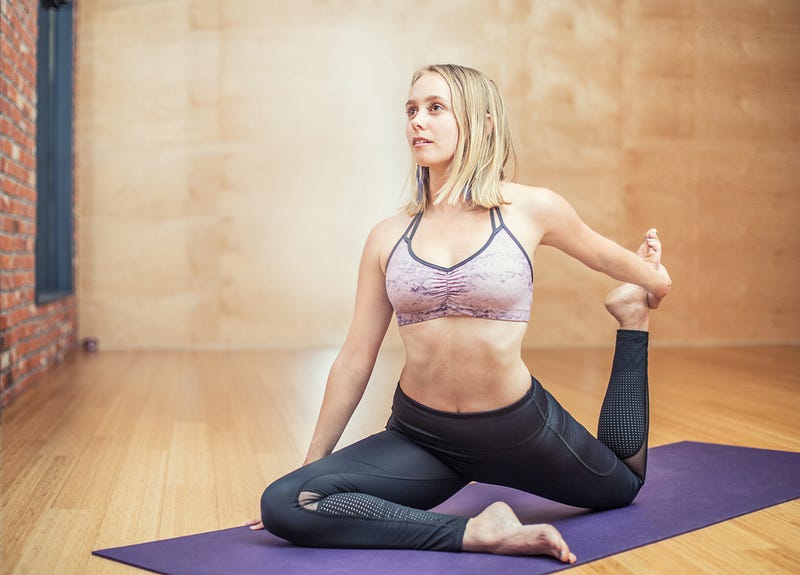
According to The Good Body, here are a few of the yoga poses designed to alleviate the anxiety symptoms.
- Butterfly Pose (Baddha Konasana)
- Extended Triangle Pose (Utthita Trikonasana)
- Bridge Pose (Setu Bandha Sarvangasana)
- Legs-Up-The-Wall Pose (Viparita Karani)
- Child’s Pose (Balasana)
- Seated Forward Bend (Paschimottanasana)
- Cow Pose (Bitilasana)
P.S-Before you start any new exercise yoga program, be sure to check with your doctor if you are suffering from any chronic cardiovascular diseases.
Technique №3: Meditate for a Healthy B̶o̶d̶y̶ Mind
The latest study published in The Science Journal of Biological Psychiatry has provided groundbreaking evidence proving that meditation helps us alter the neurological functions that empower us to counter our unreasoned fears.
Also, Gunes Sevinc, a postdoctoral research fellow in the Department of Psychiatry at Massachusetts General Hospital and Harvard Medical School, presented a study confirming that mindfulness meditation training alters the way we process our irrational fears. (The National Institutes of Health supported his work).
Hence, the best way to deal with any mental stress caused by imagined fears is meditation.
Besides, meditation is an old Indian technique to slow down fast running thoughts that cause anxiety. Meditation quiets the mind by bringing a mindful awareness of the present time. It is like an exercise for the mind rather than the body.
Meditation is not yoga. Yoga is for the body while meditation is for the mind.
Performing meditation is easy. I am presenting the five necessary steps to perform meditation as illustrated by the Brahmakumaris World Spiritual University.
It is called the “Rajyoga Meditation” (meditation to control and quiet the senses).
Step#1: Relax
Relaxation is about letting go of all the tensions and worries and bringing the mind into a peaceful state. One can relax in either a sitting or lying position at one’s convenience.
Step#2: Concentrate Try to focus the mind on one thought. You can do it by physically concentrating on a tiny point of light. And then, imagining oneself to be that light.

Step#3: Contemplate
It is like reflecting deeply on one’s true self. Reflecting on the inner world and thinking about actual values (that one possesses)like love, compassion, joy, happiness, bliss, and power charges the individual with positivity.
Step#4: Realize
Having a profound realization about self and the meaning of life can be fruitful in dealing with anxiety. Accepting that happiness is a birthright for all can drive away all the kinds of mental illness from its core.
Step#5: Meditate
This step involves remembering the eternal Godfather Almighty and connecting with him through our intellects. The eternal truth that we are souls and our father is a supreme soul can help us look beyond this material world and enter into a realm of peace and poise.
I have been following this Rajyoga Meditation for the past ten years, and I have been able to quiet my mind and body whenever being hit by unwanted irrational fears.
To wrap things up, remember one thing, that you are not alone in this battle.
Everyone is fighting their own battles. Some choose to seek help, while some literally can’t find one.
So it’s the right time that we help ourselves. Being proactive when it comes to mental illnesses can be more conducive than being preventive. We have to take the baby steps, even if our anxiety is not severe.
“You don’t have to see the whole staircase, just take the first step.” — Martin Luther King
Using mindfulness, we can make ourselves strong against ourselves.
Let us all cut out the darkness of mental illness by lighting the candle of mindfulness.